Real Food, Fertility, and the Modern Mismatch: Why Nutrition Before Conception Matters More Than You Think
Featuring Lily Nichols, RDN
Real Food for Fertility: What Actually Impacts Conception (with Lily Nichols, RDN)
A science-based conversation on fertility nutrition, protein, fats, micronutrients, and why modern dietary patterns may be working against conception — featuring registered dietitian and author Lily Nichols.

Author
Craig McCloskey
Certified Nutritionist
Infertility is no longer a rare or fringe issue. Today, roughly one in six couples struggles to conceive, a number that continues to climb. While medical explanations certainly exist, many couples are surprised to learn how often fertility challenges stem not from diagnosis—but from non-optimized nutrition and lifestyle factors long before pregnancy is even on the table pasted.
Modern life has quietly created a mismatch between how humans evolved to reproduce and how we currently live. Chronic stress, circadian disruption, under-fueling, ultra-processed diets, and widespread nutrient depletion all shape reproductive health in ways we rarely discuss until something goes wrong.
The good news? Fertility is not just about genetics or luck. It is deeply responsive to what you eat, how you live, and how well your body is nourished months—sometimes years—before conception.
Fertility Doesn’t Begin at a Positive Pregnancy Test
One of the most overlooked truths about fertility is timing. The health of an egg or sperm is not determined overnight.
This matters because early reproductive processes—fertilization, implantation, placental development, and early embryogenesis—are exquisitely sensitive to metabolic health. Blood sugar regulation, inflammation, micronutrient status, and hormone production all play foundational roles.
Simply put: fertility reflects the body’s assessment of whether conditions are favorable to create and sustain new life.
Why Under-Eating and “Eating Clean” Can Backfire
In a culture that praises restriction, leanness, and appetite suppression, many people unintentionally send their bodies the wrong signal.
When energy intake drops too low—whether from chronic dieting, over-training, or fear of fat—reproductive function is often the first system to down-regulate. Ovulation can become irregular or stop entirely. Hormone production declines. In men, sperm quality suffers.
This isn’t a flaw—it’s biology. Reproduction is optional. Survival is not.
Avoiding fat and cholesterol may seem “heart-healthy” on paper, but from a fertility standpoint, it removes essential raw materials.
Traditional Cultures Knew What Modern Nutrition Forgot
Long before prenatal vitamins or fertility clinics existed, traditional cultures across the globe recognized that reproduction required intentional nourishment.
Organ meats
Full-fat dairy
Shellfish and seafood
Eggs and animal fats
What’s striking is that these cultures arrived at similar conclusions independently, without shared language or knowledge. The common thread wasn’t ideology—it was observation. When certain foods were prioritized, pregnancies were healthier and babies thrived.
Modern science now helps explain why.
The Nutrients That Quietly Drive Fertility
Fertility isn’t fueled by calories alone. It depends on specific nutrients that support hormone production, cellular energy, antioxidant defense, and genetic signaling.
Animal foods remain uniquely rich in many of these compounds:
Choline, critical for egg quality, placental development, and fetal brain development
Vitamin A (retinol), essential for cellular differentiation and reproductive signaling
Iron and zinc, required for ovulation, sperm production, and implantation
Selenium, a key antioxidant for reproductive tissues
Creatine, carnitine, taurine, amino-acid–derived compounds that support mitochondrial function
Protein Quality Matters More Than You’ve Been Told
Current protein recommendations are based on bare-minimum survival needs, not optimal function. For women—and men—seeking fertility, this distinction matters.
Protein supports:
Hormone production
Blood sugar regulation
Detoxification enzymes
Lean body mass
Thermoregulation
Egg and sperm development
This gap becomes especially relevant in fertility contexts, where metabolic demands increase.
The Hidden Fertility Cost of Ultra-Processed Foods
Ultra-processed foods don’t just lack nutrients; they actively increase the body’s demand for them.
🎥 Watch the Full Conversation Here
Transcript:
[0:00] Lily Nichols: My vegan clients just cannot get pregnant or cannot sustain a pregnancy. Vegans will say that their protein [0:05] Lily Nichols: intake is adequate, but when their standard is the current RDA, which is inadequate, it's not enough. [0:12] Craig McCloskey: That's like the OG birth control pill right there. There you go. I mean, we see it in our modern times. You have women who [0:18] Craig McCloskey: undereat and one of the first functions of your body that gets turned off is ovulation. [0:18] Craig McCloskey: Is it actually realistic? [0:25] Narration: One in six couples facing infertility. [0:25] Narration: Every 2% increase in trans fat consumption was [0:31] Narration: linked to a 73% greater risk of ovulatory infertility. [0:31] Narration: Lily Nichols is a registered dietician, [0:38] Narration: certified diabetes educator, researcher, and best-selling author. [0:38] Narration: Lily's clinical expertise and extensive background in [0:44] Narration: prenatal nutrition have made her a highly sought-after consultant and speaker in the field. [0:44] Narration: She's the author [0:49] Narration: of three bestselling books, including her first book, Real Food for Gestational Diabetes. [0:49] Narration: Her second book, [0:55] Narration: Real Food for Pregnancy, is the most comprehensive text on prenatal nutrition to date. [0:55] Narration: Since its publication, it [1:01] Narration: remains the number one best-selling book on prenatal nutrition, and her most recent book, Real Food for Fertility. [1:01] Narration: In [1:07] Narration: addition to her books, Lily is founder of the Institute for Prenatal Nutrition, where she mentors other practitioners on [1:13] Narration: perinatal nutrition, and is the co-founder of Women's Health Nutrition Academy, which offers individual [1:18] Narration: webinars on a variety of women's health topics. [1:18] Lily Nichols: Infertility rates are on the rise, right? We have approximately one [1:26] Lily Nichols: in six couples facing infertility. There's a lot of delays in conception [1:31] Lily Nichols: that couples are facing. Sometimes there's, you know, a more serious underlying health issue. Other times it [1:37] Lily Nichols: can just be, you know, nonoptimized lifestyle, nutrition, lifestyle choices, [1:43] Lily Nichols: right? Um, but we're we're at a time point in our history where people are actually having to think a little more [1:49] Lily Nichols: about their fertility versus just like, oh, it just happened and here we are. [1:55] Lily Nichols: Um, so, uh, there's a lot of factors that go into this. Like I mentioned, the [2:00] Lily Nichols: food nutrition component. Our lifestyle is kind of a mismatch to optimal [2:06] Lily Nichols: fertility. We're not living by circadian rhythms. We're highly stressed. We're not as active. or we have some [2:12] Lily Nichols: individuals who are extremely active but not fueling adequately. Um we have exposure to toxins, you know, all sorts [2:19] Lily Nichols: of things in our environment that are affecting uh fertility. Not to mention a lot of couples are waiting a lot later [2:25] Lily Nichols: to have babies than we did, you know, ancestrally, which can also play a role. [2:25] Lily Nichols: So I I started this and my first two [2:32] Lily Nichols: books are on the pregnancy side of things. Um but I was like, "Wow, we we [2:37] Lily Nichols: really have a lot more work to do. there's a lot more that we need to do to optimize people's health, not just to [2:43] Lily Nichols: get pregnant, but to have also a healthier pregnancy um as a whole and a healthier baby. And a lot of those [2:49] Lily Nichols: choices really circle back to preconception choices that uh both both [2:56] Lily Nichols: people, both partners um need to incorporate well in advance of [3:01] Lily Nichols: pregnancy. [3:01] Craig McCloskey: Right. Right. And so you were talking about all the different factors that kind of go into fertility. And I think [3:07] Craig McCloskey: you kind of mentioned a lot of people just kind of go into this maybe thinking that just taking a prenatal and not [3:13] Craig McCloskey: really necessarily thinking about how nutrition can impact that, how their their fertility chances. And in your [3:20] Craig McCloskey: latest book, Real Food Fertility, you really lay out I love the approach you take. You lay out the science and a lot [3:26] Craig McCloskey: of it was shocking to me. and I've been in this space a little while and the the stats that you share were truly shocking [3:31] Craig McCloskey: which we'll dive into. But you also have this fundamental and very relatable approach talking about real food and [3:37] Craig McCloskey: what humans have been doing for a very long time. And you also talk about all the other lifestyle components, the [3:43] Craig McCloskey: toxins, the sleep, the stress in here and an incredible book. And that's something that that you alluded to is [3:49] Craig McCloskey: that food can make such an impact not just when you become pregnant and [3:55] Craig McCloskey: throughout uh pregnancy, but months, maybe even years, and maybe even generations before you become pregnant. [4:02] Craig McCloskey: Can you talk a little bit about the importance of nutrients and eating whole foods the months leading up to [4:08] Craig McCloskey: conception? [4:08] Lily Nichols: Yeah, it depends how long you want to like rewind the clock because arguably there's uh we're still [4:16] Lily Nichols: benefiting or maybe not benefiting much from the choices that our parents or our [4:21] Lily Nichols: grandparents or our great-grandparents made um in, you know, prior generations. [4:26] Lily Nichols: there's this epigenetic effect where these um exposures over time can impact [4:33] Lily Nichols: the development of the next generation and how how their genetics are expressed and all of that. [4:33] Lily Nichols: Um if we take it from [4:40] Lily Nichols: like the shortest time span just thinking of like us our choices now and [4:45] Lily Nichols: our future children we're looking at um what is our metabolic health like [4:52] Lily Nichols: currently preconception um because that impacts the quality of [4:57] Lily Nichols: our egg and sperm and our various metabolic health markers such as our [5:03] Lily Nichols: blood sugar and insulin levels being a really big one but there are many others levels of inflammation things like fat [5:09] Lily Nichols: levels of micronutrients that can actually impact the quality of the egg and sperm. [5:09] Lily Nichols: Uh the likelihood that uh [5:16] Lily Nichols: fertilization will take place that uh early embryogenesis will work out well. [5:21] Lily Nichols: Implantation the development of the placenta like all all future coming [5:26] Lily Nichols: stages will all kind of work as uh designed without without issue. [5:26] Lily Nichols: So when [5:34] Lily Nichols: we think about what are the greatest impacts for egg and sperm quality with egg quality, you technically have to go [5:41] Lily Nichols: back about 220 days to the um uh the [5:47] Lily Nichols: development of the ovarian follicle before it be is even developed to the point that it could be ovulated as a [5:53] Lily Nichols: fully developed human egg cell. [5:53] Lily Nichols: Um usually I mean that that's a hard pill [5:59] Lily Nichols: to swallow for people because that's like seven to eight months. [5:59] Lily Nichols: Um, I will say in the final like three months or so [6:06] Lily Nichols: prior to ovulation, that's when your nutrition and lifestyle choices have the [6:11] Lily Nichols: biggest impact. [6:11] Lily Nichols: And then for uh sperm quality, we're looking at can't remember [6:16] Lily Nichols: the exact number of days, but it's over 70 days. [6:16] Lily Nichols: So, same kind of time frame about 3 months or so preconception. [6:24] Lily Nichols: Um, that's when your lifestyle choices make make the biggest impact. [6:24] Craig McCloskey: you mentioned I I mean in the book you mentioned that [6:31] Craig McCloskey: women have this you know they they're born with all their eggs uh at at birth and then we might have this belief that [6:38] Craig McCloskey: it's out of our control the quality of our eggs are out of our control. [6:38] Craig McCloskey: Uh but that's not the case because as you're [6:44] Craig McCloskey: mentioning 200 and some days 20 days before conception really makes a big difference in what you eat and the [6:51] Craig McCloskey: quality of foods that we're eating. [6:51] Craig McCloskey: And then you go on in the book to lay out not just the science, but cultures that [6:58] Craig McCloskey: have been doing this for millennia. I mean, as long as as humans have really existed, cultures have been prioritizing [7:04] Craig McCloskey: certain lifestyles and certain foods. And all across the globe, they've been prioritizing the same types of foods. [7:11] Craig McCloskey: They didn't know each other. They didn't have social media. They didn't know what each culture was doing. [7:11] Craig McCloskey: So, what were [7:16] Craig McCloskey: some of these cultures doing? And what were some of these foods that these cultures were prioritizing months to [7:22] Craig McCloskey: years and and maybe even some cases they were waiting for specific times of the year to become pregnant? [7:27] Lily Nichols: Yeah, it's pretty interesting when you dive into uh the research on this which which we did when we were writing this [7:32] Lily Nichols: book. [7:32] Lily Nichols: Um you know, a lot of our modern concerns about fertility were actually [7:39] Lily Nichols: uh different in times past. Yes, there was the focus on on optimization when the time was right, but there was also a [7:46] Lily Nichols: withholding of certain foods from couples um during times when it was not [7:52] Lily Nichols: optimal for them to have a baby. [7:52] Lily Nichols: So, you would withhold specifically like animal foods and fatty foods like high calorie [8:00] Lily Nichols: foods during certain times to prevent new members being added to your [8:06] Lily Nichols: community at a certain time. [8:06] Lily Nichols: Um, that's like the OG birth control pill right there. [8:11] Craig McCloskey: There you go. [8:11] Craig McCloskey: I mean, we see it in our modern times. You have women who undereat and one of the first functions [8:16] Craig McCloskey: of your body that gets turned off is ovulation, right? It's like there are not enough resources to grow a [8:23] Craig McCloskey: baby right now, we're not even going to bother ovulating, right? [8:23] Craig McCloskey: We're going to take reproduction off the table for a [8:29] Craig McCloskey: period of time. [8:29] Lily Nichols: Um but on on top of this there were also practices often like [8:35] Lily Nichols: before a couple were were married for example um they would put them on a [8:40] Lily Nichols: special diet prior to marriage with the assumption that at at marriage they would likely have a baby. [8:46] Lily Nichols: Um so it [8:46] Lily Nichols: depended on which which culture you're looking at. [8:46] Lily Nichols: So, we have, you know, just off the top of my head, I don't have the [8:52] Lily Nichols: book open in front of me, but um, you know, communities in the South Seas, for example, would maybe prioritize certain [8:59] Lily Nichols: types of shellfish in advance of conception. [8:59] Lily Nichols: You had the Messiah, um, who [9:05] Lily Nichols: would prioritize uh, full fat dairy and more meat for for the women and girls [9:12] Lily Nichols: um, and the couple prior to conception. [9:12] Lily Nichols: Um, you would even have in some cultures where they would save certain organ [9:18] Lily Nichols: meats for the um, women and and their partner prior to marriage or prior to [9:24] Lily Nichols: conception. [9:24] Lily Nichols: And so there was an understanding that you need kind of the raw materials in order to have [9:31] Lily Nichols: reproduction go well. [9:31] Lily Nichols: And you have to think, you know, prior to even the last 50 years, we didn't have prenatal [9:38] Lily Nichols: vitamin formulas available. So there was no like insurance policy with supplements. It really truly was are [9:45] Lily Nichols: they getting the nourishment from their diet or are they not? [9:45] Lily Nichols: And they did not have names often for these nutrients. [9:53] Lily Nichols: I mean, we didn't identify some of these nutrients until, you know, mid 1900s. [9:53] Lily Nichols: Um, and so, [10:01] Lily Nichols: you know, there was just sort of a an observation, right? [10:01] Lily Nichols: It's kind of like how did these cultures know that certain foods were toxic? like, [10:07] Lily Nichols: well, somebody ate the poison berry or the poison mushroom and now we know. [10:13] Lily Nichols: Um, same thing of like, oh, something went wrong with that pregnancy. [10:13] Lily Nichols: Oh, that was, you know, consumed. This is a problem. [10:19] Lily Nichols: Or this pregnancy went well. Oh, good. [10:19] Lily Nichols: This person was eating all of this and that. We should eat more of that. [10:25] Lily Nichols: Um, a lot of this was through generations of of observation and we're just now kind of piecing together the science as to [10:33] Lily Nichols: why those foods may have been um prioritized or beneficial like what is their micronutrient makeup. [10:41] Lily Nichols: Um, so I try to go through a lot of that different evidence in uh, chapter three of real food for fertility going, you know, food [10:47] Lily Nichols: by food. What are the components of these foods and why were they prioritized and how, you know, in modern [10:54] Lily Nichols: times can they benefit our fertility? [10:54] Craig McCloskey: Yeah. Yeah. You do that so very well in this book and it it's so user friendly. [11:00] Craig McCloskey: For anybody that doesn't know much or anything really about fertility, this is such a perfect uh, example and a [11:06] Craig McCloskey: resource for that. I send it to people all the time that are that are asking me. [11:06] Craig McCloskey: And isn't it interesting though [11:11] Craig McCloskey: because you just laid out a few foods that these cultures have prioritized uh for fertility, but we are being told in [11:17] Craig McCloskey: today's culture to limit these foods, you know, the the saturated fat, the cholesterol component to these foods. [11:23] Craig McCloskey: And I just think it's so interesting that we're also experiencing uh you know a fertility issue epidemic really. And [11:30] Craig McCloskey: we're also being these foods are being demonized, the ones that are directly causing great fertility because of the [11:36] Craig McCloskey: nutrients. And that's what I want you to touch on a little bit are what are some of these nutrients in these animal foods [11:42] Craig McCloskey: that are amazing for fertility. [11:42] Craig McCloskey: There you lay out a list of them. Not only the foods, but the science as to why what [11:49] Craig McCloskey: nutrients are in these foods and uh how they, you know, create good fertility. [11:49] Lily Nichols: Well, I mean, first and foremost, you can [11:55] Lily Nichols: start with like the macronutrient side of things. you know, our fat, carbohydrate, and protein. [11:55] Lily Nichols: Um, we really [12:01] Lily Nichols: need a sufficient amount of protein and fat, especially for supporting fertility. [12:01] Lily Nichols: I'm not going to go all [12:07] Lily Nichols: anti-carb on you, but like most people really truly are eating a sufficient [12:12] Lily Nichols: amount of carbohydrates. [12:12] Lily Nichols: Um, really where you start to see the deficits in hormone production are in individuals [12:19] Lily Nichols: who are really uh restricting their fat and protein intake too much. [12:19] Lily Nichols: Of course, [12:24] Lily Nichols: anybody who's just undereating as a whole, as I already mentioned, you you got problems with hormone production [12:30] Lily Nichols: when you're not consuming enough calories. [12:30] Lily Nichols: But they've actually done trials where they've put women on [12:35] Lily Nichols: low-fat diets, for example. [12:35] Lily Nichols: And these trials were done specifically because [12:41] Lily Nichols: they were trying to see could we prevent um estrogen-driven breast cancers. [12:41] Lily Nichols: And [12:46] Lily Nichols: we know fat intake helps support estrogen production. So, could could this be used for benefit of like [12:51] Lily Nichols: preventing cancer and whatnot? Those actually have not, by the way, panned out very well. [12:57] Lily Nichols: Um, but they did find [12:57] Lily Nichols: indeed it did suppress both estrogen and progesterone production. [13:03] Lily Nichols: And we're not [13:03] Lily Nichols: talking ridiculously low-fat diets. [13:03] Lily Nichols: We're actually just talking diets that comply with the current dietary [13:09] Lily Nichols: guidelines of approximately less than 30% of your calories coming from fat. [13:09] Lily Nichols: That'll tank estrogen and progesterone [13:15] Lily Nichols: levels anywhere from like 20 to 50%. [13:15] Lily Nichols: Um, so we we really have to be getting [13:20] Lily Nichols: enough of the like the raw materials. [13:20] Lily Nichols: All our sex steroid hormones are built [13:25] Lily Nichols: on a backbone of cholesterol. [13:25] Lily Nichols: So if you're not consuming those foods, you're you're going to have a problem. [13:25] Lily Nichols: We only [13:32] Lily Nichols: obtain cholesterol from animal foods. [13:32] Lily Nichols: Our bodies do have this backup mechanism [13:37] Lily Nichols: for producing cholesterol in our bodies. [13:37] Lily Nichols: Um, but yet what happens when these [13:42] Lily Nichols: people are not eating enough fat? we see the the decline in in sex hormone [13:48] Lily Nichols: levels. [13:48] Lily Nichols: So, that's a big one that like I just want to lay that out from the get-go before I start kind of getting [13:53] Lily Nichols: into the weeds on on interesting uh nutrients. [13:53] Craig McCloskey: And you mentioned in the book, I mean, [13:58] Craig McCloskey: specific types of fats. It's not just eating more total fat in general. Calories we need, yes. Not undereating, [14:05] Craig McCloskey: but you mentioned specific types of traditional fats and not just going out and eating random fats that you might [14:10] Craig McCloskey: find in ultrarocessed foods and on the storeshelves, right? A lot of it has to do with the quality consumed, right? [14:10] Craig McCloskey: So, yeah, [14:17] Craig McCloskey: everybody can get like siloed into their little individual like, oh, we need to just like eat enough of this and not [14:23] Craig McCloskey: talk about quality. [14:23] Craig McCloskey: On on the other side, you have people only talking about quality or only talking about certain [14:28] Craig McCloskey: micronutrients that aren't like zooming out enough to see the big picture. [14:28] Craig McCloskey: So, [14:33] Craig McCloskey: yeah, don't think that I I only take a a macronutrient focused approach because you do have to be thinking about the [14:39] Craig McCloskey: quality. [14:39] Lily Nichols: Um, quality of fats is a big one. [14:45] Lily Nichols: uh overconumption of omega-6 fats [14:45] Lily Nichols: like you get in the you know vegetable oils, seed oils as most people call them these days. [14:45] Lily Nichols: Um or even just in like [14:54] Lily Nichols: certain animal foods for animals that have been fed a super high amount of of seeds in their diet, lots of soy and [15:01] Lily Nichols: corn for example, um they actually build up more omega-6 fatty acids in their tissue and then we're consuming them in [15:07] Lily Nichols: that way, right? [15:07] Lily Nichols: Those oils are very prone to oxidation, meaning damage, and [15:13] Lily Nichols: then they start triggering a cascade of inflammation in our bodies. [15:13] Lily Nichols: So, we know that excessive consumption of omega6, [15:20] Lily Nichols: for example, will deplete your body's levels of vitamin E. [15:20] Lily Nichols: Your vitamin E is trying to fight off that oxidation. [15:26] Lily Nichols: Well, guess what? [15:26] Lily Nichols: Vitamin E is also really vital to egg and sperm quality. [15:26] Lily Nichols: um you start to kind of just create more [15:34] Lily Nichols: work for your body to try to fight off this inflammation with consumption of those fats. [15:34] Lily Nichols: Whereas, you know, animal [15:41] Lily Nichols: fats, uh fats that are high in saturated fat, they those don't oxidize easily. [15:41] Lily Nichols: They're not actually contributing to um inflammation in the same way that these [15:51] Lily Nichols: other fats are. [15:51] Lily Nichols: So, the quality component is is definitely important. [15:51] Craig McCloskey: I [15:57] Craig McCloskey: believe you mentioned in your book that and I was surprised to learn this that actually eggs or the the cells that make [16:03] Craig McCloskey: up the eggs are actually comprised of mostly saturated fat. [16:03] Lily Nichols: Yes, that was a [16:08] Lily Nichols: super interesting finding as I was digging into this because it's it's fat is actually one of the uh hardest [16:16] Lily Nichols: macronutrients to research when it comes to fertility because there's all sorts of conflicting uh research depending on [16:24] Lily Nichols: how the researchers designed the study. [16:24] Lily Nichols: How did they measure dietary intake? [16:24] Lily Nichols: How long was the trial? [16:24] Lily Nichols: Is this just like a [16:31] Lily Nichols: looking back association sort of a thing? [16:31] Lily Nichols: Is this a clinical trial, controlled feeding trial? [16:31] Lily Nichols: There's like [16:37] Lily Nichols: all different ways that they could do the research and then all different ways that they can interpret things to try to [16:43] Lily Nichols: like, you know, shift the the findings in in a way that's favorable to whoever [16:50] Lily Nichols: is doing the research or to support the current dietary guidelines or whatever it is. [16:50] Lily Nichols: So fat is a really tricky one, [16:55] Lily Nichols: but I found that um fascinating. [16:55] Lily Nichols: Yeah, they looked at what is the fatty acid makeup of the human oite, the human egg [17:02] Lily Nichols: cell, and it it was primarily saturated fat. [17:02] Lily Nichols: And it's interesting because that [17:08] Lily Nichols: those those cells have a lot of uh metabolic activity. [17:08] Lily Nichols: You have more [17:14] Lily Nichols: mitochondria in the human egg cell by far than any other cell type in the human body because they have to do so [17:20] Lily Nichols: much work. [17:20] Lily Nichols: I mean, you have to multiply and divide extremely rapidly. [17:20] Lily Nichols: I mean [17:26] Lily Nichols: have all the you know power to um differentiate into different cell types [17:32] Lily Nichols: and form organ systems. [17:32] Lily Nichols: I mean it's a very complex uh cell and how interesting [17:37] Lily Nichols: that the majority of the fatty acid makeup is saturated fat. [17:37] Lily Nichols: It's like it's trying to protect against oxidation [17:45] Lily Nichols: essentially. [17:45] Lily Nichols: It's trying to stabilize itself. [17:45] Lily Nichols: Right. [17:45] Craig McCloskey: And it's that's you laid that out perfectly why it's so important not to [17:51] Craig McCloskey: fear dietary fats but also understanding the quality and and and these cultures that we just talked about they would [17:57] Craig McCloskey: prioritize some of these fats in their diet and for optimal fertility. [17:57] Craig McCloskey: Can you touch a little bit on on protein and its [18:03] Craig McCloskey: importance because you laid out a good section in the book, a lot of um education surrounding protein and why [18:10] Craig McCloskey: that's super critical and how maybe the guidelines the the DRI are super low for for protein and women are barely even [18:17] Craig McCloskey: meeting that and we need to be eating a little bit more protein. [18:17] Lily Nichols: Yeah. So, you need protein for so many [18:24] Lily Nichols: different functions. [18:24] Lily Nichols: You need it for regulating the menstrual cycle. [18:24] Lily Nichols: Um, you need it for maintaining just healthy [18:31] Lily Nichols: metabolic function like blood sugar balance, hormone production, maintaining lean body mass, which is so crucial to [18:37] Lily Nichols: our metabolic health. [18:37] Lily Nichols: Um, liver detoxification. [18:37] Lily Nichols: People talk about toxins all the time, but when you look at what [18:44] Lily Nichols: our body actually uses to help detoxify, toxic exposures, we need protein to [18:51] Lily Nichols: build our detoxification enzymes, right? [18:51] Lily Nichols: Um, so that's a a really key one that a [18:56] Lily Nichols: lot of people don't think about. [18:56] Lily Nichols: You also need sufficient protein to maintain a healthy body temperature, which is another big big part of fertility. [19:05] Lily Nichols: And then of course um following conception, you're now growing a brand new human being from scratch, which requires a [19:11] Lily Nichols: heck of a heck of a lot of protein as well. [19:11] Lily Nichols: Um there's a number of ways that our guidelines have got it completely [19:18] Lily Nichols: wrong on uh protein. [19:18] Lily Nichols: U not just the amounts that are recommended, which is [19:23] Lily Nichols: far too low, but the types of protein that are recommended. [19:23] Lily Nichols: Um, a lot of people don't realize that our like RDA [19:30] Lily Nichols: for protein is based on a absolute bare minimum quantity of of protein just [19:36] Lily Nichols: enough to like survive. [19:36] Lily Nichols: It equates to about 10% of of calories coming from protein. [19:36] Lily Nichols: For an average woman, if you [19:44] Lily Nichols: like go and calculate out your protein requirements based on those RDA calculators, um, it's it's shocking. [19:51] Lily Nichols: It's like 45, 50, 55. like it's a really [19:56] Lily Nichols: low amount of protein. [19:56] Lily Nichols: Uh when you actually look at some of the more current protein research which now like [20:04] Lily Nichols: since the RDAs were created, the way in which we can quantify protein requirements has advanced. [20:12] Lily Nichols: We used to have these nitrogen balance studies. [20:12] Lily Nichols: Now we can actually measure like the oxidation of individual amino acids and [20:17] Lily Nichols: all sorts of more advanced ways of of looking at protein metabolism. [20:22] Lily Nichols: And [20:22] Lily Nichols: there's plenty of protein researchers who think we need, you know, a good like [20:28] Lily Nichols: think like double in some cases the amount of protein of what the RDAs are set at or even more than that for for [20:35] Lily Nichols: athletes, for example. [20:35] Lily Nichols: Um there's also a lot more talk about the protein quality [20:42] Lily Nichols: um than I certainly had when you know I was training as a dietitian. [20:42] Craig McCloskey: Yeah, we learned the amino acids, but we learned [20:49] Craig McCloskey: like some are essential, some are not essential. [20:49] Craig McCloskey: Uh, new research has actually revealed that that is a misnomer. [20:56] Craig McCloskey: There's really never been any evidence that certain amino acids are not required. [21:02] Craig McCloskey: So, that opens up a whole can [21:02] Craig McCloskey: of worms when you talk about people um who are not consuming animal foods because there are certain amino acids [21:08] Craig McCloskey: that are actually only found in animal foods or only found in sufficient quantities um in animal foods. [21:15] Craig McCloskey: So just [21:15] Craig McCloskey: because our body has the ability to create some of these amino acids from scratch, uh is it really optimal for us [21:23] Craig McCloskey: to not be consuming those whatsoever? [21:23] Craig McCloskey: And there's a number of examples of some [21:28] Craig McCloskey: of these amino acids that I I cover in the book, creatine, carnitine, torine, and some others um that actually are [21:35] Craig McCloskey: really helpful for supporting optimal fertility that you're just not going to find in plant food sources either at all [21:42] Craig McCloskey: or just not in sufficient concentrations. [21:42] Craig McCloskey: Yeah, that that's a really nice segue because before we [21:47] Craig McCloskey: touch on ultrarocessed foods and some of these food uh ingredients that you might find in ultrarocessed foods that might [21:54] Craig McCloskey: be harming fertility, let's jump in and talk about maybe the challenges of a vegan vegetarian diet because uh you [22:00] Craig McCloskey: have a whole chapter dedicated to this in your book and we're talking about the importance of getting in these nutrients found in animal foods. what might be [22:07] Craig McCloskey: some with a with a huge plant-based push push in our culture today and the demonization of these animal foods uh [22:15] Craig McCloskey: many women men and women uh because a lot of your uh discussions in here are [22:20] Craig McCloskey: focused towards men as well and I think you cite like half of all cases of fertility issues are attributed to the [22:26] Craig McCloskey: to the man in the relationship which was shocking to me. What are some of the challenges for a vegan vegetarian [22:33] Craig McCloskey: approach uh for fertility? [22:33] Lily Nichols: Yeah, I've um before I like dive into that, I just [22:38] Lily Nichols: want to say I've kind of like tried to dance around this conversation uh in my [22:44] Lily Nichols: in my previous books, right? It's like why talk about the thing that is not optimal? I'm just going to talk about [22:50] Lily Nichols: what is actually optimal. [22:50] Lily Nichols: Um so like I don't talk about vegetarian diets at all in my first book and then in real food [22:57] Lily Nichols: for pregnancy I throw in a little section at the end of the chapter all about foods to emphasize many of which [23:02] Lily Nichols: are animal foods. [23:02] Lily Nichols: And then in this book, it was like, okay, we're just doing a full chapter here because these things [23:10] Lily Nichols: need to be said and nobody is saying them. [23:10] Lily Nichols: So, um, when it comes to a vegan [23:16] Lily Nichols: or vegetarian diet, a big consideration is the micronutrient intake and the [23:23] Lily Nichols: amino acid intake. [23:23] Lily Nichols: So, um, briefly, there's certain micronutrients that may [23:28] Lily Nichols: be missing entirely, such as vitamin B12, torine, carnitine, creatine. [23:35] Lily Nichols: There [23:35] Lily Nichols: may be some that aren't provided in sufficient concentrations in plant foods. So, even though they're there, there's no reasonable way for somebody [23:41] Lily Nichols: eating a normal amount of calories to get enough of these nutrients. [23:41] Lily Nichols: Um, so choline, selenium, and some other amino [23:48] Lily Nichols: acids can be fall into that category. [23:48] Lily Nichols: There's also some nutrients that just [23:54] Lily Nichols: are again in the foods but aren't well absorbed. [23:54] Lily Nichols: Iron and zinc is a good example. [23:54] Lily Nichols: We have some nutrients that are [24:00] Lily Nichols: in the food but it's not in a form that your body can utilize. [24:00] Lily Nichols: So the type of omega-3 in plant foods, ALA, there's no [24:08] Lily Nichols: feasible way that your body can convert adequate amounts into DHA, for example. [24:08] Lily Nichols: You have to be consuming an animal [24:14] Lily Nichols: source or an algaebased DHA supplement. [24:14] Lily Nichols: Likewise, beta carotene from plant [24:19] Lily Nichols: foods. Our body cannot adequately convert into true pre-formed uh vitamin A. [24:19] Lily Nichols: And then there's also some nutrients [24:27] Lily Nichols: that it's possible you could get them enough get enough of them from plant foods, but they're found in such uh in [24:35] Lily Nichols: sufficient concentrations in such a limited number of plant foods that most vegetarians and vegans are under [24:41] Lily Nichols: consuming them. [24:41] Lily Nichols: So, vitamin K2, unless you're consuming natto on a regular basis, you're not going to get enough [24:47] Lily Nichols: K2. [24:47] Lily Nichols: Uh, iodine, unless you're eating seaweed on the regular, you're not going to get enough iodine. [24:47] Lily Nichols: Um, so it comes [24:54] Lily Nichols: down to like, is it actually realistic? [24:54] Lily Nichols: Then beyond that, you start to look at, [24:59] Lily Nichols: okay, what's like the macronutrient makeup of a typical vegetarian or vegan diet? [24:59] Lily Nichols: And you see really high intake of [25:07] Lily Nichols: carbohydrates, precisely the proportion of the diet coming from carbohydrates. that's been associated with infertility [25:13] Lily Nichols: in other studies. [25:13] Lily Nichols: So, most vegetarians are eating 60% or more of their calories [25:18] Lily Nichols: from carbs. [25:18] Lily Nichols: This drives significant blood sugar dysregulation, which is precisely what I've seen in clinical [25:25] Lily Nichols: practice and the majority of vegetarians that I've worked with. [25:25] Lily Nichols: Um, you have low amounts of protein. [25:32] Lily Nichols: Vegans will say that [25:32] Lily Nichols: their protein intake is adequate, but when their standard is the current RDA, which is inadequate, it's not enough. [25:39] Lily Nichols: then you're lacking a number of different amino acids. [25:39] Lily Nichols: U so that adds to its own issue. [25:39] Lily Nichols: The protein quality also [25:46] Lily Nichols: isn't good enough. [25:46] Lily Nichols: So even if you are consuming so-called enough protein, you actually need to be going like even [25:52] Lily Nichols: harder on the protein because your body has to do so much metabolic work to try to create these other amino acids that [25:59] Lily Nichols: you're not consuming or not absorbing well. [25:59] Lily Nichols: And then um finally you look at [26:05] Lily Nichols: the the fat quality and the majority of fat intake on a vegetarian or vegan diet [26:11] Lily Nichols: is from omega-6 uh sources. [26:11] Lily Nichols: So their their fatty acid you know ratios are [26:18] Lily Nichols: completely off. [26:18] Lily Nichols: Then on top of that you look at like caloric intake of a typical vegetarian or vegan and their calorie [26:25] Lily Nichols: intake is often too low. [26:25] Lily Nichols: So, you know, when you have a typical vegetarian woman only eating like 1,600 calories a day, [26:33] Lily Nichols: no matter what the diet is made up of, that's not enough energy for an adult [26:39] Lily Nichols: grown woman to maintain her hormone production. [26:39] Lily Nichols: So, yeah, there's like a [26:45] Lily Nichols: number of different ways you can look at it, but it's just it it often just doesn't um work very well uh unless you [26:51] Lily Nichols: put in a really significant amount of effort. [26:51] Lily Nichols: And we do outline tips to [26:56] Lily Nichols: optimize vegetarian diet for individuals who want to still, you know, embody that [27:02] Lily Nichols: that dietary choice. [27:02] Lily Nichols: Um, we're of the opinion that a vegan diet is inadequate. [27:08] Lily Nichols: Um, consistently you hear from fertility practitioners. [27:08] Lily Nichols: I can't tell you how many fertility practitioners have reached out [27:14] Lily Nichols: to me thanking me for this chapter specifically because they're like, "This [27:19] Lily Nichols: is what I see in practice. [27:19] Lily Nichols: No matter how much we do to optimize, my vegan clients [27:24] Lily Nichols: just cannot get pregnant or cannot sustain a pregnancy. [27:24] Lily Nichols: And yeah, this is this this is why. [27:31] Craig McCloskey: Yeah, I'm I'm so happy that when I I got your book, I saw that chapter because time and time again, you know, you've [27:37] Craig McCloskey: heard these stories of of uh women men, you know, they they tend to struggle a little bit when they go fully vegan or [27:43] Craig McCloskey: vegetarian and um it takes maybe some months or a couple years, but your book is titled Real Food for Fertility. And [27:50] Craig McCloskey: if you're coming from an ultrarocessed food diet, which we'll talk about, going to eating just more whole foods in [27:56] Craig McCloskey: general, plants, animals, that's that's the goal for me is is to help people with that and just eat more whole real [28:02] Craig McCloskey: foods. [28:02] Craig McCloskey: Uh, but you outlined this beautifully and just lay out some of the struggles that that women may be going [28:10] Craig McCloskey: through if they aren't eating enough calories or or protein or some of these nutrients found in animal foods. [28:10] Craig McCloskey: So, [28:15] Craig McCloskey: thank you for putting that in there. [28:15] Craig McCloskey: It's going to help so many people. [28:15] Craig McCloskey: Uh on that, let's talk about ultrarocessed [28:21] Craig McCloskey: foods and maybe some of these ingredients because a majority of our diet in uh American culture today is [28:28] Craig McCloskey: coming from ultrarocessed foods. [28:28] Craig McCloskey: I mean, I believe it was in JAMMA, a journal of the journal of the American Medical [28:34] Craig McCloskey: Association found that uh over 60% of our adult calories are coming from [28:39] Craig McCloskey: ultrarocessed foods, even more for our children under the ages of 18. [28:39] Craig McCloskey: And so this is a major issue and there's a lot [28:45] Craig McCloskey: of ingredients in there that you highlight in your in your book that may be causing some issues for fertility. [28:51] Craig McCloskey: Can you talk about those? [28:51] Lily Nichols: Yeah, sure. So our you know our ultrarocessed foods are yeah a mess. I [28:58] Lily Nichols: mean as you said the majority of calories in the American diet is is coming from those foods. The majority of [29:04] Lily Nichols: added sugar that comes in 90% of added sugar intake is in the form of uh [29:09] Lily Nichols: ultrarocessed foods. [29:09] Lily Nichols: It's not people adding like a teaspoon of sugar to their coffee. [29:09] Lily Nichols: It's like these sodas and fake [29:16] Lily Nichols: fruit punches and, you know, ultrarocessed desserts and whatnot that are they're really driving this sugar [29:21] Lily Nichols: intake. [29:21] Lily Nichols: So, yeah, there's there's a number of different ways that this can impact fertility from the refined [29:27] Lily Nichols: carbohydrates and and sugars that are in these foods. [29:27] Lily Nichols: So, like the the white flour, um refined like starches, um and [29:36] Lily Nichols: then all the different types of added sugar, you know, the highly processed ones like corn syrup being some of the worst. [29:44] Lily Nichols: They really drive blood sugar imbalance. [29:44] Lily Nichols: You know, we get this huge blood sugar spike which then necessitates a huge surge in uh insulin [29:51] Lily Nichols: to try to bring our blood sugar levels down. [29:51] Lily Nichols: You have uh glycation happening [29:56] Lily Nichols: within your body which is driving inflammation. [29:56] Lily Nichols: you know, more nutritional resources and more of your body's [30:02] Lily Nichols: resources have to be put to use to like quell the inflammation caused by this [30:07] Lily Nichols: blood sugar spike and all these damaged proteins from, you know, this high consumption of of sugar and refined [30:13] Lily Nichols: carbs. [30:13] Lily Nichols: Another issue with the ultrarocessed foods is they can be a source of artificial sweeteners and [30:20] Lily Nichols: there is a number of artificial sweeteners that have been shown to have a negative effect. [30:20] Lily Nichols: Some of them can actually trigger higher blood sugar [30:27] Lily Nichols: levels or trigger the surge of insulin. [30:27] Lily Nichols: Um, some of them can also impact the microbiome and we need a healthy [30:34] Lily Nichols: microbiome to support fertility to support absorption of nutrients. [30:34] Lily Nichols: Uh, detoxification of uh different [30:40] Lily Nichols: chemicals. [30:40] Lily Nichols: There's even certain nutrients that are uh manufactured in the gut itself. [30:47] Lily Nichols: Um, so we definitely [30:47] Lily Nichols: need to be careful with the amount and types of artificial sweeteners that are [30:53] Lily Nichols: consumed. [30:53] Lily Nichols: Um, another issue is the quality of fat. [30:53] Lily Nichols: So, oftentimes ultrarocessed foods are fried in these [31:01] Lily Nichols: seed oils, which we've already talked about, or maybe they're created with trans fats. [31:08] Lily Nichols: Um, of all of the different [31:08] Lily Nichols: types of fats, the trans fats are actually the most strongly linked to infertility of any of the other types. [31:14] Lily Nichols: Um, there was one study that found that in women of reproductive age, every 2% [31:20] Lily Nichols: increase in trans fat consumption was linked to a 73% greater risk of [31:25] Lily Nichols: ovulatory infertility. [31:25] Lily Nichols: So, we really do need to be careful about making sure [31:31] Lily Nichols: those are not in our diet. [31:31] Lily Nichols: So, checking ingredient labels and checking for partially hydrogenated oils. [31:39] Lily Nichols: Um, these [31:39] Lily Nichols: are less in the food supply these days because food companies have been pressured to remove them once we had [31:45] Lily Nichols: mandatory labeling come in in 2006. [31:45] Lily Nichols: Um, but sometimes you'll still you'll still [31:50] Lily Nichols: see them lurking around every once in a while. [31:50] Lily Nichols: You'll definitely still see them in um, imported foods sometimes. [31:56] Lily Nichols: So, [31:56] Lily Nichols: those would be some of the top ones. [31:56] Lily Nichols: I would also just add that, you know, ultrarocessed foods, the bulk of them [32:02] Lily Nichols: are made with some of these ingredients that I'm talking about. [32:02] Lily Nichols: But one thing that sets ultrarocessed foods apart is [32:08] Lily Nichols: that they have a whole bunch of other junk in them as well. [32:08] Lily Nichols: You have typically [32:13] Lily Nichols: um flavorings, colors, you have um emulsifiers, things to make the texture, [32:20] Lily Nichols: you know, just so so sometimes you have um compounds that can change like the I [32:27] Lily Nichols: don't know how glossy or shiny it is. [32:27] Lily Nichols: There's just all sorts of industrial ingredients that are added in there to [32:33] Lily Nichols: make them have a certain taste, texture, mouth feel, shelf life. [32:33] Lily Nichols: Um certainly the [32:39] Lily Nichols: preservatives are a consideration. [32:39] Lily Nichols: Uh so they're just really not things that are offering any sort of micronutrient [32:46] Lily Nichols: benefit. [32:46] Lily Nichols: They're just offering us from a macronutrient perspective refined [32:51] Lily Nichols: carbohydrates or sugars and the oils and then like all these other chemical [32:57] Lily Nichols: ingredients that like holds it together. [32:57] Lily Nichols: They're not even really food when you think about it. [33:03] Craig McCloskey: Yeah, we we've touched on this on our [33:03] Craig McCloskey: platform a few times, but in the 80s big tobacco bought big food companies, Craft, Nabiscoco, Hines, General Mills, [33:10] Craig McCloskey: and because they realized that they were their tobacco their cigarettes were not that healthy. [33:10] Craig McCloskey: Surprise, surprise. and uh [33:16] Craig McCloskey: they were really skilled at marketing them the cigarettes towards the public. [33:16] Craig McCloskey: So they bought big food and they became [33:22] Craig McCloskey: increasingly more addictive over the next couple decades. [33:22] Craig McCloskey: So in the early 2000s I mean that's when you realize [33:28] Craig McCloskey: like Cheetos and Doritos and they have scientists that are literally creating these foods to make them highly [33:34] Craig McCloskey: addictive so you can't put them down. [33:34] Craig McCloskey: It tricks the pleasure centers inside of our brains as you were talking about. [33:40] Craig McCloskey: Uh [33:40] Craig McCloskey: but you have the science laid out here in your book detailing why this isn't optimal for fertility pregnancy um and [33:47] Craig McCloskey: probably even and postpartum and and that aspect of of pregnancy fertility as [33:52] Craig McCloskey: well. [33:52] Craig McCloskey: And so that we just talked about the vegan vegetarian kind of approach and a lot something that really kind of [34:00] Craig McCloskey: surprised me when I first learned about this but I mean when people go plant-based a lot of these plant-based products are ultrarocessed foods. [34:07] Craig McCloskey: I [34:07] Craig McCloskey: mean, it's not necessarily just eating whole vegetables. [34:07] Craig McCloskey: You go up and down the aisles and it'll say maybe plant-based [34:12] Craig McCloskey: on it, but it's it's filled with boxes and bags of ultrarocessed ingredients, [34:17] Craig McCloskey: seed oils, refined sugars that you had just mentioned. [34:17] Craig McCloskey: And just because it says maybe plant-based or or natural doesn't [34:24] Craig McCloskey: necessarily mean it's it's healthy or healthpromoting. [34:24] Lily Nichols: Absolutely. [34:24] Lily Nichols: Yeah. [34:24] Lily Nichols: and and a lot of when [34:30] Lily Nichols: you look at you know what are the you know major major calorie contributors on [34:36] Lily Nichols: a typical vegetarian diet and the majority of times it's it's soy and [34:42] Lily Nichols: carbohydrates. [34:42] Craig McCloskey: So I want to switch gears slightly and because we talked about what foods uh and you talk about this I just I want to [34:49] Craig McCloskey: make sure I mention this but at the back of your book you have a great recipe section and a detailed list like walk [34:54] Craig McCloskey: you through every day every meal. [34:54] Craig McCloskey: So, if people want the the tangible just [34:59] Craig McCloskey: step-by-step guide on how to implement this, you have it right here in your book, Real Food Fertility. [34:59] Craig McCloskey: And what I [35:06] Craig McCloskey: want to ask, can you get too many of these nutrients from these foods that we're talking about eating that are [35:12] Craig McCloskey: great for fertility? [35:12] Craig McCloskey: I mean, first one that comes to mind maybe vitamin A or choline or uh iron or zinc or all these [35:19] Craig McCloskey: nutrients that are good for fertility. [35:19] Craig McCloskey: Should we be worried about getting these in excess when we start eating more of [35:25] Craig McCloskey: these whole foods? [35:25] Lily Nichols: So, probably out of all of those nutrients, the only one that's a [35:32] Lily Nichols: possibility would be vitamin A, but it's pretty tricky to do. [35:32] Lily Nichols: Um, unless people [35:39] Lily Nichols: are taking like taking in a lot of liver, um, and we could talk more [35:45] Lily Nichols: specifically about that if you want, it's it's pretty unlikely that they're going to be overdoing it. [35:45] Lily Nichols: So, I mean, [35:51] Lily Nichols: first off, our our RDA for vitamin A is set at a very very conservative level. [35:56] Lily Nichols: Um, the recommendations we have in the book on liver, I think, are also still [36:02] Lily Nichols: on the conservative side, but we recommend about 3 to 6 ounces per week. [36:07] Lily Nichols: And that does not I've done all the calculations on this. [36:07] Lily Nichols: If you want the specifics, I have a blog article on um [36:14] Lily Nichols: liver and organ meats talking mostly from the pregnancy perspective. [36:14] Lily Nichols: Same limits, by the way, would hold true [36:21] Lily Nichols: in in pregnancy. [36:21] Lily Nichols: Um, where I walk through like exactly how much vitamin A you'd be getting when consuming that [36:27] Lily Nichols: amount of liver per week from either chicken or beef liver. [36:27] Lily Nichols: Um, it's not it's [36:33] Lily Nichols: not excessive. [36:33] Lily Nichols: It's not exceeding the the tolerable upper limit by any means. [36:33] Lily Nichols: The cases that we have of vitamin A [36:41] Lily Nichols: toxicity, and we walk through this in chapter 3 of Real Food for Fertility, are almost exclusively in people [36:47] Lily Nichols: supplementing with really high amounts of synthetic vitamin A. [36:47] Lily Nichols: Um, you have some rare historical case reports from [36:55] Lily Nichols: overconumption of polar bear liver by Arctic explorers. [36:55] Lily Nichols: Polar bear liver [37:01] Lily Nichols: should not be equated with liver from beef or chicken or other land animals. [37:01] Lily Nichols: it it's really is truly like quite excessively high in vitamin A, like millions of IUs of vitamin A in a fairly [37:14] Lily Nichols: small portion. [37:14] Lily Nichols: Um, it's not what you're seeing in in, you know, vitamin A from [37:20] Lily Nichols: land animals down here. [37:20] Lily Nichols: Um, so that, you know, but it is a potential possibility. [37:26] Lily Nichols: Somebody could go way overboard. [37:26] Lily Nichols: And I think nowadays, I never used to think I would have to like really talk about [37:32] Lily Nichols: like quantities so much with people because it's just such a difficult thing [37:38] Lily Nichols: getting people to even be willing to consume organ meats in the first place. [37:38] Lily Nichols: But nowadays with organ meat supplements [37:44] Lily Nichols: becoming so common, I do have some people where they're like, "Oh yeah, I'm eating liver every day and I'm taking [37:50] Lily Nichols: this organ meat supplement and I'm taking this other organ meat supplement and I'm taking the like top quality [37:55] Lily Nichols: prenatal vitamin on the market which has a good amount of vitamin A in it as well." [37:55] Lily Nichols: And sometimes I have to be like, [38:00] Lily Nichols: "Whoa, whoa, whoa, slow your roll." [38:00] Lily Nichols: Like, you don't need to do all of those things. [38:00] Lily Nichols: Like keep it to the amounts that [38:07] Lily Nichols: I'm talking about. [38:07] Lily Nichols: If you're taking an organ meat supplement, you want to equate what is that in a, you know, raw [38:14] Lily Nichols: uh amount of liver. [38:14] Lily Nichols: Like for me personally, if I'm consuming liver on [38:20] Lily Nichols: any given day, I'm not also going to be taking an organ meat supplement. [38:20] Lily Nichols: You don't you don't need to. [38:20] Lily Nichols: You already took in enough. [38:20] Lily Nichols: Um, anyways, as for the [38:28] Lily Nichols: other uh nutrients that you mentioned, really really unlikely that people are going to be going way overboard on the [38:35] Lily Nichols: nutrients from food sources specifically. [38:35] Lily Nichols: Um, choline, [38:41] Lily Nichols: 94% of women are under consuming choline. [38:41] Lily Nichols: So, that one, no. [38:41] Lily Nichols: And there's a [38:47] Lily Nichols: pretty pretty good evidence at least in pregnancy um and also postpartum that we [38:52] Lily Nichols: actually should be aiming for more than double what the current recommended intake is. [38:52] Lily Nichols: We have to remember that our [39:00] Lily Nichols: guidelines on choline like when they decided it was an essential nutrient. [39:00] Lily Nichols: This was 1998. [39:00] Lily Nichols: It is the most recent [39:06] Lily Nichols: nutrient to be added to our essential nutrients list and the data that that was based on was exclusively in adult [39:13] Lily Nichols: men. [39:13] Lily Nichols: So our estimates for women are all just based it's mathematical estimates. [39:18] Lily Nichols: Women are generally smaller than men. [39:18] Lily Nichols: Therefore they need slightly less and then they add a little bit extra for [39:23] Lily Nichols: pregnancy and lactation. [39:23] Lily Nichols: Now we just have the research in women specifically at these different life stages finding [39:31] Lily Nichols: oh wait a minute like when we give pregnant women twice that amount of choline more than twice that amount of [39:37] Lily Nichols: choline their kids are smarter. [39:37] Lily Nichols: Like they have better brain development. [39:37] Lily Nichols: not [39:43] Lily Nichols: just in toddlerhood. [39:43] Lily Nichols: We now have data extending to age seven. [39:43] Lily Nichols: Um, and to go [39:48] Lily Nichols: further on the choline thing, the tolerable upper limit for choline is quite high. [39:48] Lily Nichols: It's like 3,500 milligrams [39:55] Lily Nichols: for adults. [39:55] Lily Nichols: And that's quite impossible to get from food alone. [40:02] Lily Nichols: Absolutely [40:02] Lily Nichols: impossible. [40:02] Lily Nichols: Like, nobody is going to hit that. [40:02] Lily Nichols: It's it's a feat when we even have people hitting, you know, 6, seven, 8, [40:08] Lily Nichols: 900,000 milligrams of choline from food. [40:08] Lily Nichols: So it's simply not going to happen. [40:08] Lily Nichols: Iodine could be a possibility, but only [40:15] Lily Nichols: in somebody who's consuming really large quantities of seaweed. [40:15] Lily Nichols: So we do see in [40:21] Lily Nichols: some Asian countries where um seaweed is frequently on the menu, they have higher [40:26] Lily Nichols: iodine uh intakes definitely. [40:26] Lily Nichols: Um and that kind of brings into question [40:32] Lily Nichols: whether our RDA for iodine is is truly adequate or not. [40:32] Lily Nichols: Um, but nonetheless, [40:38] Lily Nichols: unless you're doing a lot of seaweed, it's pretty unlikely you're going to go overboard on that one either. [40:38] Craig McCloskey: Yeah. And that's maybe some of the most [40:45] Craig McCloskey: common questions that I would get and that we get at Ancestral Supplements is, can I eat too much vitamin A if I'm [40:50] Craig McCloskey: taking, you know, your supplements or if I'm eating food? [40:50] Craig McCloskey: And I think for the vast majority of people that do come [40:56] Craig McCloskey: from eating ultrarocessed foods and not really used to eating whole foods, they hear maybe vitamin A is toxic because [41:02] Craig McCloskey: it's a fats soluble vitamin. [41:02] Craig McCloskey: But I think for the vast majority of people, over consuming these nutrients is is a very [41:09] Craig McCloskey: low concern. [41:09] Craig McCloskey: I think more people just need to be getting in more of these nutrients, especially for fertility, because you lay out in the book why [41:15] Craig McCloskey: these are so important for fertility, pregnancy, and postpartum and breastfeeding. [41:15] Craig McCloskey: And on that note, I have [41:22] Craig McCloskey: just a couple more questions for you. prenatalss and because this is a very popular topic. [41:22] Craig McCloskey: If if women are eating, [41:30] Craig McCloskey: you know, what you're you're talking about here in your book, the real foods, what what is your take on prenatalss? [41:37] Craig McCloskey: Do [41:37] Craig McCloskey: they need them if they're if their diet is fully optimized? They're doing the organs, they're eating, you know, real [41:44] Craig McCloskey: food. [41:44] Craig McCloskey: What is your take on that? [41:44] Lily Nichols: So, you're describing maybe like the 1%. [41:50] Lily Nichols: Certainly, I mean, if we go back in human history, uh, we didn't always have prenatal vitamins, right? [41:56] Lily Nichols: So, we did [41:56] Lily Nichols: rely fully on food. [41:56] Lily Nichols: So, in somebody who has no pre-existing health issues, no [42:02] Lily Nichols: long-standing nutrient deficiencies, they have never been on hormonal contraceptives because those also [42:09] Lily Nichols: deplete nutrients. [42:09] Lily Nichols: They are um really getting the highest quality food [42:14] Lily Nichols: possible, uh, no dietary limitations. [42:14] Lily Nichols: are kind of hitting all marks on the [42:19] Lily Nichols: omnivorous spectrum, uh, then they may be fine without a supplement. [42:19] Lily Nichols: But that [42:25] Lily Nichols: is a a really small proportion of the population. [42:25] Lily Nichols: I will even say myself, I've [42:31] Lily Nichols: been eating an ancestral style way since I was a teenager. [42:31] Lily Nichols: And I did [42:37] Lily Nichols: micronutrient testing uh right before my second pregnancy. [42:43] Lily Nichols: And [42:43] Lily Nichols: I was surprisingly low in a number of different things. [42:43] Lily Nichols: And vitamin A, by the way, was one of them, which is [42:49] Lily Nichols: surprising because I was one of those, you know, consuming liver on a fairly regular basis people. [42:49] Lily Nichols: And still like [42:55] Lily Nichols: just the depletion of pregnancy and long-term lactation with my first baby, [43:01] Lily Nichols: you know, that probably had depleted me um somewhat in my nutrient stores. [43:01] Lily Nichols: So, I [43:06] Lily Nichols: I did still uh supplement. [43:06] Lily Nichols: But yeah, somebody who has it fully dialed in, [43:12] Lily Nichols: maybe not. [43:12] Lily Nichols: They might be okay. [43:12] Lily Nichols: Um, you could, you know, out of an abundance of caution, run a micronutrient analysis, [43:19] Lily Nichols: work with a a well-trained uh nutritionist or dietician or functional health practitioner and just see where [43:26] Lily Nichols: you're at and that would give you the peace of mind uh either way. [43:26] Lily Nichols: But, um, [43:31] Lily Nichols: it's a it's a surprisingly small percentage of people who I think are truly hitting the marks. [43:31] Lily Nichols: Um I actually [43:38] Lily Nichols: like I work with health practitioners in uh my institute for prenatal nutrition. [43:44] Lily Nichols: It's a mentorship program and one of the things we work on is micronutrient analyses. [43:52] Lily Nichols: And a most practitioners don't [43:52] Lily Nichols: do this by the way but like taking a full dietary intake and running a micronutrient analysis. [43:58] Lily Nichols: It is [43:58] Lily Nichols: surprisingly hard to miss to hit the mark for a number of different uh [44:04] Lily Nichols: nutrients without really dialing it in. [44:04] Lily Nichols: It's like, okay, we got like the liver in here. [44:04] Lily Nichols: We got like some oysters coming [44:10] Lily Nichols: in. [44:10] Lily Nichols: We have like multiple eggs. [44:10] Lily Nichols: We have this leafy green. [44:10] Lily Nichols: We have this citrus [44:15] Lily Nichols: fruit. [44:15] Lily Nichols: We have, you know, it's hard to hit the marks for everything. [44:20] Lily Nichols: Uh [44:20] Lily Nichols: especially on a daily basis. [44:20] Lily Nichols: And then you just take, you know, what we're in for in our modern lifestyle of like the [44:25] Lily Nichols: toxin exposure which has to like we burn through m more micronutrients [44:31] Lily Nichols: um trying to detoxify those and the poor sleep and then you add hormonal contraceptives, having a baby, [44:37] Lily Nichols: lactation, stress, and we see, you know, quite a bit of nutrient depletion. [44:37] Lily Nichols: So, [44:43] Lily Nichols: I'm never going to say no, not not whatsoever. [44:43] Lily Nichols: Um that doesn't make sense to me. [44:43] Lily Nichols: But uh I I do recommend them for [44:50] Lily Nichols: the majority of of people. [44:50] Lily Nichols: I think a lot of us do need a little extra help of supplements. [44:50] Craig McCloskey: Do you have um any good recommendations [44:57] Craig McCloskey: of ones that you've that you've seen because I'm sure there's a wide range of prenals out there that maybe aren't the best that don't have the right ratio of [45:03] Craig McCloskey: nutrients or the right amount of choline in them. [45:03] Craig McCloskey: Uh do you have any just particular recommendations? [45:09] Lily Nichols: Yeah, definitely. [45:09] Lily Nichols: So, um I like two brands are the top of my list. [45:09] Lily Nichols: Uh Fullwell, that's a dietitian formulated [45:16] Lily Nichols: uh brand. really high quality and also uh seeking health optimal prenatal also [45:23] Lily Nichols: a company run by a health practitioner really stringent quality control standards I I will say as a caveat for [45:30] Lily Nichols: people as you look into those formulas they are you know it's more than a one a day in order to get all the nutrients [45:37] Lily Nichols: that you need for these you have to take some capsules because a lot of things [45:42] Lily Nichols: take up capsule space there's a lot of nutrients that are very bulky Choline is [45:48] Lily Nichols: one of them and a lot of our minerals like getting enough calcium, magnesium for example, they take up capsule space. [45:55] Lily Nichols: So this is why a lot of prenatalss that are just in a one a day format, you're [46:01] Lily Nichols: you're not going to hit the full spectrum of all the things because they can only fit so much into that one [46:07] Lily Nichols: capsule. [46:07] Lily Nichols: So you will see low amounts of minerals, low amounts of choline in formulas that have a small number of [46:14] Lily Nichols: capsules for that reason. [46:14] Craig McCloskey: That's so good. [46:14] Craig McCloskey: Um, one more question for you with talking about, you know, dialing in your [46:21] Craig McCloskey: fertility months and maybe even we talked about generations before how this can really impact our health and our [46:28] Craig McCloskey: chances of becoming fertile. [46:28] Craig McCloskey: If somebody's just hearing this for the first time and maybe they're pregnant [46:34] Craig McCloskey: right now and they feel like they miss the boat on doing some of these things, [46:39] Craig McCloskey: one, is it too late for them? [46:39] Craig McCloskey: I'm sure you would say no. [46:39] Craig McCloskey: and maybe to read your other book, Real Food for Pregnancy. [46:46] Craig McCloskey: Uh, [46:46] Craig McCloskey: but is it too late for them? [46:46] Craig McCloskey: And what can they do to optimize their lifestyle [46:51] Craig McCloskey: and diet right now? [46:51] Lily Nichols: Yeah. [46:51] Lily Nichols: So, funny. [46:51] Lily Nichols: I I get these sorts of [46:56] Lily Nichols: questions so often that I actually wrote a blog article on this, which is, "Am I [47:02] Lily Nichols: too late to benefit from nutrition changes in pregnancy?" [47:02] Lily Nichols: So, I can I can direct listeners to that as well. [47:10] Lily Nichols: Um the [47:10] Lily Nichols: I my opinion is that briefly it's never too late. [47:10] Lily Nichols: There's never a bad time to [47:15] Lily Nichols: optimize your diet. [47:15] Lily Nichols: I mean I get people contacting me, hey I'm like 38 weeks. [47:15] Lily Nichols: Is there anything I could do? [47:23] Lily Nichols: Um or even [47:23] Lily Nichols: postpartum or in preparation for their next pregnancy. [47:23] Lily Nichols: I mean as moms were probably going to be the hardest on [47:30] Lily Nichols: ourselves. [47:30] Lily Nichols: Oh, I wish I could go back and do this that or the other thing. [47:30] Lily Nichols: Like you got to remember I I didn't have [47:37] Lily Nichols: real food for pregnancy didn't exist before I had my first baby. [47:37] Lily Nichols: Real food [47:42] Lily Nichols: for fertility didn't exist when I had either of my babies. [47:42] Lily Nichols: Right? [47:42] Lily Nichols: There's a lot that I have learned over the years [47:49] Lily Nichols: that yeah, it would have been great to know about this study on choline before I was pregnant. [47:49] Lily Nichols: That study didn't exist. [47:56] Lily Nichols: Okay. [47:56] Lily Nichols: But what's the nice thing about taking a real food approach is that even [48:02] Lily Nichols: when you learn new information like oh hey wow we need more choline or this is why this vitamin is important or oh I [48:09] Lily Nichols: had no idea the role of CoQ10 on this that or the other thing. [48:09] Lily Nichols: If you are [48:14] Lily Nichols: consuming an omnivorous real food diet that's already nutrientdense, [48:20] Lily Nichols: the chances that you have already been consuming some or some of that nutrient or enough of that nutrient are much [48:27] Lily Nichols: higher than if you hadn't made um any of those changes. [48:27] Lily Nichols: Um there are always going [48:33] Lily Nichols: to be like time periods in your your baby's development that have kind of a a [48:41] Lily Nichols: window of opportunity. [48:41] Lily Nichols: When we think about congenital birth defects like a heart defect or a congenital [48:48] Lily Nichols: diaphragmatic hernia or a neural tube defect like those happen typically in the first eight weeks of pregnancy. [48:54] Lily Nichols: There's like a period of time where these cells are differentiating and [48:59] Lily Nichols: forming organs and organ systems and different structures in the body where when you miss that time frame yeah like [49:07] Lily Nichols: you're too late. [49:07] Lily Nichols: Um, that is probably the most serious of like the considerations, which is why again when [49:14] Lily Nichols: you when you have the luxury of planning ahead, building your nutrient stores preconception, optimizing your lifestyle [49:21] Lily Nichols: choices preconception will have the greatest benefit. [49:21] Lily Nichols: But assuming you've gotten through that early part of [49:27] Lily Nichols: pregnancy, maybe you're like halfway through, 3/4 of the way through, there are still steps that you can take to [49:33] Lily Nichols: optimize. [49:33] Lily Nichols: Some of our studies on um nutrients in pregnancy, the intervention [49:39] Lily Nichols: period is only during the second and third trimester or only during the third trimester or sometimes it's things only [49:46] Lily Nichols: during lactation where it's like boosting the levels of certain nutrients in your breast milk. [49:46] Lily Nichols: Um, I think we need [49:52] Lily Nichols: to, you know, think of our bodies, uh, a little more kindly and a little more from a standpoint of resilience because [50:01] Lily Nichols: heck, a lot of this research didn't exist when when I was in utero, right? [50:06] Lily Nichols: Um, [50:06] Lily Nichols: and certainly I didn't know all that I know now, even when I had, you know, my kids. [50:06] Lily Nichols: And and I'm not going to sit [50:12] Lily Nichols: around like beating myself up. [50:12] Lily Nichols: It's just I knew what I knew then and I knew what I know now. and I'm going to take the [50:18] Lily Nichols: steps to optimize um whenever I can. [50:18] Craig McCloskey: Absolutely. [50:18] Craig McCloskey: I love that you said that. [50:18] Craig McCloskey: I mean, we need to have a little grace [50:24] Craig McCloskey: with ourselves because we don't know everything and we're never going to know everything, but we're doing the best that we can do now with all the [50:30] Craig McCloskey: information that we have. [50:30] Craig McCloskey: And I love that you said that the the research, the evidence, the studies just didn't exist [50:35] Craig McCloskey: then. [50:35] Craig McCloskey: But that's why I love the approach that you take because our ancestors, they didn't have any of this this [50:41] Craig McCloskey: research. [50:41] Craig McCloskey: They didn't have any studies yet. [50:41] Craig McCloskey: They did what they intuitively knew was going to help them. [50:41] Craig McCloskey: And I think [50:47] Craig McCloskey: that's the the importance of just eating a whole foods based diet because 20 years from now we're probably going to [50:52] Craig McCloskey: discover another nutrient that we didn't know about now, but because we were eating a whole foodbased diet, we were [50:58] Craig McCloskey: getting that in and it was helping our bodies now. [50:58] Craig McCloskey: But just because we don't know about it doesn't mean it's, you know, it's not important. [51:04] Lily Nichols: So [51:04] Lily Nichols: exactly. [51:04] Lily Nichols: Exactly. [51:04] Craig McCloskey: Thank you for for joining us today and talking about your new book, Real Food [51:10] Craig McCloskey: for Fertility, which is absolutely incredible. [51:10] Craig McCloskey: Like I said, I recommend it to anybody that ask me anything about [51:16] Craig McCloskey: fertility or just optimizing, you know, their chances. [51:16] Craig McCloskey: That's the first resource I always send them. [51:16] Craig McCloskey: So, can you let [51:23] Craig McCloskey: listeners know where they can find out more about you, grab your book, and just a little bit more about yourself? [51:28] Lily Nichols: Yeah, for sure. [51:28] Lily Nichols: So, um, MainHub is my website, lilly nicholsrdn.com. [51:35] Lily Nichols: There's a tab for books, um, up in the menu bar, so you can click on that. [51:35] Lily Nichols: that'll give you all the information [51:41] Lily Nichols: about real food for fertility, real food for pregnancy, and real food for gestational diabetes. [51:41] Lily Nichols: Um, over at real [51:48] Lily Nichols: food for fertility.com, we do have the first chapter available for free if anybody wants to download [51:56] Lily Nichols: that. [51:56] Lily Nichols: You have that at your fingertips. [51:56] Lily Nichols: That'll give you also like the table of contents, the introduction, the forward [52:02] Lily Nichols: by Dr. Viva Rom. [52:02] Lily Nichols: So, you can like get a better feel for what it is before buying [52:08] Lily Nichols: if you'd like to. [52:08] Lily Nichols: Um, we also have an ebook and an audio book as well. [52:13] Lily Nichols: And [52:13] Lily Nichols: yeah, over on my, you know, my main site, Lily Nichols RDN is, uh, where I have my blog. [52:19] Lily Nichols: There's a whole bunch of [52:19] Lily Nichols: other freebies available there. [52:19] Lily Nichols: So, take your pick, do some reading. [52:25] Lily Nichols: Um, I have [52:25] Lily Nichols: I've not chosen to like put all my work onto, you know, Substack or some other [52:30] Lily Nichols: paywald place. [52:30] Lily Nichols: So, all the blog articles on on my website are freely available. [52:30] Lily Nichols: So, use the search bar and you'll find [52:37] Lily Nichols: lots and lots of different um research based uh pieces of information on on [52:42] Lily Nichols: prenatal uh postpartum fertility uh and breastfeeding nutrition. [52:42] Craig McCloskey: Love it. [52:42] Craig McCloskey: Lily Nichols, thank you for [52:48] Craig McCloskey: joining me today. [52:48] Lily Nichols: Thank you.
Can You Get “Too Much” From Real Food?
This is a common fear, especially around nutrients like vitamin A or iron.
For example, consuming 3–6 ounces of liver per week provides meaningful nutrients without approaching unsafe levels. In contrast, most people struggle to meet even minimum targets for choline, zinc, iodine, and magnesium from food alone.
The bigger risk for most couples isn’t excess—it’s deficiency.
Where Prenatal Supplements Fit In
In an ideal world, food would cover everything. In reality, modern stress, soil depletion, hormonal contraceptive history, and pregnancy itself create nutrient gaps that diet alone may not fully correct.
High-quality prenatal supplements can serve as insurance, especially those formulated with:
Bioavailable forms
Adequate choline
Thoughtful mineral dosing
Realistic capsule counts
Many popular one-a-day prenatals simply can’t deliver meaningful amounts of key nutrients due to capsule space limitations.
When used alongside a nutrient-dense diet—not as a replacement—supplements can meaningfully support fertility and pregnancy outcomes.
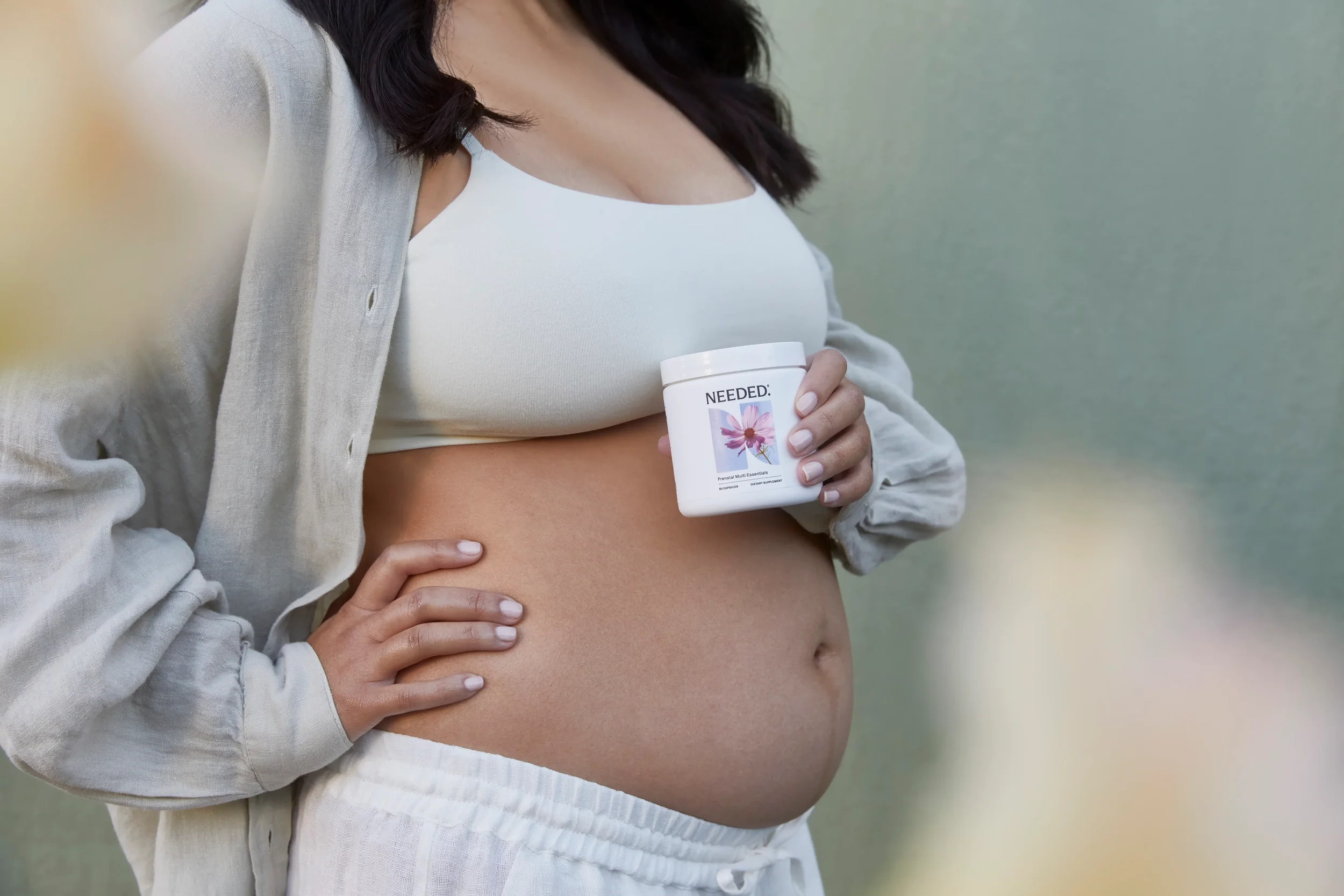
That’s why my wife and I personally trust and recommend Needed Prenatal.
It’s one of the few prenatals that aligns with how nutrients actually work in the body—using active forms, clinically relevant dosing, and a formulation designed for real physiological demands, not marketing claims.
It’s also the prenatal my wife, a registered dietitian, chose to take herself, which matters to us. When we recommend something in this space, it’s because it meets both professional standards and personal ones.

Is It Ever “Too Late” to Improve Fertility Nutrition?
No.
While early pregnancy is a critical window for organ development, nutrition always matters. Improvements made during pregnancy, postpartum, or even between pregnancies still influence maternal health, breast milk composition, and long-term outcomes for both mother and child.
Perfection isn’t the goal. Progress is.
Real food provides resilience. Even when research evolves—and it always will—whole foods consistently deliver nutrients we may not fully understand yet.
The Bigger Picture
Fertility isn’t just about getting pregnant. It’s about creating the conditions for a healthy pregnancy, a resilient baby, and long-term family health.
When couples shift from restriction to nourishment, from ultra-processed convenience to real food, they often discover that fertility isn’t something to chase—it’s something the body allows when it finally feels safe enough to do so.
SHOP LILY’S BOOKS
The Lily Nichols Library
Tap a book to shop it on Amazon. These are Lily’s best-known, research-backed resources.
 Fertility
Real Food for Fertility
Food + lifestyle upgrades that support conception for both partners.
Shop on Amazon →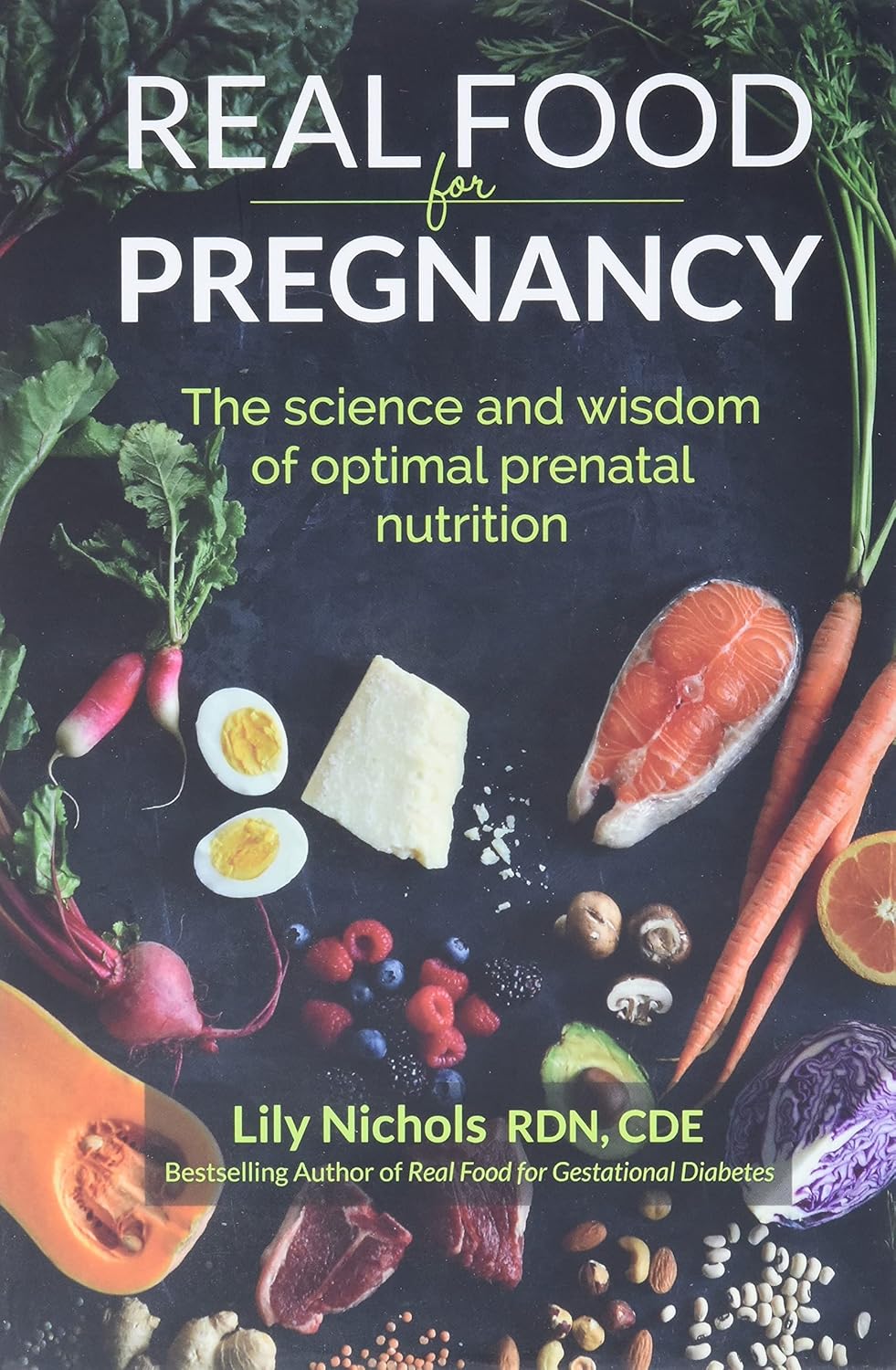 Pregnancy
Real Food for Pregnancy
The most comprehensive real-food prenatal nutrition guide I’ve found.
Shop on Amazon → Blood Sugar
Real Food for Gestational Diabetes
A practical approach to blood sugar that doesn’t rely on ultra-processed “diet” foods.
Shop on Amazon →




A science-based look at how beef liver supports fertility through key nutrients like vitamin A, choline, folate, and B12 - and why we included it during the months leading up to pregnancy.