Eat Like a Human: Why Modern Diets Are Failing Us, and What Ancestral Food Got Right
Featuring Dr. Bill Schindler
Eat Like a Human: Why Modern Diets Are Failing Us, And What Ancestral Food Got Right
A deep conversation with archaeologist and author Dr. Bill Schindler on how humans actually evolved to eat — why food processing isn’t the enemy, how fermentation transformed nutrition, and what modern diets are getting wrong.

Author
Craig McCloskey
Certified Nutritionist
Modern nutrition conversations are almost always framed around one question: What should we eat?
But according to archaeological, anthropological, and biological evidence, that may be the wrong place to start.
A better—and far more important—question is how should humans eat?
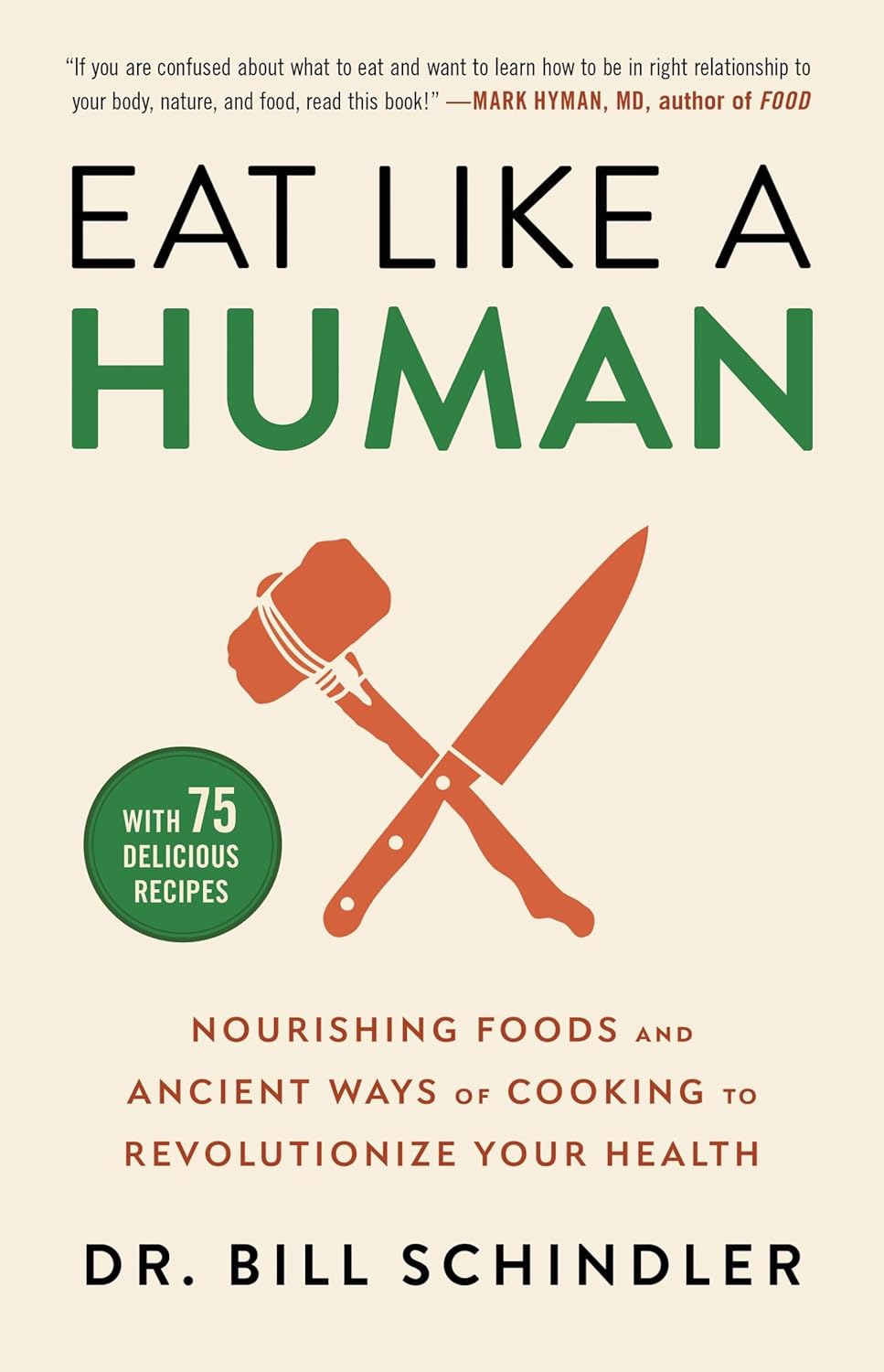
That distinction sits at the heart of my recent conversation with Bill Schindler, an archaeologist, primitive technologist, and author of Eat Like a Human. His work challenges nearly every assumption modern culture holds about food, health, and so-called “processing.”
What emerges is not a rigid diet framework, but a deeper understanding of how humans have always used tools, fermentation, and animal foods to nourish large brains, resilient bodies, and long health spans.
Why Modern Nutrition Feels So Confusing
One of the great paradoxes of modern life is that we have unprecedented access to food, yet chronic disease, metabolic dysfunction, digestive disorders, and nutrient deficiencies are the norm—not the exception.
Historically, humans didn’t need food pyramids, macro calculators, or supplement stacks just to feel functional. For most of our evolutionary history, food was deeply integrated with environment, culture, and survival. It wasn’t abstract. It wasn’t outsourced. And it wasn’t ultra-processed.
Today, we are overfed but undernourished—a consequence not of eating the “wrong” foods necessarily, but of eating foods that have been stripped of the processes that once made them nourishing.
This is where Schindler’s framework becomes powerful.
Humans Are a Technological Species—Especially With Food
Humans are biologically unusual. Compared to other animals, we have relatively weak jaws, small teeth, limited digestive capacity, and short intestines. On paper, we shouldn’t thrive.
Yet we do—because humans evolved not by developing stronger digestive systems, but by externalizing digestion through technology.
These weren’t conveniences. They were biological necessities.
This applies to all diets—animal-based, plant-based, or mixed. No human diet exists without technology.
Animal Foods: High Input to Acquire, Low Input to Digest
One of the most misunderstood aspects of ancestral diets is the role of animal foods.
From a biological standpoint, animal foods are uniquely nutrient-dense and bioavailable. Once an animal is obtained—through hunting, trapping, or fishing—very little processing is required to access its nutrients. Fat, organs, blood, and connective tissue are already biologically compatible with human digestion.
This is why early human brain expansion coincides not with scavenging meat scraps, but with hunting entire animals and consuming all parts—not just muscle meat.
Organs like liver, heart, kidney, marrow, and blood provided dense concentrations of fat-soluble vitamins, minerals, and amino acids that muscle meat alone cannot supply.
In modern diets, this diversity has largely disappeared.
Plant Foods: Low Input to Acquire, High Input to Digest
Plant foods represent the opposite challenge.
Wild plants often contain toxins, anti-nutrients, and fibers that are difficult—or impossible—for humans to digest without some form of processing. Historically, humans didn’t eat raw grains, legumes, or many vegetables as-is.
They fermented them.
Soaked them.
Sprouted them.
Cooked them slowly.
These processes didn’t destroy nutrients—they unlocked them.
Modern food systems, however, have preserved the appearance of plant foods while removing the biological processes that made them digestible. This is especially true for grains.
Why Most “Sourdough” Isn’t Actually Sourdough
True sourdough bread involves two simultaneous fermentations: yeast and bacteria. The bacterial fermentation lowers pH, degrades gluten, reduces phytic acid, lowers glycemic response, and improves mineral absorption.
Historically, every loaf of bread—from roughly 8,600 years ago until the mid-1800s—was fermented this way by default.
Modern “sourdough” often skips this process entirely, adding acids to mimic flavor while leaving the grain biologically unchanged. Nutritionally, this makes it function closer to refined white bread than traditional sourdough.
The takeaway isn’t to fear bread—but to understand how you can prepare bread to make it more nutrient-dense and safer to eat.
Practical tip: If bread doesn’t require time, fermentation, or patience, it likely isn’t doing your digestion any favors
Processing vs. Ultra-Processing: A Critical Distinction
One of the most important clarifications from this conversation is that processing itself is not the enemy.
Historically, food processing served three purposes:
Improved safety
Increased nutrient density
Enhanced bioavailability of nutrients
Ultra-processing, on the other hand, prioritizes shelf life, profit margins, transportability, and hyper-palatability—often at the expense of nutrition.
Cutting meat off a bone is processing.
Fermenting vegetables is processing.
Cooking soup is processing.
But refining grains, removing fats, adding industrial seed oils, emulsifiers, and synthetic vitamins—this is something entirely different.
Turning a field of wheat or corn into Lucky Charms is an example of ultra-processing, and your ancient biology doesn’t recognize it the same it would recognize long-fermented sourdough or nixtamalized corn (which both are far more delicious than Lucky Charms, btw).
Industrial Seed Oils and the Loss of Traditional Fats
For most of human history, dietary fats came from animals: butter, ghee, tallow, lard, schmaltz, and rendered fat. These fats were stable, calorie-dense, and biologically familiar.
The modern replacement—industrial seed oils—are a recent invention, created through chemical extraction and refining processes never encountered in human evolution.
Reintroducing high-quality animal fats isn’t regressive—it’s restorative.
Can Any Food Be Made Healthier?
One of the most freeing ideas discussed is that almost any food can be made healthier—if prepared properly.
Pizza isn’t inherently unhealthy. Ultra-processed pizza is.
Bread isn’t inherently harmful. Unfermented bread is.
Even alcohol—when traditionally fermented without additives—exists in a different category entirely than modern industrial versions.
The goal isn’t perfection. It’s reducing distance between yourself and your food.
Cook more. Ferment occasionally. Know your sources. Ask questions.
Bringing It Back to the Home Kitchen
You don’t need to live ancestrally to eat like a human.
You don’t need to hunt your food or ferment everything you eat.
But small shifts matter:
Choosing traditionally prepared foods when possible
Using stable animal fats instead of refined seed oils
Supporting producers who prioritize biological processes
Supplementing strategically where modern life creates gaps
Health isn’t found in restriction—it’s found in alignment.
Final Thoughts
If there’s one message worth carrying forward, it’s this:
Human nutrition didn’t evolve in a lab. It evolved through time, environment, culture, and necessity. When we honor those processes—even imperfectly—we give our bodies something they recognize.
And that may matter more than any macro split or diet trend ever could.
This article was informed by a long-form conversation with Dr. Bill Schindler, author of Eat Like a Human, and reflects concepts discussed in the accompanying YouTube interview.
SHOP DR. BILL'S BOOKS
The Dr. Bill Schindler Library
Tap a book to shop it on Amazon. These are Dr. Bill's best-known, research-backed resources.




A new peer-reviewed 2026 UC Davis study tested 74 chips, salad dressings, and mayonnaise products labeled with avocado oil to determine whether they were compositionally consistent with authentic avocado oil. In this article, we break down the findings, explain what they mean for consumers, and include a searchable database showing which products passed and which did not.