Is PCOS and Infertility Reversible? What the Science and Real Stories Say
Featuring Dr. Ken Berry, Neisha Salas-Berry, RN, & Meg Connolly
Is PCOS and Infertility Reversible?
A long-form exploration of PCOS, infertility, insulin resistance, and inflammation — and how diet, lifestyle, and metabolic health may play a far bigger role in fertility than we’ve been told.

Author
Craig McCloskey
Certified Nutritionist
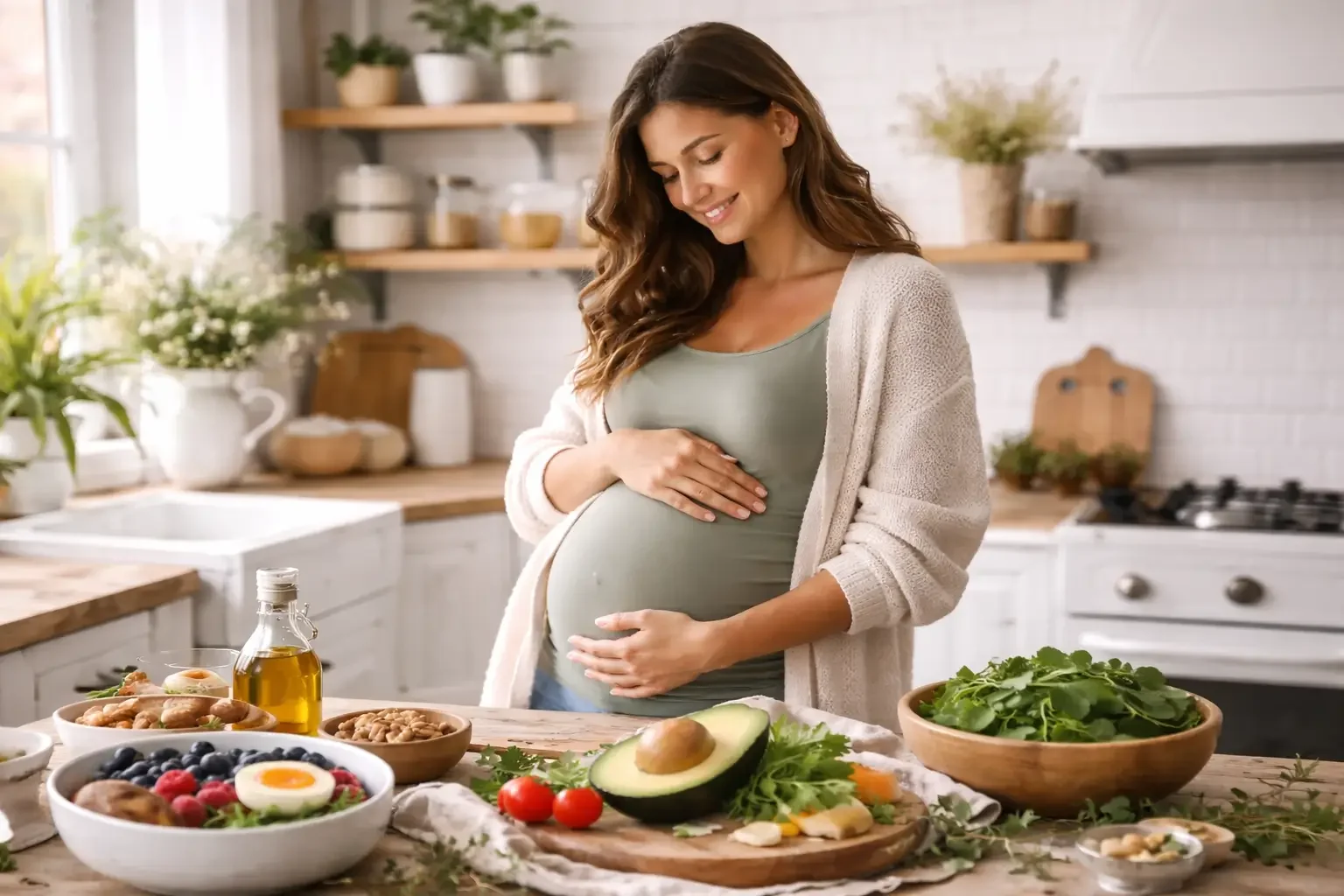
According to the World Health Organization, roughly one in six people worldwide struggle with infertility. That number alone should stop us in our tracks. Even more alarming is the fact that the most common diagnosis tied to infertility in women is polycystic ovarian syndrome (PCOS) - a condition that has become so normalized that it’s often treated as inevitable rather than reversible.
The mainstream approach to PCOS and infertility usually follows a familiar script: birth control, hormone manipulation, prescription drugs, and the promise of “managing symptoms.” But for many women (and men), this never answers the deeper question:
Why is the body struggling to reproduce in the first place?
That question is what led me to create this video and this accompanying article. Because when you zoom out far enough, fertility is not just about ovaries, sperm, or hormones in isolation - it’s about whether your body perceives the world around it as safe and abundant enough to create new life.
And that perception is shaped every single day by how we eat, how we move, how we sleep, and what we expose ourselves to.
Fertility as a Signal, Not a Switch
One of the most important reframes you’ll hear in this conversation comes from Dr. Ken Berry, who has spent over two decades working with patients struggling with chronic disease - including infertility and PCOS.
PCOS, despite its name, has very little to do with ovarian cysts themselves. At its core, it is largely driven by chronic hyperinsulinemia and systemic inflammation. In other words, it’s a metabolic and inflammatory condition long before it’s a reproductive one.
What’s striking is this: when women with PCOS are surveyed about their diets, the vast majority are eating what looks eerily similar to the Standard American Diet - heavy in processed foods, refined carbohydrates, seed oils, and nutrient-poor calories. Virtually no one develops PCOS because they ate too much steak, eggs, or organ meat.
So the logical question becomes: what happens when you do the opposite?
Clinicians like fertility specialist Dr. Robert Kiltz (mentioned in the interview) have observed that when patients shift toward high-fat, nutrient-dense, animal-based diets, fertility markers often improve - not just in women, but in men as well. Sperm count, motility, and quality are deeply tied to metabolic health and micronutrient sufficiency, something that rarely gets discussed in fertility conversations.
Fertility, in many ways, acts like a biological report card. When energy availability is high, inflammation is low, and nutrition is robust, the body gets the message: it’s safe to reproduce.
“Fertility is a feedback signal — when the body senses safety and nourishment, it’s more willing to reproduce.”
A Personal Story: Neisha’s Path to Pregnancy
One of the most powerful moments in the video comes from hearing the story of Neisha Salas-Berry, Dr. Berry’s wife, who struggled with infertility and autoimmune thyroid disease while undergoing IVF.
At the time, Neisha had been diagnosed with Hashimoto’s and was already experimenting with ketogenic eating. Eventually, she decided to try a fully carnivore approach before another IVF attempt - not expecting a miracle, but hoping to support her health.
While IVF was still necessary, something important happened underneath the surface: her body became more resilient. Pregnancy was successful. Postpartum recovery improved. And when she later returned to a very meat-heavy, high-fat diet - combined with strength training and lower stress - something unexpected happened.
Six weeks after deciding she was “done having kids,” she became pregnant naturally.
What stands out isn’t just the pregnancy itself, but the pattern: when her body was consistently receiving dense nutrition and clear signals of abundance, fertility followed.
When “Healthy” Isn’t Actually Nourishing
The final interview in the video may resonate deeply with many women today. Meg Connolly spent nearly 17 years following a vegan diet. Despite doing “everything right” by conventional wellness standards, her health began to unravel.
She had previously been diagnosed with endometriosis - a condition affecting roughly one in ten women - and later developed ovarian cysts, fibroids, and eventually PCOS. Her fertile window shortened. Hormonal symptoms worsened. Something was clearly off.
After receiving standard dietary advice that included avoiding butter and cooking with soybean oil, she had a moment of clarity: this looked nothing like the way her grandmother lived - a woman who had eight healthy children.
That realization sent her down a different path.
Meg began removing industrial seed oils, reintroducing red meat and animal foods, prioritizing organic ingredients, and focusing on nutrient density. She added raw dairy, fruit, honey, and targeted organ-based supplements - including formulations designed specifically for female health and fertility (this is where many people choose to explore Ancestral Supplements).
Within four months, her blood work told a radically different story.
PCOS markers resolved. Insulin resistance reversed. Cortisol normalized. Hormonal acne disappeared. The “string of pearls” appearance on ultrasound was gone.
And perhaps most remarkable of all: endometriomas - cysts that rarely shrink on their own - began shrinking naturally.
Two years later, her surgeon reviewed the imaging and told her simply: “Whatever you’re doing, keep doing it.”
“For many people, the fastest fertility wins come from removing the obvious: ultra-processed foods, refined sugars, and industrial seed oils.”
▶️ Watch the Full Video Here
Read the full transcript
One in six individuals worldwide struggle with infertility according to the World Health Organization. And the number one reason for infertility is PCOS, polycystic ovarian syndrome. And mainstream recommendations to manage the symptoms of infertility like PCOS is to take birth control or other forms of prescription drugs. But this never gets to the root cause of what is actually causing infertility in women and even men in today's culture. But you're going to hear from three individuals today that how you live your life matters in the context of becoming fertile or not. One of those individuals is Dr. Ken Barry who is a top carnivore doctor in this space and he has worked with patients for the past 20 years helping them to not only treat but reverse a lot of their chronic conditions including PCOS just by making subtle shifts in their lifestyle and dietary changes. One of our other guests in this interview is his wife, Nisha Salisberry, who struggled with infertility for years. And she shares a very personal and powerful story about how when she included more nutrient-dense foods into her diet and avoiding ultrarocessed foods and living a more ancestral way of life, she immediately had two kids with Dr. Ken Barry. And the last interview that you're going to hear is with Meg Connelly. And this was a very, very powerful interview. She shared with me how she was vegan for nearly 17 years and how including just a little bit more animal foods into her diet and making subtle lifestyle shifts in her environment, she achieved some serious results. You're not going to want to miss out on what I have to say after her interview ends. So, when you're ready, let's jump into this first interview with Dr. Kenberry and Nisha Salisberry. The most common cause of infertility is polycystic ovarian syndrome which has nothing to do with the cysts. It has to do with hyperinsulinemia and chronic inappropriate inflammation. That's the most common cause of infertility. 80% cause and I no woman ever developed PCOS because she was eating too much meat and too too much organ meat. Literally no. If you if you did a a survey, which they you know the gynecologists and obstitricians have done this, when you poll women with PCOS, what's your average diet? It's 70% commodity plants. Like they're literally living on the standard American diet. So you you then you would say, "Okay, well maybe if you did the opposite of that, that might help heal your body, lower your insulin, lower the inflammation, and increase your fertility if you ate lots of meat, eggs, and seafood." And indeed, uh, a specialist like Dr. Robert Kilts, who's board certified fertility specialist, he puts every mom who comes into his clinic trying to conceive on highfat carnivore. Wow. and liver. Liver and the dads. That's another thing that doesn't get talked about a lot is sperm count, sperm quality, sperm motility. All of that increases as well on a proper human diet consisting mainly of fatty cuts of meat. And so fertility is an excellent signal that you're doing enough things right, that your ancient DNA trusts that now is a good time for you to reproduce. Now there seems to be enough nutrition that you could not only not starve to death, but you could keep another human alive as well. So let's go ahead and pull the levers and let you get pregnant. But if you're living on a nutrient void plant-based diet full of calories but empty of nutrition, what signal are you sending your body? You're literally telling your body this is not a good time to get pregnant. Whether you're the dad or the mom, it matters. Nisha, you were telling me earlier that uh you know living a more ancestral lifestyle, putting these practices that we just talked about actually helped fertility and postpartum with you during during that time of your life. Can you tell me a little bit about that? Yeah, so right when we figured out I had autoimmune Hashimoto's was when we were going through IVF. Um, and we gave it another year of eating, we were doing keto at the time. Maybe you were already doing carnivore, but I was like, we're not doing that. Um, then we followed Dr. Kilts and he was promoting carnivore. He's a fertility specialist. And so right before we did our IVF, I went carnivore just to see maybe we'd get lucky. We didn't. But it did prime my body, I think, to be very healthy. We only had one egg, just the one. And we were successful and had a successful pregnancy. And Becket was healthy, and I did as close to keto as I could during that first pregnancy, but it wasn't great. Um, had a hard time. And then after I had Becket, I went straight back to carnivore. Uh, because I knew as a woman, when you got pregnant, you're way more prone to having thyroid issues pop up after pregnancy. and I really wanted to help my body recover. Um, I craved liver through both of my pregnancies, but then I went back to eating heavy meat again. Uh, I healed pretty well, breastfed successfully and I continued to do this meat-based ketoore thing. And, um, then Becket had just turned two and we hadn't got pregnant and we thought we would do one more kid, give it another try, but I decided I'd had enough. Becket was a lot. No more kids. You need to go get Had the conversation. You need to go see the plumber. You need to go to the doctor. I'm like, "Okay, fine. If you're done, we'll be done." And uh six weeks later, I was pregnant naturally. And I had been eating very, very meat heavy. Probably more meat heavy than I currently am. And I was working out, eating very highfat, and I was skinny. I mean, everybody was giving me a lot of crap like, "You're too thin. You're too thin." And I think I was 100 pounds. Clearly, my body thought I was fine because I got pregnant and we had Bonnie Blue 9 months later and exclusively breastfed with her, too. And I just had it had to be that I was eating meat heavy because I'd been on and off carnivore and keto and but that year I was really meattheavy. You were sending your body signs of abundance is what I like to call it. you know, you're putting your your body, your biology in a safe place to let you know that this is okay to bring a child into this world. That's how I like to think of it. Um, my wife and I, I told you guys, we were recently pregnant, and that's something that we focused on was eating a very animal-based style diet and, uh, living, you know, ancestral principles, and it's been amazing for us thus far. Just a little background, about 10 years ago, 8 years ago now, I got diagnosed with endometriosis. So, for those who don't know what endometriosis is, it's a disease where tissue similar to the inside of the uterus grows on the outside of the uterus. One in 10 women have it. It causes very significant painful periods, infertility. So, when I got diagnosed with endo, I actually was previously a vegan because I didn't know what I didn't know at the time. And with the condition that I had, my body was rejecting all sorts of foods. Now, fast forward about 6, 7 years, married to my husband, I noticed that I was in a cycle of infertility, not just with having some painful periods, but I also noticed that I was um my fertile window was getting really short, which was a red flag to me. And because of what I had been through with endometriosis, I actually am very in tune with my body and hyperritical of what my cycles look like even when I was at my healthiest postsurgery when I got diagnosed with endo. And so I went back to have some tests done and on an ultrasound they actually noticed that I had had an endometrioma cyst. So it's a type of cyst the size of a lime on my left ovary. One the size of a grape. I had a polycystic ovarian syndrome in my both of my ovaries which I had never had before and I had a fibroid protruding into the uterine cavity. So this now explained the season of infertility that I was in. And at that time I had just gone from going 17 years without dairy, 13 years without red meat. When I got all of this news about, you know, multiple cysts, you know, infertility and so forth, I started really reflecting about what I was putting in my body and on my body. And I actually, you know, I'm a spiritual person, so in prayer, I thought about my grandmother. And my grandmother had eight healthy children. And I realized the way that she ate and the way that she lived was the exact opposite of what I was doing. when I got the PCOS diagnosis along with, you know, the endo possibly coming back, but they actually gave me in the description of what to do just did not resonate at all. They told me to cook with soybean oil, avoid butter, and then I thought about my grandmother and I was like, my grandmother did the polar opposite of all of these things. I don't even know if these foods existed back then. And so I decided, you know what? I am going to do some research. So that's actually how I found ancestral supplements was when I was going down the rabbit hole of PCOS, female health, holistic health, you know, the natural way of doing things. And then I realized it also coincided with, you know, the content that you guys put out on your social platforms and, you know, people in this realm of ancestral living put out live very similarly to the way that my grandmother had lived. So, I decided that I was going to just be very disciplined and very dedicated to eliminating all industrial seed oils from my diet, really start going, you know, eating red meat again. And that's when I started raw dairy, honey, fruit, and going fully organic and starting to take ancestral supplements. In the beginning, I mean, I just bought everything. I was like, let me just try all of this and see what what works. So, I was on the fe them formula, which I actually have. I'm still taking it right here. And then beef organs, fish eggs. I actually have all of them right here right now, too. In four months, PCOS was reversed entirely. So, I even have the blood work to prove it. So, when I had the blood work with the diagnosis, I was actually on borderline insulin resistant. And then 4 months after when I had my CBC and and full blood panel, I was insulin sensitive and my blood work was completely stabilized. In addition to that, for years, I had dealt with chronically high cortisol. And my cortisol for the first time in four years was actually at a healthy range. And so with that, I was also monitoring how my body felt. And while I was going through this, you know, obviously I had the data to work with because I'm very big on data in addition to how I feel. I realized that I wasn't having the significant pain that I was having anymore. And I was having a normal fertile window again, which was something that was concerning me, you know, prior to the diagnosis. When I went for the ultrasound, the string of pearl appearance was gone. Like there was no PCOS anymore. The the follicular cysts that I had had were gone. The hormonal acne that I experienced was gone. And like I mentioned before, I was now insulin sensitive versus being insulin resistant. So that was very clear to me that I needed to continue on this journey to see you know where my body was going and also I still had you know a giant endometrioma cyst two of them on one ovary and so at that point I had reconnected with my surgeon cuz I thought maybe I'll reexplore surgery. Now, it's been 2 years after, you know, the cyst the size of a lime. It's now about a third of the size, just shrinking naturally. These types of cysts, and I'm just saying this very clearly, endometrioma cysts don't really typically shrink on their own. It just doesn't happen. And so, when I went back to my surgeon with this data and told him what I had been doing, he's like, "Whatever you're doing, just keep doing it because it's clearly working." I feel amazing now. And honestly, like it's a lifestyle to me and this is why I've started sharing so much about it because it's really changed my life. There you have it. I hope your mind was just as blown as mine was when I was interviewing these folks. The main takeaway from this is how you live your life matters. that what you eat and what you don't eat and how you expose yourself in your environment by getting outside, getting some sun on your skin, moving your body, and avoiding environmental toxins, and just living an overall healthy lifestyle can drastically improve your chances of becoming fertile. Because, as I said in that video, you want to put your body in a state of abundance. This goes for men and women. When you are sending signs of abundance to your body from eating nourishing foods, all the vitamins, all the minerals, and exposing yourselves to a stress-free or a low stress environment, a low toxic, a non-toxic environment by avoiding all the environmental pollutants that we have in this world. When you are telling your body that this is a safe place to become fertile, this is a safe place to bring a baby into this world, your body is more likely is going to want to bring a baby into this world. But if you are primarily eating nutrient poor foods like ultrarocessed foods, eating a ton of sugar and seed oils and refined grains and all these random chemicals up and down the supermarket aisles, not getting sun, getting a ton of artificial light inside your home and working a very high stress job and not getting the proper amount of sleep, your body is constantly going to be in a a state of fight or flight and you never really get to get into that rest and digest state. your body is not going to want to bring a child into this quote unquote unsafe world. So the main takeaway is to really just send signs of abundance to your body. And with that last interview where I interviewed Meg Connelly, she was telling me how her cysts had shrunk. You could see there on the scans that they had shrunk down to minimal levels. Well, just a month after I released that interview, she texted me with a follow-up text. And I want to read you what she said. She said, "Craig, I just had an ultrasound and literally have no cyst at all. This is wild." She said, "Remember from the YouTube video how big it was and I shrunk one entirely and the other one down a lot? The other one is gone entirely." She did that just by changing her lifestyle. She did that with no medications, by the food that she ate and the food that she avoided, how she lived her life. That is what it's all about. But as humans, our bodies expect certain things from our environment to just be healthy. Every living thing in this universe, in this world, expects certain things from nature to be healthy. And incredible things happen when you give your body the nutrients it needs to thrive and function. Incredible things happen when you place yourself outside away from artificial lighting, underneath sunlight, avoiding all the environmental pollutants, and getting natural movement and good quality sleep. When you can do that, you are more likely to sense signs of abundance to your body that this is a safe place to bring a baby into this world. So, that is the major takeaway for today. I hope you enjoyed this episode with Dr. Kenberry, Nisha Salisberry, and Meg Connelly. These were some of my favorite interviews that I've done. If you feel compelled, leave your own fertility story in the comment section below. I'm sure there's so many other people that can resonate with you and share their tips about what they did to help or that hurt them or that helped
This is where you’ll hear these stories in their own words - the nuance, the emotion, and the context that’s hard to capture fully in writing.
The Concept That Ties It All Together: Abundance vs. Survival
Across all three stories, a single theme keeps surfacing: the body is always adapting to its environment.
When food is nutrient-poor but calorie-dense, when stress is high, sleep is poor, light exposure is artificial, and toxins are constant, the body stays locked in survival mode. In that state, reproduction is not a priority.
But when you begin sending consistent signals of abundance - through nourishing food, adequate protein and fat, micronutrient sufficiency, sunlight, movement, rest, and reduced toxic load - the nervous system shifts. Inflammation quiets. Hormones stabilize.
Fertility often follows.
This applies to both women and men. Sperm health is just as sensitive to insulin resistance, oxidative stress, and nutrient deficiencies as ovarian function is.
“When you consistently send your body signals of abundance, it often responds with better energy, better hormones, and better fertility.”
A Follow-Up That Says It All
About a month after releasing my interview with Meg, I received a text from her that stopped me in my tracks.
“Craig, I just had another ultrasound. I have no cysts at all. The other one is completely gone. This is wild.”
No medications. No new procedures. Just sustained lifestyle change.
That’s not to say every fertility journey will look the same - or that food alone is always the answer. But stories like this force us to confront an uncomfortable truth: many of the conditions we call “chronic” may simply be adaptive responses to a mismatched environment.
Final Thoughts: Rebuilding Trust With Your Biology
Your body isn’t broken. It’s responsive.
Every day, it’s listening for cues: Is food abundant? Is stress manageable? Is the environment safe? Are the nutrients required to sustain life present?
When the answer becomes “yes” often enough, remarkable things can happen.
If there’s one takeaway from this article and the video, it’s this: fertility isn’t something we force - it’s something we earn back by aligning our lives with what the human body expects.
If you’ve walked your own fertility path - whether it led to healing, pregnancy, or deeper understanding - I’d encourage you to share your story in the comments. You never know who might need to hear it.




A new peer-reviewed 2026 UC Davis study tested 74 chips, salad dressings, and mayonnaise products labeled with avocado oil to determine whether they were compositionally consistent with authentic avocado oil. In this article, we break down the findings, explain what they mean for consumers, and include a searchable database showing which products passed and which did not.