The Proper Human Diet: Why Ancestral Eating Still Matters in a Modern World
Featuring Dr. Ken Berry & Neisha Salas-Berry, RN
The Proper Human Diet: Ancestral Eating, Metabolic Health, and Fertility
A long-form conversation on ancestral nutrition, animal-based eating, metabolic health, fertility, and why modern food systems may be driving chronic disease — with Dr. Ken Berry and registered nurse Neisha Salas-Berry.

Author
Craig McCloskey
Certified Nutritionist
If you look at modern nutrition advice, it often feels fragmented. One expert says plants are everything. Another insists carbs are the enemy. Somewhere in the middle, most people are simply confused — eating what’s convenient, what’s marketed as “healthy,” and what fits into a busy life.
But when you zoom out and ask a more fundamental question — what is a proper human diet? — the answer becomes much clearer.
In a recent conversation with Dr. Ken Berry and Neisha Salas-Berry, we explored what it actually means to eat in a way that aligns with human biology, not modern food systems. Their personal journeys — through obesity, autoimmune disease, fertility challenges, and recovery — offer a powerful lens into why ancestral principles still matter today.
This article expands on that conversation, weaving in evolutionary context, clinical insight, and practical application.
Modern Abundance, Ancient Biology
Humans are an ancient species. Our DNA is nearly identical to that of our ancestors from thousands of years ago — yet our environment has changed faster than our biology can adapt.
Today, food is everywhere. Calories are cheap. Convenience is unmatched. And yet, chronic disease, infertility, metabolic dysfunction, autoimmune conditions, and mental health struggles are at all-time highs.
This paradox — eating more while becoming increasingly malnourished — is at the heart of modern health decline.
What’s missing is nutrient density.
Food vs. Commodities
One of the most useful distinctions discussed in the conversation is the difference between food and commodities.
Food is local. It spoils. It nourishes. It once required effort to obtain.
Commodities are designed for storage, shipping, and scale. They don’t rot easily. Bacteria won’t touch them. And they now form the backbone of modern diets.
This shift has profound consequences. You can consume large amounts of calories while remaining deficient in iron, zinc, B vitamins, fat-soluble vitamins, choline, and essential amino acids — a condition often described as malnourished obesity.
Animal foods, by contrast, provide highly bioavailable nutrients that humans have relied on for millennia.
Why Meat Has Always Been Central
This doesn’t mean plants are inherently harmful. It means they were historically supplemental, not foundational.
Dr. Berry emphasizes that while some individuals thrive on near-carnivore diets, others tolerate and enjoy small amounts of whole, unprocessed plant foods. The key is individual response, not ideology.
A Spectrum, Not a Dogma
The idea of a “proper human diet” isn’t rigid. It’s a spectrum.
At one end are people who require a very strict carnivore approach to maintain metabolic health. At the other are those who include eggs, dairy, seafood, and limited plants without issue. What unites all effective approaches is what they exclude: ultra-processed foods, refined sugars, industrial seed oils, and nutrient-empty calories.
As Neisha points out, she doesn’t eat vegetables because she believes they’re magical — she eats them because she enjoys them and tolerates them well. That honesty matters. Nutrition doesn’t need mythology to work.
Where Lifestyle Meets Diet
Ancestral living isn’t just about what’s on your plate.
Sunlight exposure, movement, circadian rhythm, strength, reproduction, and time outdoors all send signals to the body about safety and abundance. These signals influence hormones, immune function, fertility, and long-term resilience.
Modern humans often live in climate-controlled boxes, under artificial light, sitting for hours at a time — then wonder why energy, libido, and metabolic health decline.
Healthspan matters more than lifespan.
Living to 90 means little if those years are spent managing medications, losing independence, or struggling with cognition. Our ancestors may have had slightly shorter lifespans due to injury or infection, but their healthspan — the years lived without chronic disease — was often remarkably robust.
Transcript:
[0:00] Dr. Ken Berry: If you don't have meat in your diet, you're never going to have optimal health. A proper human diet is ancestrally appropriate, a diet that does not increase your risk of disease, and one that can reverse chronic disease.
[0:12] Dr. Ken Berry: While I support carnivore, I’m never going to say plants are trying to kill us. Plants aren’t what got us into the metabolic mess we’re in — it’s commodity foods.
[0:25] Dr. Ken Berry: Don’t eat commodities. Eat food. Commodities make corporations billions and people sick, fatigued, and miserable.
[0:43] Dr. Ken Berry: Most Americans are accidentally plant-based. The standard American diet is 70–75% plant-based — but it’s commodity plants: grains, seed oils, sugar.
[1:15] Craig McCloskey: What are the biggest lifestyle shifts modern humans need to make to live like our ancestors again?
[1:20] Dr. Ken Berry: Humans ate meat as much and as often as they could. The sun is not bad for you — the sun is good for you.
[1:32] Dr. Ken Berry: People say we live longer now, but nobody talks about how sick we are. Who cares if you’re 99 if you don’t know who you are?
[2:24] Craig McCloskey: I’m excited to have you both here and talk about ancestral living. What originally got you started?
[2:54] Dr. Ken Berry: I was a classically trained family doctor and became severely obese and pre-diabetic. I realized people don’t take nutrition advice from fat doctors.
[4:15] Dr. Ken Berry: I followed the ADA guidelines exactly — whole grains, fruit smoothies, jogging — and after 90 days, my labs were worse.
[5:16] Dr. Ken Berry: That’s when I realized maybe I didn’t know anything about human nutrition.
[6:25] Neisha Salas-Berry: I developed autoimmune Hashimoto’s, gained 45 pounds, had severe brain fog, low energy, low libido — I didn’t feel good.
[7:54] Neisha Salas-Berry: Keto helped within a week. The stricter I got, the better I felt. Eventually I did carnivore.
[9:41] Craig McCloskey: How do you balance health, content creation, and family life?
[10:51] Neisha Salas-Berry: I burned out. We had to create strict boundaries — family time is family time. Work time is work time.
[11:44] Dr. Ken Berry: We had our clinic burn down. Our house burned down. When you go through enough hardship, you adapt or you don’t.
[12:25] Craig McCloskey: How do you eat differently under the same roof?
[12:52] Dr. Ken Berry: I’m 99.5% carnivore. I gain weight easily and become diabetic easily. That’s my biology.
[14:16] Neisha Salas-Berry: We respect each other’s boundaries. I don’t bring cake into the house. He doesn’t bring Doritos.
[15:25] Neisha Salas-Berry: Our kids eat an animal-based diet. Meat, some fruit, goat milk. No ultra-processed foods.
[16:32] Dr. Ken Berry: If you care about ethics and the planet, eat local. A steak raised 10 minutes away has a smaller footprint than one shipped across the world.
[18:19] Dr. Ken Berry: It’s our responsibility to support local ranchers if we can afford to.
[20:22] Dr. Ken Berry: When you raise animals, nothing goes to waste. That’s how our ancestors lived.
[23:16] Dr. Ken Berry: Feedlot beef is fed Skittles and cereal. Ruminants aren’t magic — nutrition only comes from what they eat.
[25:05] Dr. Ken Berry: A proper human diet is ancestrally appropriate, nutrient-dense, anti-inflammatory, and reverses chronic disease.
[27:20] Neisha Salas-Berry: Ketovore just means I eat mostly meat with a few foods I tolerate and enjoy. No dogma.
[29:02] Dr. Ken Berry: Wheat, corn, soy, sugar — these are commodities, not food.
[30:31] Dr. Ken Berry: You can eat 70% plant-based and still be malnourished.
[33:54] Dr. Ken Berry: Don’t let ideology override biology.
[35:42] Dr. Ken Berry: 80–85% of chronic disease is driven by what we eat and drink.
[38:24] Dr. Ken Berry: Mimic the food, the sunlight, the movement — not the bed bugs.
[41:11] Dr. Ken Berry: Malnourished obesity is the defining condition of modern America.
[44:17] Dr. Ken Berry: Organ meats are the most nutrient-dense foods humans can eat.
[46:27] Neisha Salas-Berry: Eating meat-heavy helped my fertility, pregnancy, and postpartum recovery.
[50:18] Dr. Ken Berry: PCOS is driven by insulin resistance and inflammation — not meat.
[53:02] Dr. Ken Berry: There is not a single documented case of vitamin A toxicity from eating liver of domesticated animals.
[55:12] Dr. Ken Berry: Freeze-dried organs aren’t as good as fresh, but they’re infinitely better than none.
[56:16] Craig McCloskey: Thank you both for sharing your story and your work.
Fertility, Nutrition, and Biological Safety Signals
One of the most compelling parts of the conversation centers on fertility.
Neisha shares how shifting toward a more meat-based, nutrient-dense diet supported her recovery from autoimmune thyroid disease, improved postpartum healing, and ultimately contributed to natural conception after IVF struggles.
From a biological perspective, this makes sense.
Reproduction only occurs when the body perceives sufficient energy and nutrient availability. Diets low in bioavailable iron, zinc, cholesterol, fat-soluble vitamins, and complete protein can signal scarcity — even when calories are abundant.
Animal foods, particularly organ meats, play a unique role here.
The Case for Nose-to-Tail Nutrition
Historically, no part of an animal was wasted. Organs were often reserved for pregnant women, nursing mothers, or lead hunters because of their exceptional nutrient density.
Liver, heart, kidney, and other organs provide concentrated amounts of iron, vitamin A, B12, folate, copper, and choline — nutrients that are difficult to obtain in meaningful amounts from muscle meat or plants alone.
Concerns about vitamin A toxicity from liver are common, but as Dr. Berry explains, there are no documented cases in the medical literature of vitamin A toxicity from consuming liver of domesticated animals. Nearly all reported cases involve high-dose synthetic supplements or consumption of non-traditional animal livers (such as polar bears).
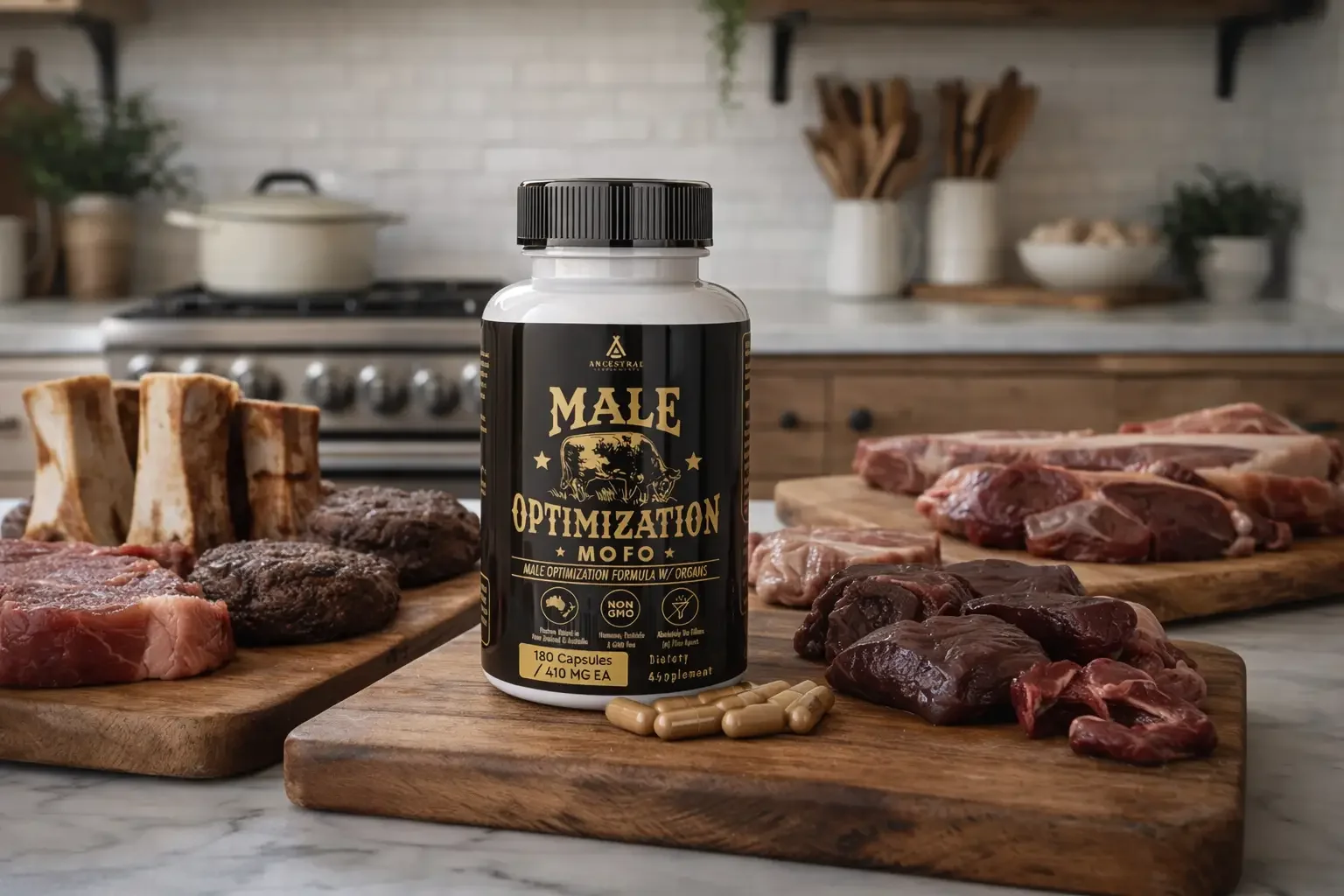
For those who struggle with the taste or texture of organs, desiccated organ supplements can be a practical bridge — not a replacement for whole food, but far superior to omission.
For me, that’s where Ancestral Supplements come in. Their products are made from grass-fed, pasture-raised animals and use a simple, freeze-dried process that preserves naturally occurring nutrients without synthetic isolates or fillers. I don’t view organ supplements as a shortcut — I see them as a realistic way to reintroduce nose-to-tail nutrition when sourcing, preparation, or taste become barriers in modern life.
You can grab yours here and save 15% off sitewide using code CRAIG at checkout.
Ethical Sourcing and Local Food Systems
Ancestral eating doesn’t require homesteading — but it does encourage connection.
Sourcing food locally reduces environmental impact, improves nutrient quality, and restores awareness of where food comes from. When families see animals raised humanely, eggs collected fresh, or meat processed with care, it fosters respect rather than disconnection.
Even small steps — farmers markets, local dairy, pasture-raised meats — matter.
Listening to the Body, Not the Tribe
Perhaps the most important takeaway is this: don’t let ideology override biology.
If a dietary approach supports stable energy, mental clarity, hormonal health, fertility, sleep, and strength long term — it’s likely working. If symptoms persist or worsen, the body is asking for a different input.
Nutrition isn’t about moral superiority. It’s about function.
When diet aligns with biology, the signals are clear: improved metabolic markers, restored cycles, increased resilience, and long-term vitality.
Final Thoughts
Ancestral eating isn’t about going backward — it’s about correcting course.
In a world of abundance without nourishment, returning to nutrient-dense, biologically appropriate foods may be one of the most powerful acts of modern self-care.
Not because it’s trendy. Not because it’s extreme. But because it works.
SHOP DR. KEN'S BOOKS
The Dr. Ken Berry Library
Tap a book to shop it on Amazon. These are Dr. Ken's best-known, research-backed resources.
 Medicine
Lies My Doctor Told Me
Medical Myths That Can Harm Your Health
Shop on Amazon → Blood Work
Common Sense Labs
A Practical Guide to Decoding Your Blood Work & Taking Control of Your Health
Shop on Amazon →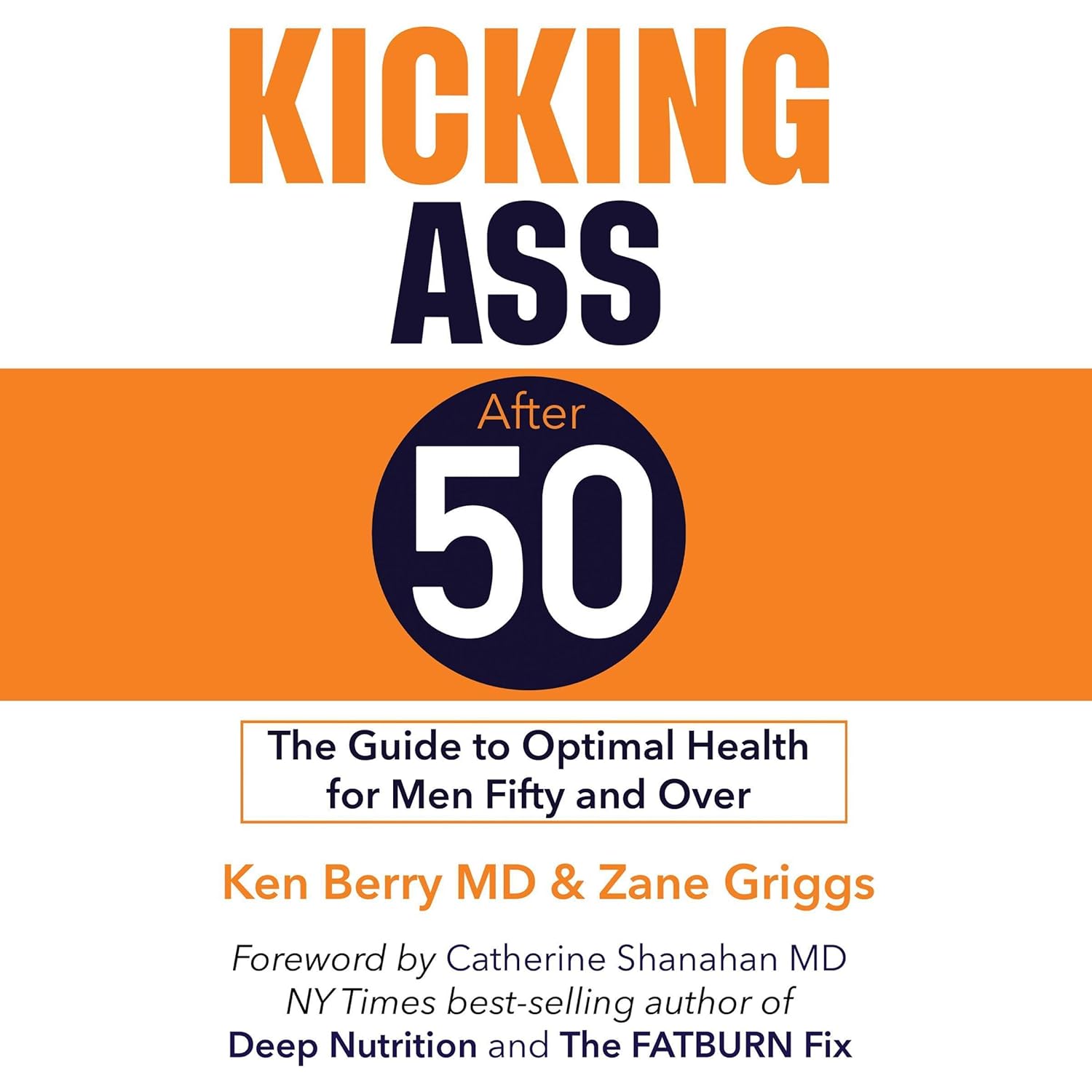 Health
Kicking Ass After 50
The Guide to Optimal Health for Men Fifty and Over
Shop on Amazon →




A new peer-reviewed 2026 UC Davis study tested 74 chips, salad dressings, and mayonnaise products labeled with avocado oil to determine whether they were compositionally consistent with authentic avocado oil. In this article, we break down the findings, explain what they mean for consumers, and include a searchable database showing which products passed and which did not.