Are Vegan Diets Really Healthier? A Scientific Breakdown of Netflix’s You Are What You Eat
DOCUMENTARY REVIEW — VEGAN VS OMNIVORE • STUDY DESIGN • HEART HEALTH
Are Vegan Diets Really Healthier? A Scientific Breakdown of Netflix’s You Are What You Eat
A science-backed review of the Stanford twin study featured in Netflix’s You Are What You Eat — what it actually measured, what it didn’t (like muscle mass), how to interpret LDL vs HDL/triglycerides, and what these short-term results can (and can’t) tell us about long-term health.

Author
Craig McCloskey
Certified Nutritionist
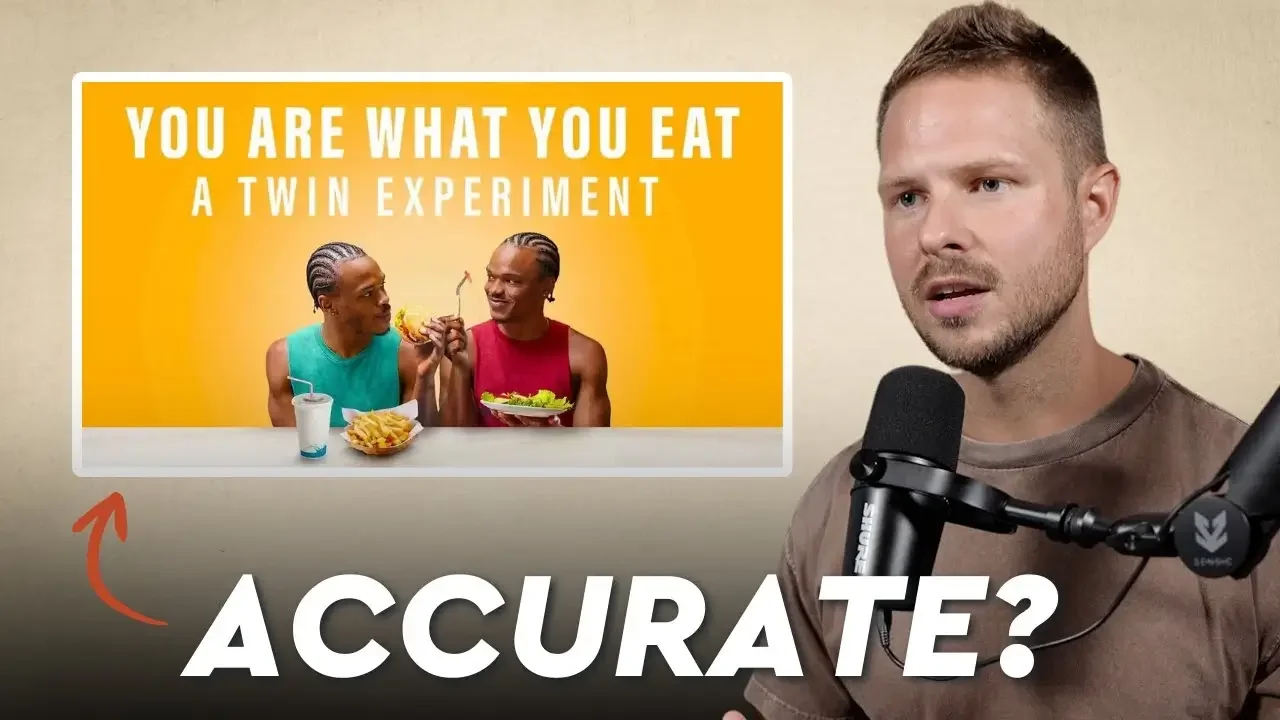
In early 2024, headlines spread rapidly across social media and major news outlets claiming that a vegan diet had finally been proven superior to an omnivorous diet. The source of these claims was an eight-week randomized controlled trial conducted at Stanford University using identical twins—often described as the “gold standard” of nutrition research. The study concluded that a healthy vegan diet led to “improved cardiometabolic outcomes” compared to a healthy omnivorous diet.
Shortly afterward, Netflix announced the release of a documentary based on the same study, You Are What You Eat: A Twin Experiment, amplifying the message even further. For many viewers, this felt like the final word in a long-running debate: plant-based eating had won, and animal foods were once again cast as the villain.
But when you slow down and examine the study design, funding sources, outcome measures, and broader body of nutrition science, the story becomes far more nuanced—and far less definitive.
This article is not an argument against plant foods, nor is it an endorsement of ultra-processed, low-quality omnivorous diets. Instead, it is a critical evaluation of how this study was conducted, what it measured, what it failed to measure, and why its conclusions should be interpreted with caution—especially when used to shape public health narratives.
Why Nutrition Headlines So Often Miss the Mark
Nutrition research is uniquely vulnerable to oversimplification. Diet is deeply personal, culturally charged, and often tied to identity. When a headline confirms what we already believe, we’re far more likely to accept it without scrutiny. When it challenges our worldview, we’re quick to dismiss it.
This cognitive bias cuts both ways. Vegans may uncritically accept claims that plant-based diets are superior, while omnivores may instinctively reject them. Neither response serves truth.
Good science demands curiosity, skepticism, and context. That’s especially important when a study is being promoted alongside a high-profile documentary and presented as definitive proof rather than one small piece of a much larger puzzle.
Watch the Full Breakdown
Below is the full video where I walk through this study, the documentary, and the broader science in detail:
Read the full transcript
[0:00] was there an ulterior motive at play [0:01] here and what you're about to find out [0:03] when we look at this science is that [0:05] some things were measured and some [0:07] things weren't some things were [0:08] deliberately left out of the study and [0:10] it makes you just question things a [0:12] little bit more so right there we got a [0:14] couple red flags earlier this month [0:16] Stanford researcher Christopher Gardner [0:18] released an 8we randomized control trial [0:19] in identical twins comparing a vegan [0:21] diet and an omnivorous diet and now this [0:24] study sent shock waves throughout our [0:25] entire community and many individuals [0:27] believe that this was the final nail on [0:29] the coffin showing that a vegan diet is [0:31] better than eating meat and that eating [0:32] meat is going to give you chronic [0:34] diseases like heart disease stroke [0:35] cancer diabetes and the list goes on and [0:37] on now if you haven't heard about this [0:39] study yet you more than likely will [0:40] because in just a few weeks time on [0:42] January 1st 2024 Netflix is actually [0:45] releasing a documentary talking all [0:47] about this study it's called you are [0:49] what you eat a twin experiment and so I [0:51] want to break all this down today [0:52] because there's a lot of nuances here [0:54] there's some things that weren't talked [0:55] about in the study that are really going [0:56] to surprise you like who funded it the [0:59] background on the researchers the [1:01] science in general what they left out [1:02] what they chose not to include so when [1:04] you're ready let's dive in now before I [1:06] jump in and talk about this study in [1:07] this documentary I first want to take a [1:08] step back and just come at this from an [1:10] open-minded perspective because when we [1:12] see headlines like this one against the [1:14] other vegan is better than carnivore or [1:16] omnivore or vice versa whatever our [1:19] confirmation bias is wherever our [1:20] beliefs lie in that moment we are more [1:22] likely to take that side or if it [1:25] opposes us if we see a headline if we [1:27] are omnivore and we see a headline that [1:28] says vegan is best we're more likely to [1:31] dismiss it or if we're vegan already or [1:33] plant-based and we see a headline that [1:34] says eating meat is is Health promoting [1:37] we're more than likely to dismiss it [1:39] rather than looking open-mindedly at it [1:40] so coming into this I really wanted to [1:42] look open-mindedly at this and just get [1:44] the background check the science and [1:46] just kind of look at this from all [1:47] angles to see what's really going on [1:48] here and I think that's what any good [1:50] researcher and scientist has to do when [1:52] they come into the data because as [1:54] you're about to find out a lot that was [1:56] going on in this study tended to be [1:58] cherry-picked and and this is [2:00] unfortunate because it's leading a lot [2:01] of good- harder people astray now [2:02] jumping into this study like I mentioned [2:04] earlier this month Stanford University [2:06] Professor Christopher Gardner published [2:08] his results of this 8-week randomized [2:10] control trial on identical twins showing [2:13] that quote a healthy vegan diet led to [2:15] improved cardiometabolic outcomes [2:17] compared with a healthy omnivorous diet [2:20] now this is a randomized control trial [2:22] randomized control trial can show cause [2:24] and effect this is different than [2:25] observational or epidemiology based [2:28] studies randomized control trials [2:30] eliminate essentially all variables but [2:32] one and then when there's a a an outcome [2:35] you can show that this one variable [2:37] caused that okay and so that's why these [2:39] are the gold standard of studies and [2:42] this was done on identical twins because [2:44] they share the same genome and if you [2:46] give one diet uh an omnivorous diet to [2:49] one twin and then you give a vegan diet [2:51] to the other twin you can that's that's [2:53] like as gold standard as it gets now [2:55] Christopher Gardner also holds a few [2:56] high ranking positions here in the [2:58] United States now the first one being he [3:00] is a director of the Stanford [3:01] plant-based diet initiative which is the [3:03] pbd which was just launched a couple [3:05] years ago in 2021 we're going to come [3:07] back to that in one second now he also [3:09] sits on the US dietary guidelines for [3:11] Americans which is the nutrition [3:12] committee that is responsible for [3:14] creating school lunches prison uh [3:16] nutrition guidelines and things like [3:18] that he also holds a pretty unique [3:19] position within that committee to lower [3:22] or raise the saturated fat content but [3:24] not only that he is also on the [3:25] nutrition committee for the American [3:27] Heart Association so he holds a lot of [3:29] high ranking positions that can [3:31] influence an entire culture on what they [3:33] can and can't eat not to mention he just [3:35] released this study and he's coming out [3:36] with uh a documentary you are what you [3:38] eat on January 1st now like I just [3:40] mentioned he is the director of the [3:41] Stanford plant-based diet initiative the [3:43] pbd this was launched in 2021 with a [3:46] 5-year Grant by beyond meat this is an [3:49] ultr processed food meat replacement [3:52] company so just take that in and let [3:54] that sit there put that in your back [3:55] pocket we're going to come back to that [3:57] in a little bit now the funding of the [3:58] actual study itself where did that come [4:00] from because when we look at studies and [4:02] we want to look at these objectively and [4:04] unbiasedly we have to look at who funded [4:06] the study well this particular study was [4:08] funded by Kyle vote and he is a member [4:11] of the quote unquote vegan Mafia so what [4:13] is that he is a part of a group of [4:15] Silicon Valley investors who have [4:18] historically invested in vegan focused [4:21] companies not only did he fund this [4:23] study but he also spent more than a [4:25] million dollars funding the Netflix [4:27] vegan documentary the game changers so [4:29] right there we got a couple red flags we [4:32] got to take a step back and just put [4:34] that in our back pocket and just sit on [4:35] that for a second now the more you look [4:37] into this it doesn't take long you can [4:38] watch the trailer of you are what you [4:40] eat the twin experiment and it says from [4:42] the producers of the game changers [4:44] because as I mentioned earlier C vote [4:46] has donated to many vegan films over the [4:48] past several years one of them being the [4:50] game changers back in 2019 but he also [4:53] gave a considerable donation of $600,000 [4:56] to the game changers production company [4:58] Oceanic preservation Society or Ops now [5:01] they're on a mission to create media for [5:04] environmental advocacy you know like [5:06] animal rights and stuff like that well [5:08] the Ops is also the same company that [5:10] filmed this Stanford twin study so they [5:12] produced both the game changers and this [5:15] study and he's also donated to both of [5:17] those now taking this background [5:19] information into consideration these [5:21] conflicts of interest weren't disclosed [5:23] in the study itself this should make [5:25] anyone just take a step back and just [5:28] look at this a little differently and [5:30] ask the question was there an ulterior [5:32] motive at play here and what you're [5:34] about to find out when we look at this [5:36] science is that some things were [5:37] measured and some things weren't some [5:39] things were deliberately left out of the [5:40] study and it makes you just question [5:43] things a little bit more because now [5:45] we're about to jump into this science [5:46] and you're about to see that some things [5:48] were measured and some things were [5:49] deliberately left out of the study [5:51] because they didn't fit the narrative [5:52] which is a Telltale sign of [5:54] cherry-picking and this is what we want [5:55] to avoid so without further hesitation [5:58] let's jump into this study now this [6:00] randomized control trial this lasted for [6:02] eight weeks like I mentioned this [6:04] included 22 pairs of identical twins so [6:07] 44 you can do the math 22 pairs of [6:09] identical twins they were either [6:10] randomized to either healthy vegan diet [6:13] or a healthy omnivore diet and this is [6:16] one twin per diet meals were provided [6:19] for the first four weeks of the study [6:21] the participants were then asked to [6:22] provide their own meals for the last 4 [6:24] weeks now in order to determine which [6:26] diet was healthier the researchers [6:27] needed to test their lipid levels their [6:29] colle cherol their LDL their HDL their [6:31] fasting insulin all those sort of [6:33] metrics and at the beginning of the [6:34] study this is important at the beginning [6:35] of the study ldlc was named as the [6:38] study's primary outcome measure okay so [6:40] this is what they were testing for and [6:42] this was the sole variable upon which [6:43] that they determined their conclusion [6:46] that a vegan diet was healthier than an [6:48] omnivorous diet because when they [6:50] examined the levels of the vegans versus [6:51] the omnivorous participants ldlc was [6:54] indeed lower 13.9 milligram per decer on [6:57] average lower in the vegans compared to [6:59] to the omnivorous group but this [7:00] shouldn't be surprising because all [7:02] plant-based diets do indeed lower ldlc [7:05] in humans because some of the plant [7:06] stero within the plant compounds replace [7:10] some of that cholesterol in in the body [7:12] now this is a super important thing to [7:14] take away they also tested HDL and [7:17] triglycerides among a few other [7:18] variables HDL was lower in the vegans [7:22] compared to the omnivorous diet and [7:24] triglycerides was higher in the vegans [7:26] compared to the omnivorous diet any diet [7:29] that lowers HDL and increases [7:31] triglycerides is not a healthy diet now [7:34] eating that omnivorous diet that healthy [7:36] omnivorous diet void of ultr processed [7:38] foods this increased HDL and this [7:41] lowered triglycerides but it it didn't [7:44] lower LDL the same as vegans now if you [7:46] just look at the LDL if you just look at [7:49] the LDL mainstream would tell you that [7:52] the vegan diet was healthier but it's [7:54] not taking into account all the other [7:56] variables and this is what matters most [7:58] now what was also mentioned in the study [7:59] is that the vegans also had a better [8:01] fasting insulin in spite of consuming [8:02] more carbohydrates which is a little [8:04] interesting but they also lost 4.2 more [8:07] pounds on average than the omnivorous [8:09] counterparts and so this was part of the [8:11] conclusion that a vegan diet is [8:13] healthier they lost more weight their [8:14] LDL went down their fasting insulin went [8:17] down so overall that should be healthier [8:19] than the omnivorous diet but there's [8:21] some caveats to this now they lost more [8:23] weight because the vegan diet they just [8:25] ate less calories than the omnivorous [8:26] diet they ate 200 less calories almost [8:29] 200 less calories on average per day now [8:32] one thing that was not assessed was [8:34] muscle mass did the vegan group lose [8:36] muscle mass because if they lost weight [8:39] was that fat was that water was that [8:40] muscle mass because any diet that causes [8:43] you to lose muscle mass just for the [8:44] sake of losing weight we don't want to [8:46] lose weight and muscle mass we want to [8:47] lose body fat if we have fat to lose if [8:50] they lost muscle mass which we don't [8:51] know because they didn't test for it [8:53] that is not a healthy diet because [8:55] muscle mass is a direct sign of [8:56] longevity just like HDL any diet that [8:59] causes your HDL to go down your [9:01] triglycerides to go up and you to lose [9:03] muscle mass which we don't know [9:05] guarantee that they probably did lose a [9:06] little bit of muscle mass because they [9:08] probably weren't eating bioavailable [9:10] forms of protein because animal Foods [9:13] Meats Dairy are and eggs are high in [9:15] bioavailable protein you can look at [9:17] what proteins are most bioavailable [9:19] which means most absorbable in the human [9:20] body this is the the Diaz score the [9:22] digestable indispensable amino acid [9:24] score and across the board eggs Meats [9:27] Dairy they're all more absorbable and [9:28] your body can use more of that protein [9:30] than you can from say peas and soy and [9:33] Grains and other plant-based sources of [9:35] protein they're just not as digestible [9:36] you don't absorb that Protein that's why [9:39] across the board usually most vegans [9:41] vegetarians plant-based individuals just [9:42] don't have a ton of muscle mass like a [9:44] meat omnivorous diet a meat eater would [9:47] and so we don't know if they lost muscle [9:49] mass that was not assessed so we don't [9:51] want them to lose muscle mass in in this [9:53] 8we trial we want we want HDL to go up [9:55] and we want triglycerides to go down now [9:57] all they did was look at fasting insulin [10:00] they lost more weight which was that [10:01] muscle we don't know and they looked at [10:03] LDL now another reason that the vegan [10:04] group might have eaten less is that on [10:06] their subjective reports that they had [10:07] to track down they had to write how they [10:09] were feeling and what they thought and [10:10] things like that for eight weeks they [10:12] reported less diet satisfaction the [10:15] omnivorous group liked their diet more [10:17] they said they enjoyed their diet more [10:18] whereas the vegans didn't enjoy their [10:20] diet as much now that could be a reason [10:22] why they ate less and they lost more [10:24] weight and some of their metrics did [10:25] improve now that's also a red flag if [10:27] you're not enjoying your diet then [10:29] that's a sign that that probably isn't [10:31] the diet for you or the diet that's [10:33] going to get you results long term [10:34] that's not a healthy diet for you long [10:36] term now here's one of the biggest red [10:37] flags of this entire study I just [10:39] mentioned that they tested for fasting [10:41] insulin and weight loss now the vegan [10:44] group experienced better fasting insulin [10:46] and they lost more weight now the [10:47] problem with these two metrics is that [10:49] the researchers did not list these as [10:51] the original end points that they were [10:52] testing for ldlc was what they were [10:55] testing for they were testing for LDL as [10:56] the primary outcome measure but fasting [10:59] insulin and weight loss was not what [11:00] they were testing for and why is this [11:02] important because when you start seeing [11:04] this these numbers and then you start [11:05] reporting out on these this is a direct [11:07] sign of cherry picking the reason that [11:09] you have to report a primary outcome [11:10] measure at the beginning of a study is [11:12] to prevent cherry picking the fact that [11:14] they listed one ldlc which they knew [11:17] would go down because across the board [11:19] anytime you eat a plant-based diet LDL [11:21] does go down they knew LDL was going to [11:23] go down so they tested for that but they [11:26] weren't entirely sure if weight loss [11:27] would go down they weren't sure if [11:28] fasting insulin would go down but they [11:30] decided to report on it after the fact [11:32] once they saw that it did work so that's [11:33] a sign of cherry-picking now to give [11:35] researchers a little bit of props though [11:37] they did report that the vegan group ate [11:39] 64% less vitamin B12 than the omnivorous [11:42] group now this is not good we want more [11:45] vitamins and minerals and it's very well [11:46] known that plant-based dieters vegans [11:49] vegetarians uh chronically and overall [11:51] eat less vitamin B12 zinc choline [11:54] carnosine carnitine heem iron nutrients [11:57] that are widely available in animal [11:58] foods that you can really only find in [12:00] animal Foods or intentional synthetic [12:03] supplementation now in spite of all this [12:05] the Stanford press released this study [12:07] with a headline that says twin Research [12:09] indicates that a vegan diet improves [12:11] cardiovascular health hey guys so as I'm [12:13] editing this video I realized that [12:15] there's two things that I forgot to [12:16] include that I really wanted to make [12:17] sure I got in this video these two [12:19] things I believe really help to give you [12:22] a more well-rounded perspective of [12:23] understanding not only this study but [12:25] this documentary as well and so what [12:27] these are the first thing is the LDL [12:29] conversation now ldlc is the primary [12:33] outcome metric that the researchers were [12:34] using to determine whether a a vegan [12:37] diet was healthier than an omnivorous [12:39] diet you take LDL away from from this [12:41] study and it has no legs whatsoever to [12:44] stand on now like I had previously [12:45] mentioned there was 22 sets of twins and [12:47] a majority of these twins were female [12:50] and what they were looking for was if [12:52] their LDL C would lower at the end of [12:55] this study and they knew it would [12:57] because all plant-based diets lower LDL [13:00] across the board the problem with this [13:02] is that ldlc is not a significant risk [13:04] factor for developing heart disease in [13:06] women Now where's the science that shows [13:09] this now here's the thing there's many [13:10] different types of LDL there's small [13:12] dense particles there's vldl there's LP [13:14] little a there's so many different types [13:16] of LDL molecules this stands for [13:18] lowdensity lipoprotein this is a [13:19] cholesterol carrier so it's not directly [13:21] cholesterol itself but it carries [13:22] cholesterol to and from the body and LDL [13:24] is what's known as your bad cholesterol [13:26] quote unquote bad cholesterol but [13:27] there's different types of LDL some are [13:29] good and LDL in it of itself is a strong [13:32] antioxidant so we can't just blanket [13:34] statement and say LDL is problematic now [13:36] ldlc is what's believed to be causal or [13:40] associated with heart disease and [13:42] conventional Health experts want to [13:43] lower this so if ldlc was the major [13:45] cause of a sclerosis and cardiovascular [13:48] disease people with the highest ldlc you [13:50] would think should have shorter lives [13:52] than people with low values right well [13:55] in a recent systematic review of 19 [13:57] cohort studies with more than 68,000 [14:00] this fills up an entire football stadium [14:03] more than 68,000 elderly people of aged [14:05] 60 or older the researchers found that [14:08] the opposite was true that the higher [14:11] the ldlc the longer they lived because [14:13] like I just mentioned LDL is an [14:15] antioxidant molecule and it has other [14:17] functions within the body that's [14:18] beneficial if that's not enough in the [14:20] largest cohort study ever conducted [14:23] those with the highest ldlc levels lived [14:26] even longer than those on Statin [14:28] treatment [14:29] but the media won't tell you that the [14:31] media will definitely not tell you that [14:33] high LDL levels caused longer lives than [14:36] taking a drug now to put the final nail [14:38] in the coffin in addition to those two [14:40] studies there have been numerous studies [14:42] in Japanese women that have found that [14:44] high ldlc is not a significant risk [14:46] factor for coronary heart disease [14:48] mortality in women of any age and for [14:51] the men in this study was ldlc a problem [14:53] to begin with it's definitely not a [14:55] problem for the women according to the [14:56] science but what does the science have [14:57] to say for the men in this study in a [15:00] large American study including more than [15:02] 140,000 patients that's two football [15:04] fields that's two [15:06] stadiums 140,000 patients with acute [15:08] myocardial inunction their ldlc at the [15:11] time of admission to the hospital was [15:13] actually lower than normal it was lower [15:16] than normal levels yet they were still [15:18] admitted with acute myocardial inunction [15:22] in another study with the same finding [15:25] the authors decided to lower the [15:26] patient's ldlc even more [15:29] it was already below normal but yet they [15:31] decided to continue to lower it even [15:33] more but at a follow-up 3 years later [15:35] total [15:36] mortality total mortality among those [15:39] with ldlc below 105 milligram a [15:41] deciliter was twice as high compared to [15:43] those with a higher ldlc and that's even [15:46] after adjusting for confounding [15:48] variables so they were able to isolate [15:49] this one component so what this means is [15:52] the more the doctors lowered ldlc levels [15:54] in these patients in 140,000 patients [15:57] the more they lowered it the more the [15:59] risk of death went up they saw more [16:01] death from their patients but yet people [16:03] are still going to see this headline [16:05] people are still going to watch this [16:06] documentary and believe that the vegan [16:08] diet was healthier than the omnivorous [16:09] diet so let's take a step back and look [16:11] at this the researchers made their their [16:14] conclusion that a vegan diet was [16:16] healthier than an omnivorous diet based [16:19] pretty much solely on that one metric [16:21] LDL and it's not even a significant risk [16:23] factor for the women in this study to [16:25] begin with yet they still concluded this [16:28] study by saying quote the healthy vegan [16:31] diet led to improved cardiometabolic [16:33] outcomes compared with a healthy [16:35] omnivorous diet clinicians can consider [16:37] this dietary approach as a healthy [16:39] alternative for their [16:41] patients even though lowering their LDL [16:44] is meaningless they also lower their HDL [16:47] which is not good which we know is a [16:49] significant um metric that we want to [16:51] have high and they raise triglycerides [16:54] which we want to lower now that brings [16:55] me to the second point that I wanted to [16:57] mention and that's at the conclusion of [16:59] this study the researchers then asked [17:01] all the twins all 44 of the twins will [17:03] you continue to follow the diet that [17:05] you're on 21 of the 22 vegans said no [17:09] they will not continue to follow this [17:11] diet by choice because their diet [17:13] satisfactory score was low they did not [17:15] like the diet they were eating only one [17:17] of them said they might continue to eat [17:18] the diet when you include animal [17:20] products as a part of your diet [17:22] unprocessed red meat eggs unprocessed [17:25] Dairy like raw dairy cheeses cafir and [17:28] yogurts and things of that nature when [17:30] you're eating these animal Foods as a [17:32] part of a whole food diet and you're not [17:34] eating Ultra processed foods that were [17:35] really just invented within the past 100 [17:37] years Donuts pizzas and you're not [17:39] eating your animal products with these [17:41] Foods because typically the meat is [17:43] eaten on a pizza as pepperoni and this [17:45] is what researchers call red meat they [17:47] call these things red meat and this is [17:49] how they classify that red meat is [17:51] problematic because it's eaten as [17:53] pepperoni it's eaten as sausage on Pizza [17:55] it's eaten as hot dogs and things like [17:57] that but this is is not what a healthy [17:59] omnivorous diet is and if ldlc goes up [18:02] when you're eating a healthy omnivorous [18:04] diet as a part of a whole food diet the [18:06] science shows that that is not [18:07] problematic and why would it be we've [18:08] been eating these foods for as long as [18:10] humans have existed and it's never been [18:12] we've never had heart disease at [18:13] epidemic proportions like we've had [18:15] until the past 100 years when we started [18:17] including modern-day lifestyle factors [18:19] like smoking drinking excessively high [18:21] stress low s sedentary behavior and [18:24] Ultra processed foods but when you start [18:26] including these Foods into your diet you [18:27] see rates of cancer heart disease [18:30] diabetes they Skyrocket so my message to [18:32] you is do not be fooled by these [18:34] headlines don't be fooled by by films by [18:36] documentaries that have an underlying [18:38] agenda now I tried to come into this [18:39] conversation unbiasedly and looking at [18:42] all angles of This research but what I [18:44] kept coming back to were these things [18:46] that were hidden these red flags that [18:48] just weren't mentioned in the study and [18:51] these metrics that were cherry-picked [18:54] and ldlc that doesn't even matter in [18:57] terms of lowering or raising it in the [19:00] long term because this study only ran [19:02] for eight weeks and you cannot paint a [19:04] long-term Health picture based off of8 [19:06] weeks all they got was that they lowered [19:09] fasting insulin they lost a little bit [19:11] more weight they lowered their ldlc a [19:13] little bit more but we've already talked [19:15] about that and so I appreciate you guys [19:17] for being here now as I wrap up I hope I [19:19] was able to present to you a more [19:20] well-rounded approach to this study and [19:23] if you're going to go out there and [19:24] watch the documentary you are what you [19:26] eat on January 1st I hope you have a [19:28] better view of what went into it who [19:30] funded it what they maybe left out of [19:32] the study what they chose to include in [19:35] the study uh and things like that so I [19:37] hope I could present to you more [19:39] well-rounded information because there's [19:41] a lot that went Untold in this and if we [19:43] are just scrolling on social media or we [19:45] are on Google and we see a headline that [19:47] says a vegan diet is better than an [19:49] omnivorous diet and if our beliefs align [19:51] with that then we are more likely to [19:53] believe that or vice versa and so I just [19:56] wanted you to be more well equipped so [19:58] you knew what went into this now if you [19:59] found this video helpful I would love it [20:01] if you could share this out with [20:02] somebody who you know needs it most and [20:04] if you feel compelled comment in the [20:05] comment section below what your favorite [20:06] takeaway was subscribe give me a follow [20:09] on Instagram I'm cigor MOSI I appreciate [20:12] you so much and I'll talk with you soon
Inside the Stanford Twin Study
Each twin pair was split so that one followed a “healthy vegan” diet while the other followed a “healthy omnivorous” diet. Meals were provided for the first four weeks, after which participants prepared their own food. Because identical twins share nearly identical genetics, this design is often framed as uniquely powerful.
However, even gold-standard designs are only as strong as the variables they choose to measure.
From the outset, the study defined its primary outcome measure as LDL cholesterol (LDL-C). This matters because the primary outcome is what determines whether a study is considered successful or not. Other metrics may be collected, but they are secondary unless specified in advance.
Unsurprisingly, LDL-C decreased more in the vegan group—by an average of about 14 mg/dL compared to the omnivorous group. This result formed the backbone of the study’s conclusion that a vegan diet was, indeed, healthier.
But focusing narrowly on LDL-C raises several important scientific concerns.
The Problem With Using LDL Alone
LDL cholesterol is often labeled “bad cholesterol,” but that shorthand obscures a much more complex reality. LDL particles are carriers, not toxins. They transport cholesterol, fat-soluble vitamins, and antioxidants throughout the body. LDL itself also plays a role in immune defense and oxidative protection.
In other words, lowering LDL in isolation—especially over just eight weeks—does not establish long-term cardiovascular benefit.
What the Study Measured - and What It Didn’t
While LDL-C was emphasized, other metabolic markers told a different story.
Participants following the vegan diet experienced lower HDL cholesterol (often called “good cholesterol”) and higher triglycerides compared to those on the omnivorous diet. Both of these shifts are generally considered unfavorable from a cardiometabolic perspective.
Yet these findings were largely downplayed in public messaging.
Even more notable was what the study failed to measure at all…
Muscle Mass Was Not Assessed
The vegan group lost an average of about 4 pounds more than the omnivorous group. While weight loss is often framed as inherently positive, weight alone tells us nothing about body composition.
Loss of lean muscle mass—especially over short time frames—is a major red flag. Muscle is not just aesthetic tissue; it is metabolically active, strongly linked to insulin sensitivity, glucose disposal, bone density, and long-term longevity.
Without measuring lean mass, the study cannot tell us whether the observed weight loss reflected fat loss, muscle loss, or both.
Post-Hoc Outcomes and Cherry-Picking
The study also highlighted improvements in fasting insulin in the vegan group. However, fasting insulin was not listed as a primary outcome measure before the trial began.
This distinction is critical. When researchers report outcomes that were not pre-specified, it raises the possibility of post-hoc cherry-picking—selectively emphasizing favorable results after seeing the data.
Pre-registering primary outcomes exists specifically to prevent this kind of selective reporting. While secondary findings can still be valuable, they should be interpreted as exploratory, not confirmatory.
Diet Satisfaction and Long-Term Adherence
One of the most overlooked findings in the study was subjective diet satisfaction.
Participants following the omnivorous diet consistently reported higher enjoyment and satisfaction. At the conclusion of the trial, when asked whether they planned to continue their assigned diet, 21 of the 22 vegan participants said no.
This matters more than many realize.
A diet that produces modest short-term biomarker changes but fails on adherence is unlikely to produce meaningful long-term health benefits. Sustainability is not a soft metric—it is a biological one. Humans do not thrive on diets they find restrictive, joyless, or socially isolating.
Funding, Conflicts, and Transparency
Scientific integrity depends on transparency, particularly when research influences public policy and consumer behavior.
The study’s lead author, Christopher Gardner, also serves as director of the Stanford Plant-Based Diet Initiative, which was launched with a multi-year grant from Beyond Meat, a manufacturer of ultra-processed meat alternatives.
Additionally, funding for the study came from individuals known for significant investments in plant-based food companies and vegan media projects. The same production company involved in the Stanford study also produced previous vegan advocacy documentaries.
While funding alone does not invalidate research, undisclosed or under-disclosed conflicts of interest should always prompt closer scrutiny—especially when results are amplified through entertainment platforms like Netflix.
Short-Term Trials Cannot Predict Long-Term Health
Perhaps the most fundamental limitation of this study is its duration.
Eight weeks is sufficient to observe changes in glycogen stores, water weight, lipid levels, and caloric balance. It is not sufficient to assess cardiovascular disease risk, cancer risk, cognitive health, bone density, fertility, or longevity.
Chronic diseases develop over decades, not months. Extrapolating long-term health claims from short-term biomarker shifts is scientifically unjustified—yet this is precisely how the study has been framed in public discourse.
Where Whole-Food Omnivorous Diets Fit In
None of this suggests that plant foods are harmful. Vegetables, fruits, legumes, tubers, nuts, and seeds are foundational to human health.
The issue is the false dichotomy between “vegan” and “omnivorous,” as though omnivorous diets are inherently synonymous with ultra-processed food, sugar, refined oils, and sedentary lifestyles.
A whole-food omnivorous diet built around unprocessed meat, eggs, high-quality dairy, seafood, fruits, vegetables, and minimally processed carbohydrates looks nothing like the standard Western diet—and behaves very differently metabolically.
When animal foods are consumed in their whole, traditional forms—rather than as components of ultra-processed products—they provide nutrients that are difficult or impossible to obtain from plants alone without supplementation, including vitamin B12, heme iron, zinc, choline, carnosine, creatine, and DHA.
Final Thoughts: Read Beyond the Headlines
Nutrition science is rarely settled by a single study—especially one that runs for eight weeks, focuses on a narrow set of biomarkers, and is promoted through a documentary with a clear narrative arc.
If there’s one takeaway from the Stanford twin study, it’s not that vegan diets are superior or inferior. It’s that context matters: what is measured, what is omitted, who funds the research, and how the results are framed.
Health is not built on short-term LDL changes alone. It is built on metabolic resilience, muscle mass, nutrient sufficiency, dietary satisfaction, and long-term sustainability.
As always, question the headlines, follow the science—not the marketing—and choose a way of eating that supports your physiology, your lifestyle, and your long-term health.




A new peer-reviewed 2026 UC Davis study tested 74 chips, salad dressings, and mayonnaise products labeled with avocado oil to determine whether they were compositionally consistent with authentic avocado oil. In this article, we break down the findings, explain what they mean for consumers, and include a searchable database showing which products passed and which did not.