How to Make Your Home Non-Toxic, Room by Room
Take a tour of our entire home
How to Make Your Home Non-Toxic, Room by Room
A practical, science-backed walkthrough of how to reduce toxic exposure throughout your home — covering air, water, lighting, cleaning products, sleep, and the everyday materials that quietly shape your health.

Author
Craig McCloskey
Certified Nutritionist
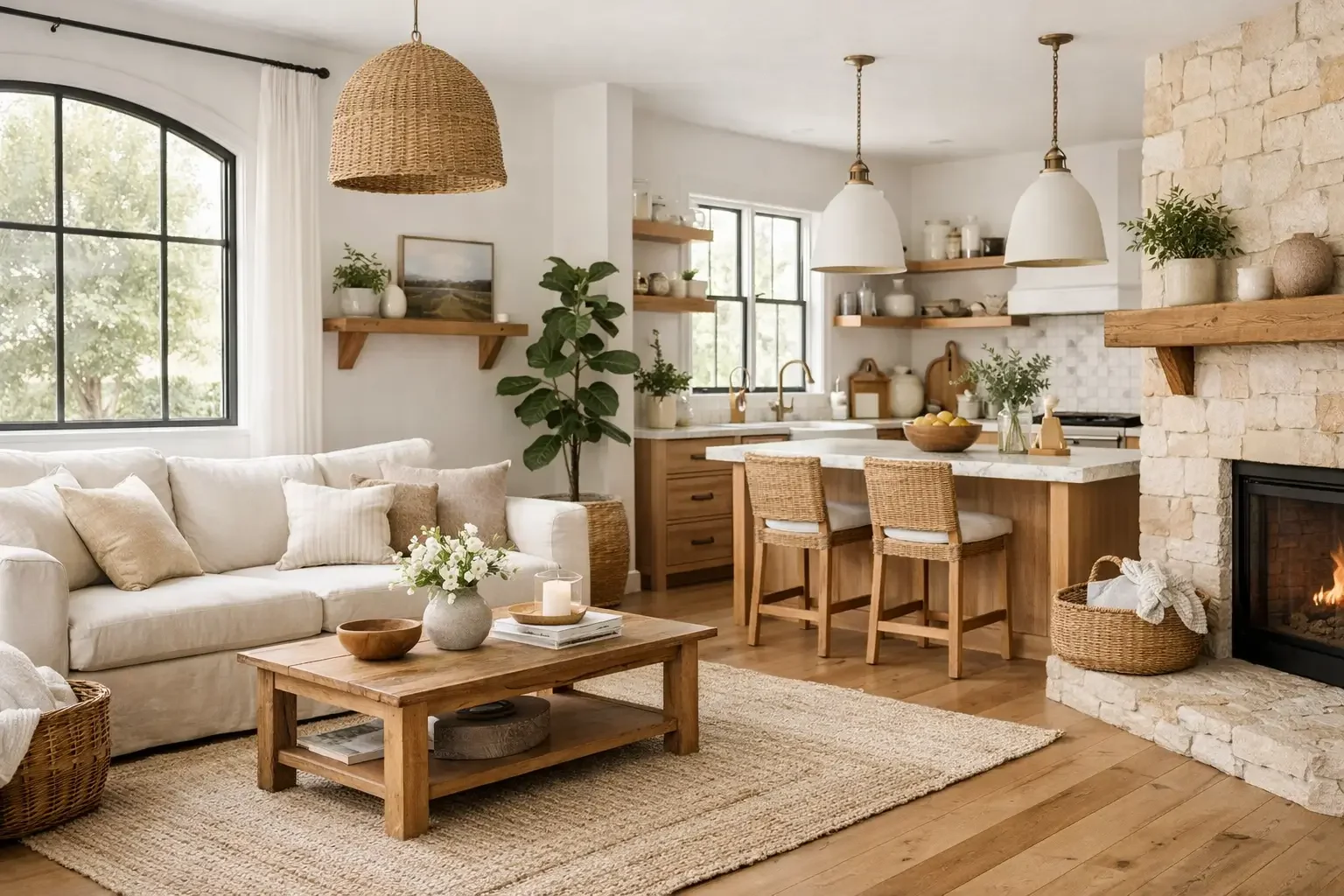
Most people don’t need another “10,000 things to worry about” post.
What we do need is a realistic framework — something that helps you make smart upgrades room by room, starting with the things that create the biggest health return.
Because here’s the truth: your home can either quietly support your health… or quietly add friction to it every single day.
And the tricky part is, a lot of what affects your health at home isn’t obvious. It’s not one giant, dramatic exposure. It’s the daily accumulation: the air you breathe, the water you drink, the cleaning residues you touch, the cookware you heat, the plastics your food sits in, and the lighting your brain interprets as “daytime” at 10pm.
That’s why I talk a lot about toxic load — not as fear-messaging, but as reality. A little exposure here and there might not feel like a big deal. But repeated exposures stack up over time. And the good news is, you can reduce that load without turning your house into a laboratory.
This post is based on our full home tour video, plus a deeper room-by-room breakdown of the “why” behind each upgrade — with links to the exact products we use, so you can reference them when you’re ready.
And if you want a simple step-by-step roadmap (what matters most, what certifications to look for, and what to skip), you can grab our latest eBook, The Healthy Home here.

Start Where It Matters Most: The Air You Breathe
If you only make one upgrade this year, make it this:
Clean up your indoor air.
You can eat incredibly well and still be affected by the air you breathe all day long — which is why indoor air quality matters more than most people realize.
And modern homes — as comfortable as they are — tend to trap pollutants. We seal them tight (insulation, modern windows, weather stripping), and that means whatever is in your home air tends to stay there longer.
The main sources most people don’t think about:
cooking (especially frying, searing, toasting)
candles/incense
cleaning sprays
pet dander + dust
VOCs from furniture, carpets, paint
humidity and mold risk (even small)
You can get a lot done by what we call “burping” your house just once per day. Open up a few windows throughout your house every day to allow a cross-breeze to help purify your air. Do this for 10-15 minutes at time, even in the colder months. It’s not a perfect solution but it will make a big difference.
We actually run a few air scrubbers/purifiers in high-traffic spaces and bedrooms. The one you see mostly throughout our house is the Jaspr. I’ve tested a lot of purifiers and this one by far is the best.
We also have used AirDoctor for about five years at this point as well. It also does a great job and I recommend it for anyone who wants great air filtration on a smaller budget.
You can save nearly 50% off AirDoctor when you use my link here (no code needed).
And if you want to checkout JASPR it’s right here… Jaspr Air Purifier / Air Scrubber (code CRAIG saves you $300 off).
The point is having real filtration, not ignoring the problem.
And here’s a simple way to think about it:
If you don’t filter the air, your lungs are the filter.
That’s not fear — it’s just physics.
Transcript:
What's up, guys? Come on in. Welcome to our home. [Music]
So, as you guys come into our entryway, the first thing that you're going to notice and that I want to point out is our air purifier. And this isn't just an air purifier. This is actually an air scrubber. This is Jasper. And this is by far the highest quality air scrubber that you can get on the market. This thing is basically the Cadillac of air purifiers on the market.
And you're going to see these throughout the house. We have a few different air purifiers throughout the house. But this is important because it's been reported that indoor air quality can be two to five times more polluted than outdoor air quality. And it might surprise you to know that poor air quality combined, both indoor and outdoor, is actually the second leading risk factor of death, right behind high blood pressure.
And believe it or not, poor air quality actually is attributed to killing more than 8 million people every single year globally. So investing in a high quality air purifier is one of the best things that you can do to make your house more non-toxic.
Because anytime I'm cooking food, it's releasing toxins into the air. And my Jasper here goes crazy. It it starts revving up. You can hear it. It's red. And that is basically picking up all the toxins, the PM2.5 in the environment.
If you don't have any kind of air purifier in your home, your lungs are the purifier. Your lungs are the filter. If you guys think about it, our home is kind of one giant Tupperware container. Humans used to live outdoors in nature all the time, but now we seal our homes off and it's completely sealing in any kind of toxins, whether that's cooking, mold, or offging of furniture.
But air, we're immersed in air 24/7. You can't escape it. So, if there's one massive change that you can invest in to make your home more non-toxic, it's getting an air purifier. It doesn't have to be this one. This is just the one that I recommend. And anything that I'm talking about here in our house, you can probably find it down in the description below.
So, as we move on over here to the kitchen, this the kitchen is really has the potential to be the most toxic room in the entire house because of the water quality, the cleaning products, everything like that, the lighting, the pots and pans.
This is our coffee setup, and it's not considered like a non-toxic coffee setup. Although, we do try to use maybe glass when we can. So, we're not, you know, using plastic like a cure rig or aluminum that kind of gets filtered through the plastic K cups.
Really, I'm just doing a ChemX, which is glass. And then we have these unbleached paper filters. And then when it comes to, you know, the actual water quality itself, you know, it's a stainless steel on the inside. We just use the gooseeneck kettle.
And then our water quality over here with the Aquatue. I can talk about that in a little bit, but I'm using filtered water. I'm adding minerals back into it. So, it's removing all the pollutants that are coming through the tap. adding it in there.
But if you're wondering about the Brevel, this actually probably has plastic parts in there. But I'm such a like a coffee connoisseur of types. I that's one trade-off that I'll make because I love high quality coffee. I love making espresso based drinks, lattes. So that's one little trade-off that I'll have.
But for the most part, we're using a glass ChemX or a French press or something along along those lines. But really trying to avoid, you know, a curig machine. That's that's really what we're about.
Moving on over. I mean, most of our glassware is going to be glass or ceramic. We're really not using plastic as much as we can. Um, it's really just going to be glass and ceramic based uh utensils and cookware.
So, that's that's maybe one of the easiest things that you can do that's going to make the biggest difference is just removing plastics wherever you can find them in your house and switching to glass or ceramic or siliconebased cookware.
We also have here, I wasn't going to point this out, but I'll show you guys this just because. But this is called a Soma Vetic. And this is a really kind of unique product that we've been using for uh about 2 years now, but this actually helps to limit Wi-Fi exposure in the house. And it also can structure your water as well.
So, it just sits right here, plugs in, and then usually every morning I have a mason jar full of water that I'll sit right here that's been filtered by our Aquatru, and it actually structures the water, making it more like spring water and more hydrating.
But speaking of water, we've been using Aquatrew. We just fill up the back tap here. This is reverse osmosis. You just fill this back tap up with water, tap water, and then it's going to run through three different types of filters, and that's going to remove pretty much everything in the tap water.
It's not going to leave very much pollutants in there at all because tap water is full of chlorine, fluoride, pharmaceutical drugs. And if you go to ewg.org/tap water, you can see your city's tap water. You can enter your zip code. There's so many different pollutants inside tap water, and every city is a little different, but this is going to remove all that.
So this picture here is completely filter pure drinking water. We actually use that for most everything. Uh whether that's soups, whether that's coffees or teas or even this ice machine here.
Uh we don't use the typical uh crushed ice or cubed ice that's going to come out of the fridge. We put this in here because my wife, she likes ice water. So it just makes it fun. And when we're doing our ice lattes, that's the type of ice we use. And it's all filtered from the Aquatue.
We also have a different Aquatue model down here. This is the Aquatu Classic. We had this for a few years before we switched to using the Aquatu carff. This one just fits our lifestyle a little better. It's a little bit smaller, but this Aqua Craft is better for larger families.
So, if you have maybe three or four or more family members in your house, the Classic is the way to go. But for us right now, doing the the Craft is the best way to go. And we like that it has the glass pitcher on the front.
The next thing in the kitchen, and this is probably maybe the biggest one for most people, cleaning products. Cleaning products is the number one thing. This there's a term called toxic load. And basically, this is the accumulation of toxins can build up throughout your body.
A little bit of plastic here or a little bit of, you know, bleach there or a little bit of environmental toxin exposure there or personal care product here might not harm you, but it's the daily accumulation of these things over time.
So, what we use, we use a few different types of cleaning products. And really, we use two main ones. And this is the same with our laundry room. We'll get to in a minute, but this is truly free.
We use, you know, their everyday cleaner. We use their heavy duty degreaser. And we use their dishwasher scrub as well. This is just a truly free dishwasher powder that we have here in this glass jar. And so, that's pretty much what we're using regularly.
We also use Branch Basics. This is my favorite, the concentrate. We put this in, you know, an all-purpose solution. So, I think it's just is it just water and Yeah. So, it's just water and the concentrate and that's what we use to clean our countertops.
We also have a fruit and veggie wash that I don't think we really use. I don't use fruit and veggie wash, but um pretty stocked up on the concentrate by B branch basics. That and Truly Free are pretty much our go-tos.
But if you guys aren't using Truly Free or Branch Basics, you can get a lot done with just a little bit of baking soda and vinegar and water solution. You can get a ton done with that and really cheap and cost effective, too.
But if you guys want to know what certifications to look for, I talk about that all in my non-toxic home guide linked in the description below. It lays out the certifications and everything that we're talking about here inside of our home. Just click that link in the description and download your guide and check it out.
The next thing, and this might be just as big as your cleaning products because you're cooking food on these. These are your pots and pans. We have a wide variety of many different pots and pans. Whether that is a nonstick ceramic coated or a stainless steel or cast iron or even titanium.
We have a nice titanium one here from our place, but we use a few different types of pots and pans. And really, it's just going to come down to avoiding the typical teflon non-stick coated pans.
If you can invest in just one highquality set of non-stick pans, that's going to make a world of difference in your health. There's two different companies that I recommend. our place and Caraway. They are by far the best companies that have been doing this for the longest and they are putting out amazing quality non-stick products that actually work and they look pretty good, too.
So, I mean, we have a few different types of pots and pans here. This is Carowway. It matches the aesthetics of our place. They have many different colors. That's just one of their non-stick pans.
We also have uh cast iron. This is just lodge. You'll just want to make sure that that stays seasoned properly. I like to use a nice tallow to season my my cast iron skillets, but we use those when we're making maybe like a soup or sourdough bread.
My wife loves to bake sourdough products, so we'll use that for for anything sourdough related. And then really just a couple other Care Away products and our place products, but that's typically what we're using on a pretty regular basis.
Check this one out, guys. I really got to show you this, but these three light bulbs right here, I'm going to dim them for you real quick. These are incandescent light bulbs. You can turn them on and off.
But lighting, that is the number one thing that I think a lot of people, that's like the most underrated thing in the house. We talked about air quality, we talked about pots and pans, water, cleaning products, but lighting, guys.
Just like you can have junk food and you can eat an unhealthy diet, there's also junk light and you can have unhealthy lighting. Incandescent are the original light bulb that Thomas Edison invented, you know, what 150, 200 years ago.
That is a different type of light than the typical LED lights. Have you ever walked into a room, a home, a business building, and the lights just drain you? Well, those are probably LED or fluorescent light bulbs.
And these are more of a full spectrum light that actually replicates sunlight. So, if you're looking to get more natural sunlight in your life without actually going out outdoors to get it, bringing more incandescent light bulbs can help you to do that.
These are from a company called Health Lighting. It's linked in the description below. We've had these uh for maybe four or five, 6 months now. These are in our kitchen. They're down in our gym. I'll talk a little bit more about them when we go down to our home gym and show you the lighting there.
But if there's one thing that you can upgrade other than maybe your air quality, your water quality, it would definitely be the lighting in your home because that can make a big impact on your energy levels, your sleep quality at night, and a host of other things.
There's two more things I want to show you in our kitchen, and they're pretty simple swaps that you can make literally today that can make a big difference.
glass storage containers for your leftovers is one of the best things that you can do. Um, you avoid plastics. You're helping the environment. There's a host of reasons to switch to glass and it's relatively cost effective.
Like it doesn't cost much to just replace plastic Tupperware. Throw those out. They're not serving anyone. Recycle them. Better yet, recycle them and switch to glass because that's just going to help help you help your food. You're not leeching microplastics or nanoplastics in your food.
The second thing that also has to do with plastics, this is ditching plastic cutting boards. And guys, going to wood cutting boards. We have a ton of these up here.
And I put out a video a few years ago about the dangers of using plastic cutting boards. Just by, you know, chopping on on plastic cutting boards, you're leeching millions, if not billions of microplastics and nanoplastics into your food.
And there's a host, we know there's a host of health issues that are coming with microplastics, but switching to wood cutting boards and making sure you're cleaning them properly with the cleaning products that we talked about and just sanitizing them, this can make a world of difference.
So, when you can go more all naturatural with your your cutting boards, just switch to wood make a big difference.
Guys, we had to take a brief intermission because our newborn was getting a little fussy. That's just, you know, pros and cons of uh working from home.
But check this out. My wife is our videographer and she was filming me and now she's wearing him and uh she's wearing him and filming me. So give her some shout outs and some props in the comment section below.
But if you guys are not yet subscribed to this channel, be sure to hit that like and subscribe button below. Really appreciate it. And now let's get back to the content.
The next thing, now that we're out of the kitchen, now we're in the mudroom, guys. Shoes. Wearing your shoes inside your house.
There was just a study that came out that found that over 90% of shoes, the bottom of shoes, have traces of E.coli and other substances on them.
So, one of the best things that you can do is just have people take their shoes off when they enter the house. And guys, if you found a polite way to ask people to take their shoes off when they come into your home, please let me know in the comment section below because we have not found a polite way to do it.
I mean, you can just ask somebody, but is it is it polite? I mean, just let me know in the comment section below.
But having people take your shoes off when they come in is one of the biggest game changers that you can make. So that's a pretty simple way to just cut back on all the toxins coming into your home, especially with pets.
And now that we have a baby boy who's going to be crawling here soon and our pets coming in and walking all over the floor, like we don't want them, they're much much lower to the floor than we are. So they could be breathing those in and really touching those with their hands and paws.
So we don't want that getting into their bodies, especially, you know, traces of whatever is on the bottom of shoes.
It's one thing to be out in nature and bringing in good microbes, good probiotics that pets usually do if they're out in nature. But if you're walking with your shoes on uh the cement jungle of New York City, different cities, concretes, and you're bringing in all those toxins, that's completely different than if you're bringing in microbes and probiotics from nature.
So, just asking people to take their shoes off when they come in. And just having, you know, shoes right here might be a sign for for people to take their shoes off when they come in.
Now, we're here in the main living space. And honestly, this space is not too special of a place. This is an open concept house that we live in.
So, the air quality is already being filtered by Jasper that we talked about at the beginning. Uh, so there's not too much to talk about in here except for one thing.
And this is a basket of red light glasses, blue light blocking glasses that we really keep here in this living space. That way, if anybody wants to use them, they can.
These are something that we've been using for I think 2016, 2015 or 2016 is when I first started using them. So going on a decade of of using these.
So why would you want to use blue light blocking glasses? Well, we talked about lighting earlier, but really the main living space, especially at night for most people, that's where you're going to get a lot of junk light from your TV, from the overhead lights, it's going to be a lot of bright blue and uh white lights that can really interrupt your sleep quality.
If you're struggling with sleep, staring at bright TVs at night after the sun goes down, that is signaling to your body that the sun is still up, that it's still daylight, that your cortisol is going to be elevated.
So, if you are looking for ways to boost melatonin, to lower cortisol, to get better sleep, to actually digest your food a little bit better, wearing blue light blocking glasses like these bright uh red glasses here, that's going to block out all that blue light, the TV light, the overhead light.
You put these on at night, literally no blue light, no bright light can get in. So, you're signaling to your biology that this is like fire. This is almost as similar to what fire would be, a very dark red or an orange color.
So that way that's really the tones that you're getting when you're sitting here watching TV at night. You can still watch your shows. You can still watch football. You can still watch your games. Just uh maybe throw on a little bit of blue light blocking glasses at night. So that's another thing you can do.
So in addition to all the natural lighting that we have, you can or can't control that. We also have some plants in this house. Honestly, we could probably use a little bit of more plants, but that's just a way to uh put a little bit more oxygen into your air, reduce some carbon dioxide, and just make things look a little bit better.
You know, when you're staring at green, you're staring at nature, it's always a good thing to have.
Guys, as we move in here into the master bedroom, this is my wife and I's bedroom and our baby boy's bedroom. Currently, he's only a couple months old.
But there's a few things in this room that I really want to point out. This is really our sleep sanctuary. And this is where we all spend a third of our lives. So, if you can really dial in this room, this can make a big impact.
And there's four to five things that I really want to point out in here that really we are intentional about in designing a safe, healthy, and non-toxic home.
The first thing is air quality. You guys see we have another Jasper in here. This is not just for us, but this is also for our baby boy. His lungs are breathing at a faster rate. So, he's breathing in more air per breath than than we are.
And so, kids and infants, babies are more susceptible to poor air pollution than adults are.
But one thing you'll notice about this Jasper in here is that I have it on dark mode and you can press this light button and it'll turn on or you can press the light button and it'll turn off. That really helps because we don't want bright lights when we're sleeping. So, that's one feature I really like about Jasper.
The next thing is light quality. Check this out, guys. So, we have more of these red light bulbs. These are incandescent red light bulbs that we have. It looks really cool at night. Our neighbors probably think we're doing something crazy in here, but these are our red light bulbs that we have on at night to reduce blue light exposure.
Uh when we get up with him at night, we have these red lights on or just warmer lights in general. It helps us to, you know, not be wide awake. It helps us to not stress as much. It's a more much more inviting time at night when we're falling asleep. These are on as well. And then we just turn them off right before we go to bed.
Talking about lighting, we have as much natural light in here as you can get. But people have neighbors. We have some neighbors. They have bright lights. So, we have these shades, these blinds that come down. And these are blackout blinds.
And we have these all throughout our room. And so, these do a really good job at blocking out any junk light, any street light that is coming from the outdoors, whether that is other people's houses, street lights, or anything like that.
So, then our room is literally pitch black at night. You can't see virtually anything. We have pretty much no lights on in here. So, if filtering out all the outdoor light and having no lights on in here, that's really keeping our sleep environment pretty pretty serene.
So, recommend checking these out. This is a brand called Levelore, I believe, and they are from Lowe's. You can check those out.
So, in addition to air quality lighting, blocking out the outdoor lighting using the blackout curtains, we also don't have any technology per se in our bedroom.
We don't have a TV. We don't have anything like that in our bedroom because really the bedroom is just for one or two things, you know, sleeping and bonding. We'll just leave it at that.
But we don't have any technology here in our room. We don't want to have bright lights on at night. We don't want to have stack of bills or anything next to our bedside. We want this to be a place that we come and associate with getting good sleep.
So, we made that switch what feels like a decade ago of just having no technology. We don't even keep our phones here in our room. We're not having phones in here. We're not sleeping with our phones next to our bed. Uh we keep that in the kitchen on a phone charger typically.
Also, the last thing that I want to talk about here in our bedroom when it comes to having a non-toxic sleeping space is the bedding itself.
We use everything Nature Pedic. Our mattress, our sheets, everything. Our duvet, our duvet cover, our pillows, everything on here is from Nature Pedic. This is by far the best. We've tried a few different brands and companies over the years, but we keep coming back to Nature Pedic.
They have honestly the nicest, best certifications that you can look for when it comes to bedding. They're actually the first ever EWG verified mattress to become EWG verified. And so we use them for everything. We highly recommend them.
Our son even has a Nature Pedic mattress in his nursery that we're going to talk about here very soon and show you that entire nursery. So if you're looking forward to that, stay tuned for that.
But uh Naturopedic is not only got and gold certified, they are green guard gold certified. They have all the certifications that you want to look for when it comes to sleeping in serene, peaceful, non-toxic bedding.
Because we are spending a third of our lives in our bed, so we might as well make it a non-toxic one because typical bedding is going to be made of polyester, which is plastic. We don't want to be sleeping in plastic.
It's also going to have flame retardants and other toxic chemicals on there. We don't want to be sleeping in that type of bedding, especially since we're spending a third of our lives in there.
So, I highly recommend checking out Naturopic. You can find them linked in the description below.
Real quick, check this out. This is our closet. But a lot of what I've been switching to lately, what I'm wearing now, this is 100% organic cotton, but most people are wearing polyester clothing, whether it's 10% or or 100% polyester, I'm trying to switch more to organic cotton or just cotton in general. And that's typically what I have here.
Um, cotton pants, cotton shorts, more cotton shorts, cotton underwear, uh, plenty of different styles like that.
So, I know it's not optimal to switch entirely over and that's not, you know, the goal isn't to be perfect, but if you can switch slowly over to wearing more cotton because not only are you sleeping in bedding that, you know, is a third of your life, but you're wearing clothes pretty much 24/7.
Uh, typically, you know, we're wearing we don't want to be wearing plastic basically. So, uh, switch over to organic cotton when you can, but that's what I'm trying to do here.
Guys, if you follow me into our bathroom next, this is also a main room that can be filled with toxins.
I mean, women before they leave the house, they leave they leave the house with more than 270 government recognized carcinogens every single day before they leave the house because of all the personal care products that they put on their body.
So, I'll show you what we use, but typically I'm using a company called Altera Naturals. This is what I have out here on my counter. their moisturizer, their their cleanser, their uh serums, their clay mask, everything like that. It's typically what I'm using every single day.
I'm not trying to put on a ton of different chemicals. This is literally just like Earthmade really good superfood ingredients in here.
We also have some of their clay mask that we use pretty much once or twice a week on a good week. You know, sometimes we go a month without using this, but uh on a good week, you know, we're fully stocked up on this.
Actually, I didn't even realize we had three of them, but we have plenty of these that we like to use. You can find those linked in the description below as well.
Even guys, you can even find non-toxic whitening strips. So, these are Lumino, I believe, is how you say it, but non-toxic whitening strips that use good ingredients. I believe coconut uh derived water, coconut, dead sea salt, and then a couple essential oils.
So, you can even find non-toxic whitening strips if you look hard enough for it. But that's typically what we're using.
Deodorant. This is just Ingredients deodorant. Just started using this one here, this magnesium uh deodorant for men. Like this. It has a good u like woodsy scent to it, I guess you could say.
And then if you follow me here into our toilet room, uh what you're going to see is two things. So, we have a Squatty Potty. Um we have three of these in our five toilets throughout the house. Uh we definitely need a couple more for guests when they come.
But uh squatty potty for sure to get yourself into the proper pooping etiquette and then a bet.
So if you had um let's just say if you had poop on any other part of your body on your arm, you would not just wipe it off with toilet paper. You would use some sort of water.
So we have a actual built-in bedet, but you can get one on Amazon probably for like 30 bucks and just install it to your toilet. So recommend getting a bedet and a squatty potty to, you know, help out your bathroom etiquette.
If you follow me here into our shower, we have two different shower filters. These are from Aquatue. We have the polished chrome. We like these. They actually just launched these a little bit ago and uh we really like these because we've tried another brand before and it didn't really quite work out that well, but these ones seem to be working out extremely well.
They're NSF certified. If you're searching for a shower filter, really make sure that it's NSF certified. That way, it's actually removing all the things that it says it's removing.
So, you can always save $50 off when you use my link in the description below. Your skin is your largest organ. So, if you're not going to be drinking those chemicals, why would you want them on your skin, right?
So, if you're struggling with dry hair, dry scalp, or anything like that, and you want your hair to become a little bit more lively or just to avoid all the toxins that are coming through tap water, definitely invest in a couple good shower filters like we have.
Guys, follow me into my laundry room. Oh, but first I want to show you right here in our guest bathroom. This hand soap. This is a Branch Basics hand soap that we use. Uh, you know, really good quality stuff. So, we use that here.
So, into our laundry room. Uh, really keep this super simple. I do want to point out though, this Tico, this has been a game changer for us. Uh, this is basically a vacuum and a mop, a twoin one.
So, we run this all over the floor. This comes with a pretty toxic cleaning product that we don't use in it. We actually use the Branch Basics concentrate that I talked about a little earlier in the video.
So, we just put a little bit of capful in that with water, uh, Aqua water because we don't want tap water all over our floor. So, we do Aquatue water in this.
We just fill this top right here and then we put a capful of the Branch Basics concentrate in there and then that's what cleans our floors. So, it's super simple and it works really well and it actually gets a lot of a lot of dirt and grime off the floors.
Even though we don't wear shoes in the house, somehow dirt I mean, we have two dogs. Dirt's always kind of getting in on our floor somehow.
But come in here a little bit and I'll show you the rest of our laundry goods that we have. We have a few different types of Oxy Boost so it gets, you know, the whites whiter and maybe get some stains out.
But, uh, we typically use the Truly Free or the Branch Basics. Honestly, they're both the same and they work really extremely well and it's not bleach. It's not harmful ingredients. These are both really, really good ingredients.
We also use a few different types of laundry wash. Uh lately, we've been using truly free. And what's really cool about them is that you not only get your laundry wash, but they're super cost effective, but they also send you these refillable packets that you can just refill, fill it up with water, you get this solution, like a concentrated solution, fill it up with water, and then you wash your clothes and they smell good.
They have a few different types of scents. They have an unscented version, which I like. I don't like my clothes smelling very strong, so I usually usually go with the unscented version, but they send you these packets every month, which makes it really nice.
Other types of laundry wash that we have, we go with this is Molly Suds. This is a baby laundry detergent for a little boy. Then we have Zoom. We've been using this one over the years. And this EOS brand as well.
And so, just a few other types of things. Uh, this is a Molly Sud stain remover. And then uh the truly free odor and stain eliminator because we have dogs and our son throws up a little bit. So depending on what happens, you got to have a little bit of stain remover that's not toxic.
All right, guys. This is our son's non-toxic nursery. And honestly, this is probably the most intentional room that we designed in our entire home because like I was talking about earlier in our bedroom, uh you know, babies and kids and infants, they are much more susceptible to toxins than we are as adults.
They're breathing in more toxins per liter when they breathe in. Their skin is much more permeable. It's just easier for toxins to get into their little bodies and wreak havoc.
So, we really wanted to make this space as safe and healthy for him as we could. So everything from the furniture to the mattress to the clothing to the diapers to the personal care products to the air quality to the lighting.
This is all a safer and healthier and less toxic environment uh that people should be raised in, especially kids.
When it comes to furniture, there's a specific certification you want to look for. It's called Green Guard Goldcertified. So this rocker that we have here, the crib, the dresser, these are all Green Guard Gold certified.
So they're not going to off gas any harmful chem chemicals. The wood, this material, this linen style material, this isn't going to be off-gassing any toxins. They weren't made with any toxins on them, so it's not going to have any off-gassing.
So you want to look for Green Guard Gold Certified.
When it comes to his mattress, this is a Nature Pedic mattress. This is a two-stage breathable crib mattress. And what makes it two-stage is that now that he's an infant, it's actually a little bit more firm on this side.
And when he gets a little bit older, you can flip it over and it's a little bit less firm. It's a little bit more relaxed and easier to lay on. And so we really really like that.
Uh it's it's has all the proper certifications that Nature Pedic is known for.
For his crib sheet, we have a muslin fitted crib sheet. Super soft, not treated with any chemicals. This is also from Nature Pedic.
His baby monitor is also non Wi-Fi. It just plugs in and it's not giving off any Wi-Fi signals. So, it's you don't need to worry about any Wi-Fi related toxicity, if you will.
This is his changing station. Kind of like I mentioned earlier, everything that we have from the diapers is all non-toxic or a safe brand to have from the wipes.
This is another muslin crib sheet on his diaper changing pad here.
All of his clothes, I wouldn't say all of his clothes, but a majority of his clothes are either like a nice bamboo, a viscous bamboo or organic cotton material, or if they're not, they're just fun clothes that every baby should should have. You know, it doesn't need to be perfect.
Um, personal care products, we have a bunch of different types here. Also, in his bathroom, uh, we have a bunch of different types of personal care products that are baby safe, non-toxic, certified.
And if you guys are having kids yourself and you really want to know how we designed our own non-toxic nursery for our son, we put together a non-toxic baby guide just for you.
It has everything that was on our registry inside this guide. It also goes over all the certifications, everything you need, how to shop on a budget.
And if you guys want to check that out, it's completely free. It's linked in the description below. You can definitely check that out so you can design your baby's own nursery kind of the way we did.
All right, guys. Next up, we have our loft area. And there's two different things I want to show you about this space, but this is my wife and I's shared kind of home work space that we have.
So, this is where we just do a little bit of work when we, you know, we both work from home, so we need to watch our son a little bit.
So, the next thing, if you follow me over here, this is our library where I've read, my wife and I have read a lot of different books on nutrition, fitness, personal development, finances, uh, relationships, a ton of different style of books, and we have them all right here.
So, uh, really this is just kind of our area to come read, relax, work, and, uh, you know, just chill a little bit.
Now, we have our home office. This is where my wife and I, again, we share another kind of home work space. My wife is a dietitian. She works with a ton of patients. So, this is where she has that privacy to to do that.
But I also record, you know, you might recognize this background. I record a ton of videos.
And one thing I did want to show you guys is I have a walking treadmill where I usually when I'm working, whether that's a Zoom call or just something along those lines.
So between that and then a standup desk, that's just a way to really help optimize your own workspace because most of us 90% of us probably work indoors at a a desk setting.
So, if you can actually get a standing desk or just, you know, stack some boxes up and also start walking a little bit while you're doing it, that can be a great way to not only get in more steps, but really just keep your hips loose and uh prevent some low back injuries and everything like that.
Just a few more rooms to show you in the house, but this is our downstairs movie room. There's honestly not nothing too special about this other than we have a guest bedroom that is also with non-toxic organic bedding that when guests come over, we like them to sleep in organic bedding when they can.
and a nice quality Saffa mattress as well. That's a non-toxic organic bedding. It's it's Lumen Leaf by Saffa is is that bedding. So, highly recommend checking out them as well. They're a good brand.
But the only thing that I would really change down here is just getting an air purifier. Whether that's Jasper Air Doctor down here, we don't have one of those yet down here, but that's something we're looking into.
But I do want to show you our home gym and a few specific things about this that really make it uh a better quality home gym.
This here is our home gym. And as you can see, it's pretty dark. That's because there's no windows in this room at all. It's a room inside of our home.
But the one thing I did want to point out is the lighting. It's dark because we have 60W incandescent light bulbs. Those same lots that were in our kitchen. These are also here in our home gym.
So, when we were working out, we had these bright LED lights that actually came in the home and they were too bright. When you were laying on the bench pushing that barbell up, it actually was annoying. You got headaches. you got eye strain. It just wasn't enjoyable to work out.
So, now that we have these lights installed, it's a little bit darker in here and it's not as dark as it might look on the camera, but it's actually a really nice environment when you're in here.
And when you're working out, this is replicating a little bit of sunlight. Like I said, these are 60W incandescent light bulbs. And 60 W just means it's a little bit low. It's a little bit dimmer.
So, if we were to get a 100 watt or 150 or 200 watt light bulbs, it would be much more bright in here, which we might do in the future, but they would still be incandescent and they would be a much better environment to have.
But otherwise, a home gym is a home gym. You know, you're coming in here to sweat. You're coming in here to better yourself.
The only thing that I would personally add to this is maybe an air purifier because it does tend to get a little bit stuffy. But now that we adjusted the lights, that's really the only other thing.
We do use these horse stall mats that you can get from Tractor Supply. These are a rubber material. Honestly, they're probably not the best thing in here. And that's something that maybe in the future we we could work on installing some more non-toxic flooring.
But again, like I had with my coffee upstairs, like that's a simple tradeoff that we're willing to have. Typically, I'm wearing socks in here and I'm working out uh whether in shoes or socks or something like that. Uh but that's really the only other thing in here. It's just a nice space that we can come work out work out in.
Guys, I want to show you our collection of red light therapy devices. This one here is from EMR Techch. This is probably the biggest one and the nicest one that I have.
But this is a bunch of different types of red light. They have a few different types on here. Near infrared, far infrared, uh, red light, just a bunch of different types.
But the thing that really makes this one cool is that it also has UVA and UVB for vitamin D production and all the other benefits that UV gives you.
But you can use these at different times. So, you have just the UV options. You can do just UVB, you can do just UVA, and you can do just the red light therapy, whatever ones you want to do.
We also have a few other types of red light therapy devices. I have this handheld one that I travel with by Bond Charge. This is still just as powerful.
Uh this is a handheld one that I like to travel with that's really nice that has red and near infrared.
There's also this JV. So sometimes I'll come down here, drink coffee, read a book, and you can just turn this on. This is a really powerful uh JV Mini 3.0.
So, it has red light, near infrared light. It has um an ambiance mode. So, if you don't want the benefits, you can just put it put red light on. So, it lights up your whole house uh your whole room in red light.
And this is really cool because you can control this via an app on your phone and you don't have to mess with any of the buttons here on the side. You can just just control that uh with an app.
You can also set this on a timer for up to 90 minutes, which is really nice. But this is now, you know, red light, near infrared light. It's pretty powerful and it works really, really well. I like to just sit there in front of the red light and use that one.
We also have a couple different red light therapy devices. This one is from Higher Dose. So, this one is cool. It's a it's a cap, so for hair growth, hair stimulation.
And so, you just wear that. And listen, it's big. I have a small head, but it's really not for looks or or style. It's just to get the benefits of red light therapy.
So, you wear this 10 minutes a day is all you need to wear this for. But, I've been using this, and I really enjoy doing that.
And it comes with this little charger pack here. You just put you can just charge this and then just magnetically clips on there and you just hold that button in for a second.
And here's the thing with all these devices. Higher dose is no EMFs whatsoever. All these other products are either no EMF or low EMF. And so you're not getting a ton of EMFs when you're using any of these devices.
Now, speaking of EMFs, this is a PEMF mat, not your typical EMFs like you would get from Wi-Fi or anything like that. This actually has a ton of health benefits.
You use the controls here on the panel, but this is from Higher Dose and you just turn this on and you can turn the heat up and you can just lay on this and after 60 minutes of warming up, this gets really, really hot.
My wife can attest to it. She doesn't like it super hot. I like it maybe about 75% of the way up, but it gets really nice and warm.
You get the benefits of infrared, so you can't see it. But it also has the PEMF technology in there, so you're going to be put into a more grounded state.
You lay on this for 20 minutes in the middle of the day, you can recharge yourself. You lay on this at night, it'll help you to wind down. There's four different settings uh for PEMF on there depending on what benefits you're looking for.
It also has ion so you can get the benefits of all the ion, you know, kind of like your earthing.
So, just laying on this mat, I really like it. You know, after maybe a good workout, before a cold plunge, after a little bit of red light therapy, near infrared, you can just lay on this, maybe wear my red light hat at the same time. You do all of it.
Guys, real quick, we're here in our storage room, and I want to show you what this is really quick, cuz this might concern you, but this is radon.
And radon is essentially an odorless gas that comes up from the earth. And it's completely normal, but because we live in homes and like I talked about earlier, how they're a tupperware basically sealed tight, radon can get trapped in homes.
And here's the crazy thing. This is the second leading cause of lung cancer right behind smoking. This is crazy.
And so our home is fairly new and we had a passive system already installed. This pipe was already installed. So it was passively taking the radon from the ground and taking it up out of our home so it wasn't getting trapped in.
But we tested our radon and we actually had moderate to high levels, something that we felt was just a little bit unsafe for myself, my wife, and our uh newborn son.
So, we had an active system installed. And so, basically, they installed a fan that actively sucks the radon from the ground and pulls it up.
And when we had our levels tested again, there was virtually no radon inside our house, whether here in the basement, first floor, second floor, third floor, it didn't matter. It was pulling all the radon out.
And so if you live in an older house, I would definitely recommend checking your radon. You can get testers on Amazon. I'll link to the one that we have below. Highly, highly recommend.
Like I said, it's the second leading cause of lung cancer right behind smoking.
Guys, I wanted to show you this really quick. This is how I take care of our lawn.
So, we don't use any type of pesticides, herbicides, or any type of chemicals on our property. What we like to do instead is something more non-toxic.
And this is still, you know, it's is a backpack that you throw some stuff in. But what we include in here is a little bit of salt, a little bit of white vinegar, and some dish soap. And I diluted a little bit with more water. But that's good.
And so all you got to do is crank this. And then you just spray it on any weeds that you might have.
And it's completely harmless to the life. If we spray it in the pond at all, it's completely harmless to the fish, but it kills the weeds.
The salt and the vinegar help to kill the weeds, but the soap actually helps to bind to those weeds. And then within like 24 to 48 hours, they're completely dead. And it actually works pretty well.
So this is what we do to take care of our our lawn.
All right, guys. Now, the last place that I want to show you at our home, this is our outdoor wellness space.
And so if you follow me on Instagram, Facebook, Tik Tok, you might see this wellness space that I have here, but basically it's full of a cold plunge, which is the desert plunge, the sweat tent sauna.
We have outdoor gym equipment that we're slowly adding to. And really, this is just a place where we can come chill, hang out, invite friends, family, hang out, and do a little bit of wellness activities, do a little bit of contrast therapy, maybe get in a little bit of rebounding on our on our mini trampoline, and uh just hang out.
It's a really peaceful environment out here, very uh good air quality, um natural lighting, so we're trying to get outside really as much as we can.
Lately, our workouts have been looking a little bit different lately with our sun, so uh just trying to navigate that world.
But really, this is the space where we make a lot of things happen. I'll just walk you through a couple things real quick.
But the Desert Plunge, I've had this for 7 months now, and I honestly really, really enjoy this in particular. It's very, very low maintenance, and it's incredible.
It comes with its own chiller unit uh that chills it down to as low as 39° F and up to like 60 some 70ome degrees.
It comes with a filter attached to it as well, so it's continuously running 24/7. Basically, just like a backyard pool would, but on a much smaller scale.
And I come in here and hop in. I try to every day. I do that.
And then I like to do a sauna a couple times a week. And so, where I come out and sweat out any toxins that I might have in my body just from living life, whether eating sketchy foods or just living in in modern society, I like to come in and sweat those out here in my sweat tent sauna.
It's a really cool tent. It's a really cost effective way to get in a high quality sauna because it uses a wood burner.
All that wood we have, we burn it in here in this wood stove and it gets up to over 200°. I've had it as high as 220° in here.
You need about three or four different logs and you burn those and you just sit in here with friends, family, hang out, sweat out some good toxins, spend like 15 minutes in there, and then you go over and do a little bit of contrast.
Hop in the desert plunge for three minutes. Do that three times through and you're feeling on top of the world.
But you combine a sweat tent sauna with a desert plunge, a little bit of contrast therapy, and a little bit of rebounding.
Here we have a Bellacon rebounder that I like to bounce on every so often.
You combine that with a little bit of lymph flow, a little bit of sweating, a little bit of contrast therapy, and then you're doing a lot of the other things that we're doing, whether that's eating good food, breathing in good air quality, surrounding yourself in nature.
That is the recipe for how you're going to live a pretty healthy, non-toxic life.
So guys, that was our entire non-toxic home tour. I really hope you enjoyed this style of content.
If you really like this and you're inspired to do the same thing as us, don't forget to grab that non-toxic home guide that we put together just for you in the description below.
And if you have a little one, an infant, a toddler, even a child, or you just want it for yourself or somebody that you know, we also have that non-toxic baby guide below as well. It's completely free. I would love for you to download that and check that out.
But be sure to hit this like and subscribe button because we have a lot of incredible content coming out just like this in the near future. and I'll talk with you next
The Kitchen: The Highest “Toxic Load” Room for Most Homes
Your kitchen is where a lot of exposures converge:
water (drinking + cooking)
heat (cookware)
plastics (storage, utensils, appliances)
cleaning products
air (cooking particles)
So rather than trying to replace everything at once, I like to focus on a “Big 4” kitchen sequence:
1) Water: filter it once, use it for everything
We use a countertop reverse osmosis system because it’s easy, reliable, and it’s something we use for:
drinking
coffee + tea
soups + cooking
ice
watering plants (seriously, lol)
Our system is AquaTru. We’ve used it for years, and it fits real life (fill it, walk away, grab clean water).
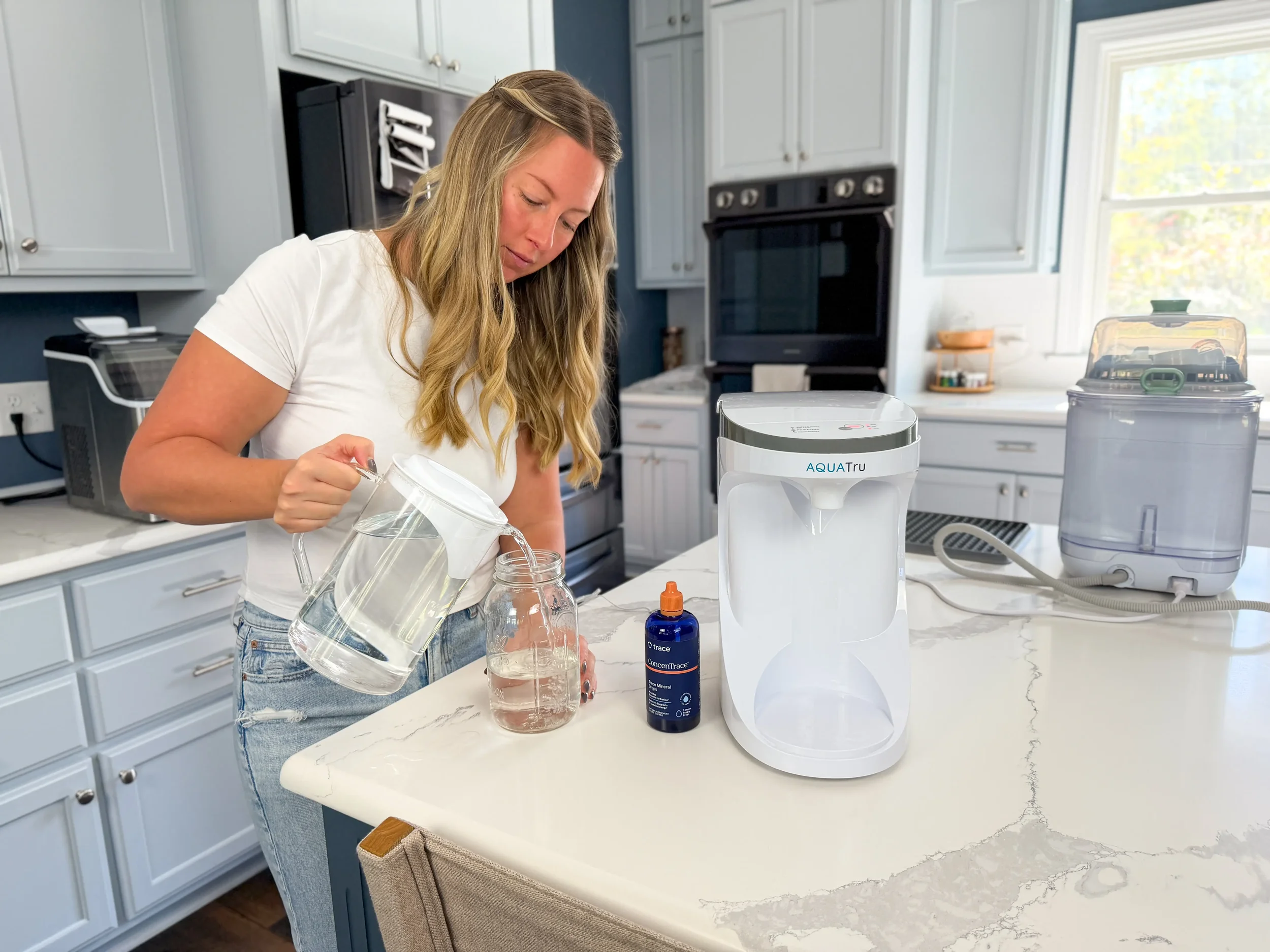
AquaTru Water Filter
And because RO strips minerals too, we personally add these minerals back in.
If you want to go deeper on water, filters, and the “what matters most” approach, that’s also outlined inside our Healthy Home Guide.
2) Cookware: stop cooking on questionable nonstick
I’m not here to shame anyone — I grew up on non-stick pans too. But one of the simplest “adult upgrades” you can make is moving away from beat-up, scratched, old-school non-stick.
In our kitchen, we rotate through:
stainless
cast iron
ceramic-coated nonstick
titanium
The two nonstick brands I consistently recommend because they actually perform AND look good:
Again: don’t replace your whole kitchen in one weekend. Start with the pan you use most — the one you cook eggs in, the one you heat daily — and upgrade that first.
3) Cleaning products: simplify, don’t chemicalize
Most people have 14 different sprays under the sink and none of them are “clean.”
We keep it simple. The two systems we use most are:
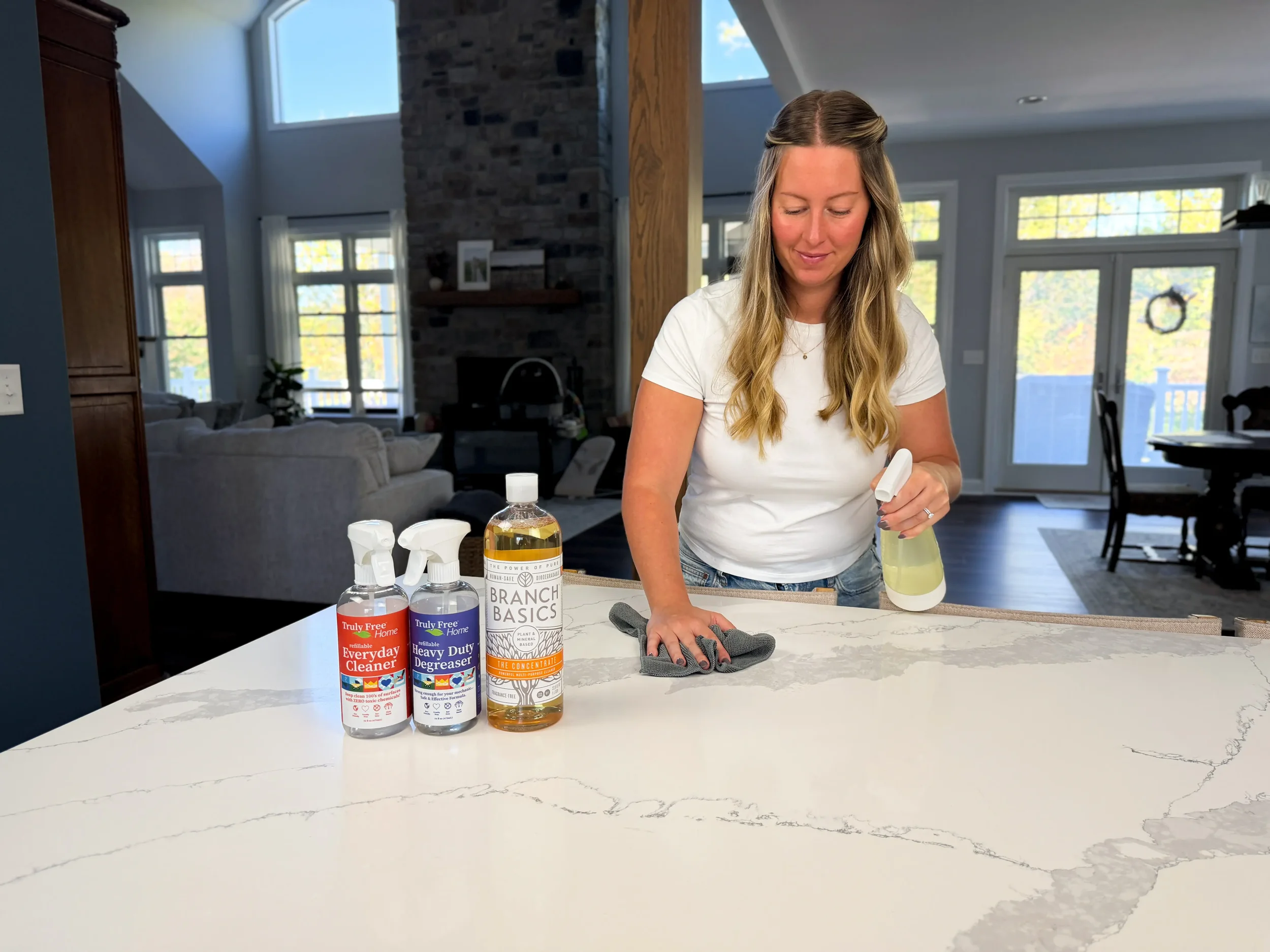
Truly Free (daily cleaners + dish powder)
Branch Basics (concentrate that you dilute)
You don’t need a “perfect” cleaning cabinet. You just want to avoid:
heavy fragrance
harsh solvents
the constant use of chemical “nukes” in a sealed home
(And yes — baking soda + vinegar + water can do a ton if you’re on a budget.)
4) Plastics: stop feeding your food microplastics
This isn’t about “plastic panic.” It’s about common sense.
If something holds your food… and it gets heated… or scratched… or used daily… it’s worth upgrading.
Two swaps that are ridiculously high ROI:
glass storage containers (replace old plastic tubs)
ditch plastic cutting boards for wood
We use glass for leftovers and drinks whenever possible. And we keep wood cutting boards because they’re durable and they don’t shed plastic into your food every time you chop.
Lighting: The Most Underrated “Health Upgrade” in the Home
Lighting affects more than mood. It affects biology.
A lot of people don’t realize you can have:
junk food…and also…
junk light
If you’ve ever walked into a building and the lights made you feel drained, tense, or wired… that matters.
For us, one of the biggest changes has been using warmer, more natural-feeling bulbs — especially in the evening and in places like the kitchen and gym where we spend time.
The bulbs we use are from Health Lighting.
Now — I’m not saying you need to replace every bulb in your house tomorrow. But if you struggle with sleep, energy, or feeling “on edge” at night, lighting is a good place to experiment.
A practical approach:
start with bedroom lamps
then your main evening living space
then kitchen overheads
Entryway / Mudroom: The “Shoes Off” Rule That Actually Matters
This is one of those boring habits that makes a big difference.
Shoes track in everything:
pesticides and herbicides
road grime and heavy metals
bacteria
whatever’s on the ground in public spaces
And if you have kids crawling or pets lying on the floor, that exposure matters more than most people realize.
So we try to keep a simple “shoes off” rhythm. We’re not rude about it — just consistent. A bench, a shoe rack, and a visual cue help.
It’s also one of the best health upgrades that’s literally free.
SHOP OUR HOME
Everything We Use — In One Place
Tap a category to shop the exact products we use (Amazon storefront + curated lists).
 Baby
Baby
Baby Nursery
Non-toxic staples we used for our own baby nursery.
Shop Nursery → Kitchen
Kitchen Essentials
Cookware, utensils, storage, and more.
Shop Kitchen → Cleaning
Non-Toxic Cleaning
Everyday cleaners that actually work — without the toxic trade-offs.
Shop Cleaning → Home
Home
Whole Home Essentials
Daily basics we trust for a safer home.
Shop Home → Coffee
Coffee Bar Essentials
Everything we use to make great coffee at home.
Shop Coffee →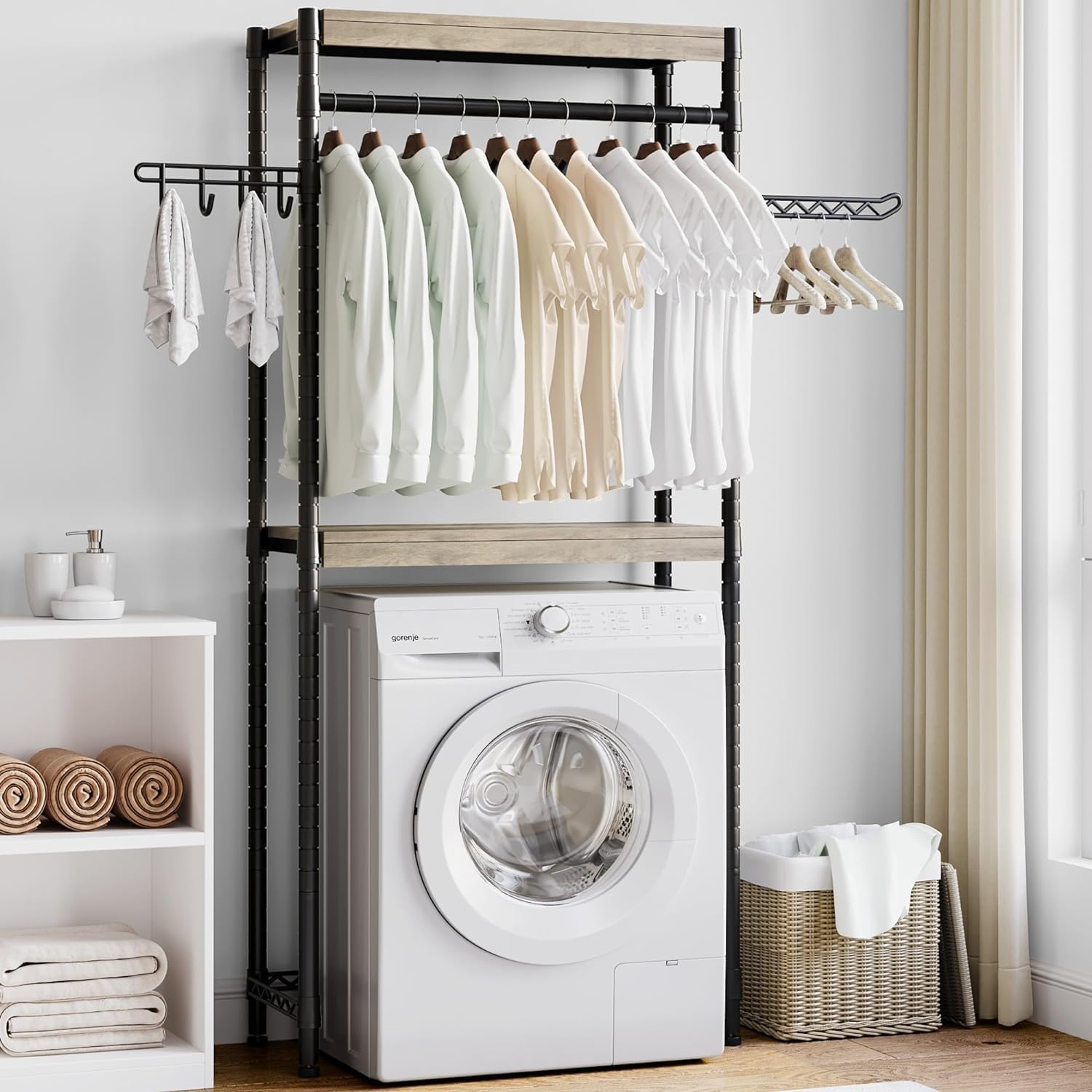 Laundry
Laundry Room Must-Haves
All of our non-toxic laundry room essentials.
Shop Laundry →Living Room: Reduce “Junk Light” at Night Without Becoming Amish
I love a good Netflix night like anyone else. The goal isn’t to live in darkness.
But there’s a real difference between watching a show at night under bright overhead LEDs vs watching a show in warm light while blocking the harsh wavelengths
That’s why we keep blue-light blockers in the living area. It’s a simple “put them on” habit at night.
If you want what we use:
TrueDark / Blue Light Blocking Glasses
Again — no fear. Just a small lever you can pull that makes nights feel calmer, and sleep comes easier.
Bedroom: Make It a Sleep Sanctuary (This Matters More Than Supplements)
I’d rather someone build a clean sleep environment than buy another trendy supplement.
Because you spend a third of your life here.
The bedroom basics we aim for:
clean air
truly dark at night
warmer lighting in the evening
no TV
phones charging outside the bedroom
clean bedding materials
1. Air filtration in the bedroom
We run Jaspr in the bedroom too — especially because we have a baby and kids breathe more air per pound than adults.
2. Blackout shades
We use blackout shades/blinds to keep the room pitch dark.
We use Levelor Blackout Shades
3. Bedding: we use Naturepedic
This is the one brand we keep coming back to because of certifications and quality.
And no — you don’t need to throw away everything you own. But bedding is a big “contact area” (skin + breathing zone), so it’s a smart place to prioritize over time.
Clothing: You Don’t Need to Be Perfect, Just More Intentional
A lot of modern clothing is basically plastic (polyester blends). We’re slowly shifting more of our everyday stuff toward cotton/organic cotton when it makes sense.
Not because we’re trying to be perfect — we’re not. But because if you’re wearing something all day every day, it’s worth making that layer a little cleaner over time.
Bathroom: Personal Care Is a Massive Exposure Source
Bathrooms are full of sneaky chemical load:
lotions
deodorants
hair products
fragrances
shaving creams
toothpaste
cosmetics
A simple principle:
fewer products, cleaner ingredients.
What I personally use most:
Alitura Naturals (skincare)
We’ve also used:
Lumineux Whitening Strips (cleaner whitening option)
Just Ingredients Deodorant
Toilet setup (yes, we’re going there)
We’re big fans of:
Shower filtration
Your skin is your largest organ. If you’re filtering your drinking water, it’s not crazy to think about what’s hitting your skin for 10 minutes in hot water.
We use:
Laundry Room: Low-Tox Detergent + Clean Floors (Without Harsh Chemicals)
Laundry detergent residue sits on your clothes… which sit on your skin all day.
We rotate a few options, but our “core” is:
Molly’s Suds (especially for baby)
For floors, we use a vacuum/mop combo (and we don’t use the chemical cleaner it comes with). We use our safer concentrate instead.
Nursery: Where “Non-Toxic” Actually Matters Most
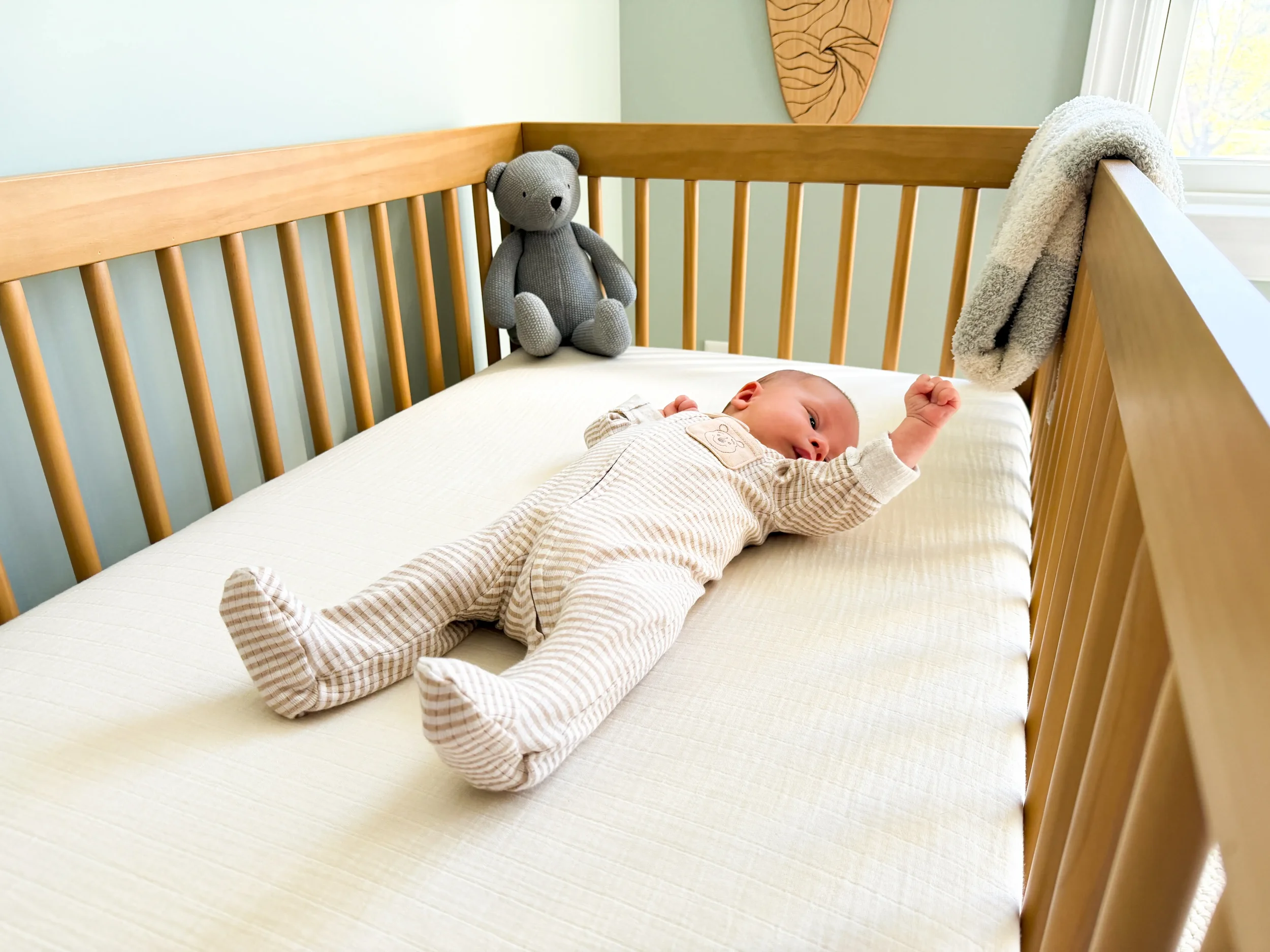
Babies are not tiny adults. They breathe more per pound. Their skin is more permeable. Their detox systems are developing.
So the nursery is one room where I think being intentional matters a lot — without making yourself anxious.
What we looked for:
Greenguard Gold certified furniture
a high-quality crib mattress
clean bedding materials
clean air
non-WiFi monitor (optional, but we chose it)
We use:
And if you’re building a registry or setting up a nursery, we made a free guide with what we actually used:

Office / Work Spaces: The “Indoor Life” Reality
Most people work indoors all day. That’s modern life.
So if you can improve your work environment even slightly, it pays off:
better light
cleaner air if needed
This isn’t a “biohacky” thing. It’s just moving your body more and reducing the “sit all day” tax.
Home Gym & Red Light
We swapped the harsh LED lighting for warmer incandescent-style bulbs because training under bright harsh light just wasn’t enjoyable.
We also use rubber horse stall mats from Tractor Supply in our home gym currently — not perfect, but a tradeoff we’re okay with for now. That’s the theme of this whole approach: choose your tradeoffs intentionally.
Red light devices we use:
And recovery tech we like:
None of this is “required.” It’s just what we’ve chosen over time.
The Thing Most People Forget: Radon Testing
Radon is one of those invisible things that’s easy to ignore… until it isn’t.
It’s an odorless gas that can accumulate in homes (especially basements). In the video, we talk about how we tested and then installed mitigation when levels were higher than we were comfortable with.
You can start with a simple test:
This is a great example of the “little by little” approach: test first, then decide.
Yard / Lawn: You Don’t Need Perfect Landscaping — You Need Less Chemical Exposure
We don’t use pesticides or herbicides. Not because we’re trying to be crunchy — but because those exposures matter when you’re outside, pets are outside, and kids are outside.
We use a simple DIY mix for weeds (salt + vinegar + soap), and it’s been surprisingly effective.
Again: not perfect. Just better.
Outdoor Wellness Space: The “Healthiest Room” Is Outside
The healthiest “room” you can spend time in is outside.
Sunlight, fresh air, movement, nature — that’s the base layer.
Our outdoor recovery setup includes:
Do you need all that? No.
But the general principle is solid:
sweat sometimes
get outside daily
move your body
breathe clean air
reduce the exposures you can control
That’s a very real “non-toxic lifestyle” foundation.
Where to Start (Without Overwhelm)
If you’re reading this thinking, “Okay Craig, but where do I actually start?” here’s my honest answer:
Start with air, then water, then sleep.
Everything else can be layered in over time.
That’s also why I made the Healthy Home Guide — it’s a simple roadmap so you don’t waste money on low-impact upgrades or get lost in certification confusion.
You don’t need a perfect home.
You just need a home that’s less toxic than it was last month.
That’s the whole game: small changes, consistently, over time.


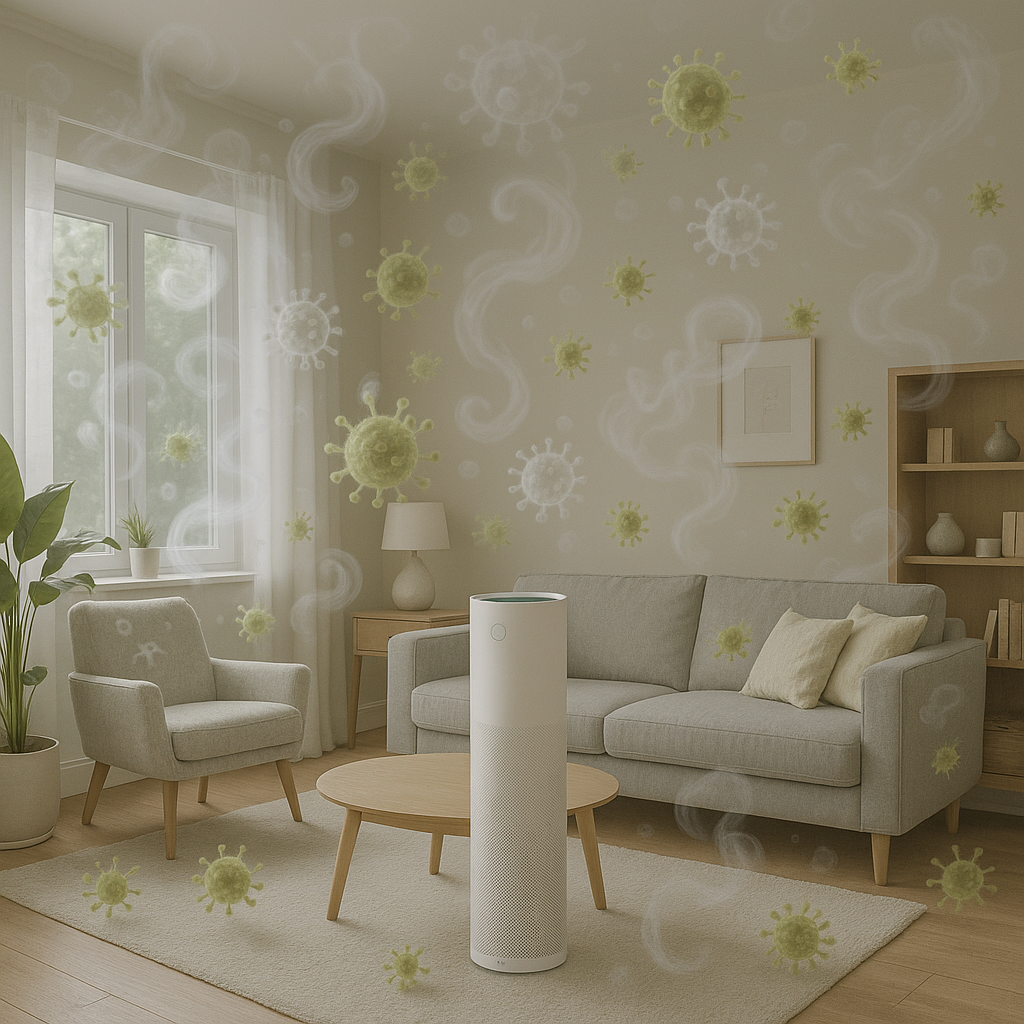

Bringing our son home changed the way we see everything — from the air we breathe to the products we use every day. This is how we’re building a healthier, lower-toxin home for our growing family, one thoughtful change at a time.