Kineon Move+ Pro Review: Red Light Therapy for Joints and Recovery
PHOTOBIOMODULATION, JOINT HEALTH, & ATHLETIC RECOVERY
Kineon Move+ Pro Review: Red Light Therapy for Joints and Recovery
Red light therapy (photobiomodulation) has been studied for decades for its ability to support cellular energy production, blood flow, inflammation balance, and tissue repair — especially in stubborn areas like joints, tendons, and connective tissue. In this science-based breakdown, I’m walking you through my honest experience with the Kineon Move+ Pro, what makes it different (660nm + 808nm wavelengths, LEDs + medical-grade lasers, and pulse wave delivery), who it’s best for, and what you should realistically expect over weeks of consistent use.

Author
Craig McCloskey
Certified Nutritionist
If you’ve followed my work for any length of time, you know I’m skeptical of flashy wellness tech. I care about two things: mechanism and data. Does it make sense biologically? And does the research support it?
Over the past few months, I’ve been testing the Kineon Move+ Pro — a targeted red and near-infrared light therapy device designed specifically for joints and connective tissue. This article pairs with my full video review below, but here we’re going deeper into the science behind photobiomodulation and whether this device actually lives up to the claims.
📺 Watch the full video breakdown here
Read the full transcript
What's up, friend? I'm Craig McCloskey and this is the Kinon Move Plus Pro. I've been using this for the past few months and I want to give you a complete breakdown of it today. Unboxing, show you the ins and outs of it and see if it's right for you. Now, just to be completely clear, this video is not sponsored by Kenon at all. They did not pay me or tell me what to say or what not to say inside this video. Everything that I'm talking about here is my own complete honest review and honest thoughts and I wanted to be able to give that to you unbiasedly today. But I am affiliated with them. So if you find that you love Kinnon today after everything that I'm talking about, you can get 10% off when you use my code or link below. You can go to cremeowski.com/kinon and you can save 10% off sitewide there. Now, the very first impressions of unboxing the Kinon Move Plus Pro, I really do got to say I like the entire unboxing experience. It It felt very high quality. I've unboxed a lot of wellness tech over the years and I felt that the Kinon Move Plus Pro, this was a nice high quality unboxing and it felt like a very premium product. Has pretty solid materials and it's a nice has a nice medical grade feel to it and it's definitely a wellthoughtout design. I've definitely gotten some things off of, you know, sketchy websites before and they just felt like knockoffs or the materials just weren't high quality or like they were going to last that long. I didn't have that feeling when I unboxed the Kinyan Move Plus Pro. Now, it comes with this nice carrying case and that's something that I really love about this is that it is very travel friendly and this carrying case is like a nice hard material and you know if you throw this in your luggage or a backpack, it is not going to be easily damaged. This is a very sturdy sturdy case and that would make sense because this is where you charge your actual red light therapy devices. Now, it comes with three devices here. It comes with three lights and this is where they charge. You plug these in directly into the carrying case and then you plug the carrying case into an outlet using a standard USBC port. And they just go right in. They just magnetize right in. So, it's really pretty simple. They just go right in into place. From my experience, I've had them fully drained and I would say it takes about an hour for them to fully charge. But a charge, I mean, it's lasted me, you know, I use it for like 15 minutes a day, maybe like 3 weeks, you know, a day. So, you're getting a really good charge off of just one 1 hour charge. They also have this zipper up top here, which is going to come in handy because that's where you're actually going to house your charging cable and your strap that you're going to fit your red light uh little therapy devices into. First, it kind of felt a little clunky. I mean that, you know, that little pocket up there felt like it was a little cramped with that in there, but after I used it for a while, it just kind of felt normal and uh it doesn't feel that bad at all. And it feels uh pretty good once once everything's in there and it's easy to close the the carrying case. Now, when you go to turn these little individual lasers on, uh when you press one, they all turn on at once at the same time. Now, when it comes to the charging cable itself, the USBC charging cable, it appears to be I mean maybe like a yard, maybe 3 or 4 feet long. So, it's a good distance away. So, you're not getting one of those short 1 ft cables that are kind of annoying at times, but it's also a very high quality material. I I don't know if you have any of the new MacBooks uh that come with those really nice high-quality cables, but that's what you're getting with that material. It's like a rope material uh wrapped around there. So, it feels very sturdy and high quality and uh it definitely feels like a nice nice experience when you're charging it. It also comes with a just a standard USB port as well. So, if you don't have a USBC in your laptop or a USBC cube, it does come with the just standard USB port as well. Now, in regards to the strap, when I unboxed it, it was clear that it's a a Velcro strap. But when you get your your dimensions, your your measurements, I guess you could say, set, then all you got to do is uncip it. There's a little clip right here that you can just uncip and then just snap right in. So, if you're typically using this for your knees or your shoulder or your elbows, you can get your measurements set. So, that way you don't have to constantly adjust adjust the straps. You can just keep it in one place. But, it was relatively simple to, you know, undo because I've been using it for my shoulder and my knees uh that have different measurements. So, it was really simple to just kind of undo the strap here. And then all you got to do is click and uncclick it. So, if you just want to wrap it around your knee, you just snap that right into place. And now with the Red Light lasers, they just easily just snap right into these little pockets that are on the the strap. And you can hear that just click in. And when you have this on your skin, whether that's your your knee, your elbow, wherever you want to put this, and those lasers are going to be directly on top of your skin. Whereas maybe when you're using some other red light therapy devices like panels, you're going to be standing 6 in to a foot away. Whereas these ones, this is directly right on top of your skin. Now, talking about the red light itself, one thing that I make sure when I'm looking for a high quality red light company, do they have the right wavelengths? Because there's specific wavelengths of light, whether that's red light or infrared light or blue light or green light or all the different colors of the full spectrum. There specific wavelengths of light that are actually being studied that are going to give us the health benefits that we're looking for. And so the Kinon Move Plus Pro uses two specific wavelengths that have been extensively studied in the research. They are using the red light of 660 nanometers, which is a visible spectrum of red light, which is when you turn this on, you can actually see that red light. And they're also using 808 nanometers, which is an infrared light, which is completely invisible to the naked eye. But this is able to penetrate a little bit deeper into the skin and give you different benefits than the red light would. Now, that 660 nanometer that you can see, that red light that you can see, this is going to sit more on the surface. And this is really going to help support circulation and inflammation. Whereas that 808 nanometer infrared wavelengths that you're going to get, you're not going to be able to see those wavelengths, but they're working. This is going to penetrate a little bit deeper into your tissue. And this is going to be that wavelength that really targets joints, connective tissue, and muscles, and really interacts with your mitochondria deep down in your tissues. That's going to help your body recover. that's going to help your muscles, your joints, and your connective tissue recover. It doesn't only have just the red and the near infrared technology. It also has what's called pulsewave technology. And for me, that's really what set the Move Plus Pro apart from all these other devices out there is that this has pulseed wave technology. When you turn these lights on, you're going to see a very fast flicker and that's pulsating constantly the entire time that you have this device on your body. And that's different than a constant stream of light that's just hitting your body. This just means that the light is being delivered in short high energy pulses on your skin and penetrating deep into your tissues. The pulse wave technology really just helps this device be a little bit more powerful without overheating. It also helps it to penetrate a little bit deeper into the skin, maybe five to six more millimeters deeper into the skin. And it also stimulates better cellular repair and recovery pathways. The way that I like to think about the pulse wave technology is that it's more like tapping on your skin and not just pushing that helps to drive the red light the the nanometers the wavelengths of those lights deeper into the skin. Now, talking about LED lights, this isn't just an LED light device like a lot of other red light devices out there that just use LED. This also uses medical grade lasers. Now, they both serve very specific purposes. You want these LED red lights on here because that's great for covering large surface area and better circulation support. You can physically feel I mean the heat coming to your body when you're using this. When I put this on my knee or on my shoulder, I physically feel the heat after 5 minutes, not even. I use this for 15 minutes at a time, but my muscles feel looser, my joints feel looser. That's particularly from the LEDs in this device. The lasers on the other hand, this is what's really helping to penetrate deeper into the tissues that's going to give you that recovery that we just talked about. But then talking about the pulse frequencies, the red and the near infrared, they both pulse at different frequencies. They're pulsing at different times. This just allows them to target different tissue depths at the same time. So to me, I mean, when I'm using this and overall feel of this, this really just feels like something that you would see in a wellness clinic, not something that you would have in your own home, to be honest. So, how I've been using the Kinon Move Plus Pro, I've been using this on my shoulder mostly because I've been going through this like weird shoulder weakness and this it's kind of like a sharp pain. I I think I tweaked it in one of my workouts, but I've been using it on my shoulder. And what I can tell you is that it's not something that you'll you'll feel um like a like it's like healed magically. That's that's not what you'll feel. But what I can tell you that I do feel is after 15 minutes of having it on my shoulder, it feels warm. like I had just done a nice warm-up. Maybe with my resistance bands, it would feel like that. Like I had just walked and I just loosened up my shoulders. It feels like that. And I didn't even move my shoulder. It's just the red light and the near infrared light pulsing on my shoulder. You can do the same thing on your knee. I've done it there a couple times and it feels like when I do it on one knee compared to the other, the knee that I use the Move Plus Pro on that feels so much more warmed up than my other knee. So the idea is that over time, the more you use this, the more it will allow your body to warm up, allow these joints to warm up, and it'll allow that deeper penetration, better blood flow, bringing more nutrients to the area, helping recovery to happen. The one thing I will tell you though is that it for my shoulder, it's just been a little tricky to try and get it around my shoulder. It it doesn't stay on my shoulder all that well. You really got to make sure it's nice and tight and you can't really move it around too much. I think just because of the way, you know, the shoulder is structured and and this is if I find a better way to use it, I'll let you know. But for shoulders, it's not the easiest to use it. It definitely works and it stays there. You just have to make sure you're still. So, like I put it on my shoulder when I'm typing cuz I'm not moving my shoulder when I'm typing or I'm at my desk. Uh, but you can put it on your knee just fine. You can put it on your elbow just fine and it'll tighten and you can move that thing all around and it stays still. I've been using this a few times a week, maybe like four or five times a week, I would throw it on. You can set it at different intervals. You can set it for 5, 10, or 15 minutes. I like to use it at 15 minutes. I feel like I get a really good warm-up with it. I throw it on my shoulder and I'll throw it on my knees. And you can just do it for 15 minutes at a time. And like I said, it holds a charge for a few weeks without needing to recharge it. But it takes about an hour to recharge from what I've noticed. Overall, this isn't going to be some magical device that I found that is just going to, you know, heal you overnight. But if you are somebody out there, there's a few different people I would say that this is for. If you're somebody out there that is one, you're looking for that edge. You're a competitor, you're looking for that edge, and you are just trying to keep your joints healthy as you train and work out, I definitely feel that this can help you in that process. If you're somebody out there that is actively going through rehab or if you're somebody out there that has joint problems, a history of joint problems, and you are looking to recover, I cannot stress enough the science on red light therapy and the quality that the Kinon Move Plus Pro has. If you're looking for more targeted support to your joints specifically, this is definitely the product for you. Now, if you're looking for more full body support, I have other red light therapy devices that I've used that are full panels, red light, infrared light, uh, lasers, UV light. I have many different products. If you're looking for that for full body support, but if you're looking for more joint targeted support, the Kinon Move Plus Pro has definitely been a gamecher for me and I've I've just seen it work firsthand, and I think it's a pretty cool pretty cool concept. But this is not for you if you're looking for just a quick fix without making any lifestyle changes. You still need to put in the work. You still need to sleep. You still need to eat nutritious food. You still need to give your body all the raw materials to actually be able to heal your body, all the collagen, all the vitamins, all the minerals, all the amino acids. You still need to be eating a healthy diet for your body to actually use the red light and take those nutrients to heal your body because those are the foundational principles. That's the raw materials needed to that's actually going to be able to build you from the ground up. The red light is kind of just that that means that's going to help you to do that. I like to think of it as just very targeted sunlight. You can go out and lay out in the sun, which I recommend. Go get all the benefits of sunlight, but this is a very targeted approach that's going to take the red and near infrared from that sunlight that you're just naturally getting out in nature and it's just really condensing that into this product and you're putting it right there in your joints. So, it's really just going to help speed up the recovery process as a lot of the science that we kind of covered today really shows. And I've also done uh EMF testing on this product and it doesn't give off any EMF. So, that's a really big bonus for me because anytime I get wellness products, whether that's uh you know uh a PMF pet bed or a PMF uh bed for myself or my wife, uh I like to test these products out or other red light therapy devices. I like to test these products out and make sure that they're not giving off any harmful EMFs that might, you know, pose other problems down the road. But I tested this one out and it is free from EMFs. So, the Kinon Move Plus Pro really checked off all the boxes for me. When they sent this to me, I was definitely a little skeptical at first. I didn't think I would really enjoy it as much as I thought I would, but after using it for about a month, I was definitely sold on it. And I was like, you know, I'm going to make this a part of my my typical routine. And it's super convenient to use. And as I age, I want to make sure that I am recovering as best as I can. I'm taking care of my joints as best I can. Whether that is through proper nutrition or just good form in general or high quality sleep, I really feel like the Kinon Move Plus Pro can really take me to that next level and be that thing that just kind of puts me over the edge. So, if you like the Kinon Move Plus Pro and you feel like it is for you, you can always save 10% off with my code Craig at checkout. Just go to that link below. Craig McCloskey.com/kinon. That's K I N E O N. And use my code Craig at checkout. You can save 10% off of everything sitewide. As always, do your own research. This was really just my own honest thoughts and experience about this product. I really thoroughly enjoyed it and I think you might too. If you use my link and code below, that really helps to support this channel so that way I'm able to keep bringing you highquality content just like this. And if you haven't liked and subscribed this video, be sure to hit that like and subscribe button below and send this video out to somebody who you think could use a little bit more red light therapy in their lives. and I'll talk to you next time.
What Is Red Light Therapy, Really?
Red light therapy — more accurately called photobiomodulation (PBM) — uses specific wavelengths of light to stimulate cellular function. Unlike UV light, which can damage DNA, red and near-infrared wavelengths fall in a range that interacts with tissue without ionizing it.
The two wavelengths used in the Kineon Move+ Pro are:
660 nanometers (nm) – visible red light
808 nanometers (nm) – near-infrared light (invisible to the eye)
These wavelengths aren’t random. They’ve been repeatedly studied in clinical research for tissue repair, inflammation modulation, and mitochondrial support.
The key target? Your mitochondria — the energy-producing organelles inside nearly every cell in your body.
How Red and Near-Infrared Light Work at the Cellular Level
The primary chromophore (light-absorbing molecule) thought to mediate PBM effects is cytochrome c oxidase, part of the mitochondrial electron transport chain.
When red or near-infrared photons reach this enzyme, several things happen:
Increased mitochondrial membrane potential
Increased ATP production (this is your energy)
Modulation of reactive oxygen species (ROS)
Nitric oxide release
Improved cellular signaling
In simpler terms: light stimulates energy production and recovery pathways.
660 nm vs 808 nm: Why Both Matter
660 nm (Visible Red Light)
Improve microcirculation
Reduce inflammatory cytokines
Support collagen production
Enhance wound healing
808 nm (Near-Infrared Light)
Near-infrared penetrates deeper — several centimeters depending on tissue composition. This makes it more relevant for:
Joint capsules
Deeper connective tissue
Muscle recovery
Tendons and ligaments
Using both wavelengths together allows layered tissue support — superficial and deep.
LED vs Laser: Does It Matter?
Most red light panels use LEDs only. LEDs are excellent for covering large areas, improving circulation, and delivering lower-intensity light over a broader surface.
The Kineon Move+ Pro combines:
LEDs for surface coverage and warmth
Medical-grade lasers for deeper, more concentrated penetration
For joint-specific support, this hybrid approach makes theoretical and clinical sense.
What Is Pulsed Light — and Is It Better?
One feature that differentiates the Kineon Move+ Pro is pulse wave technology. Instead of delivering continuous light, it emits rapid pulses.
Why might this matter?
Some research suggests pulsed photobiomodulation may:
Improve tissue penetration
Reduce heat accumulation
Enhance cellular signaling
Increase nitric oxide modulation
While the literature is still evolving, pulsed delivery may allow higher peak power without overheating tissue — which is especially relevant in compact wearable devices.
Red Light Therapy for Joint Pain and Recovery
The strongest body of evidence for PBM lies in musculoskeletal conditions.
Knee Osteoarthritis
Tendon and Ligament Healing
Muscle Recovery
For someone training consistently — or aging and trying to protect joint integrity — this becomes compelling.
What I Actually Felt Using It
Let’s separate marketing from reality.
This is not a “miracle cure.” It does not magically heal injuries overnight.
What I experienced:
Noticeable warmth in 5–10 minutes
A sensation similar to a resistance band warm-up
Increased looseness in the treated joint
Better readiness before workouts
When I used it on one knee versus the other, the treated side consistently felt more primed and mobile.
From a physiological perspective, that warmth likely reflects:
Increased blood flow
Nitric oxide–mediated vasodilation
Enhanced metabolic activity in the tissue
Over time, repeated stimulation may support longer-term tissue resilience — especially when paired with strength training, adequate protein intake, collagen, micronutrients, and high-quality sleep.
Why Targeted Light May Be More Effective Than Panels for Joints
Full-body panels are excellent for systemic exposure. I use those as well.
But panels require:
Standing 6–12 inches away
Even positioning
Longer sessions
A wearable device that places light directly on the joint removes the distance variable. Direct skin contact increases photon delivery efficiency.
For knees, elbows, and ankles, targeted application simply makes practical sense.
Shoulders are trickier due to anatomy — but for lower joints especially, the strap system works well once adjusted.
Safety and EMF Considerations
One question I always test: electromagnetic field output.
Some wellness devices introduce unintended EMF exposure. After testing, the Move+ Pro showed no meaningful EMF emission during use.
From a safety standpoint, red and near-infrared light are non-ionizing and have an excellent safety profile when used at appropriate doses.
As with any modality, context matters.
Who Is This Actually For?
Based on both research and personal use, this device is best suited for:
Athletes wanting a recovery edge
Individuals rehabbing tendon or ligament injuries
People managing chronic joint discomfort
Aging adults prioritizing connective tissue support
It is not a replacement for:
Proper resistance training
Adequate protein and collagen intake
Micronutrient sufficiency
Quality sleep
Intelligent programming
Photobiomodulation enhances recovery capacity — but it does not replace foundational physiology.
Red Light Therapy vs Sunlight
I often describe this as “targeted sunlight.”
Natural sunlight contains red and near-infrared wavelengths. In fact, near-infrared makes up a significant portion of the solar spectrum and may help mitigate some oxidative stress from UV exposure.
The difference is concentration and precision.
Instead of broad full-body exposure, you’re directing specific therapeutic wavelengths to a single joint for 10–15 minutes.
Think of it as focused stimulus rather than general environmental exposure.
Battery, Build, and Practical Use
From a functional standpoint:
High-quality medical-grade feel
Travel-friendly hard case
~1 hour full charge time
Several weeks of use per charge
Adjustable 5, 10, or 15-minute sessions
The magnetized docking and USB-C charging system make it genuinely convenient.
For something I use 4–5 times per week, convenience matters.
The Bigger Picture: Recovery as You Age
As we age, recovery capacity declines due to:
Reduced mitochondrial efficiency
Increased oxidative stress
Collagen cross-linking changes
Slower tissue turnover
Photobiomodulation directly targets mitochondrial efficiency — one of the root mechanisms of aging.
While it won’t reverse time, improving ATP production and blood flow may meaningfully support joint longevity over decades.
For me personally, this fits into a broader recovery stack:
Strength training with good form
High-quality protein and collagen
Sunlight exposure
Quality sleep
Strategic red and near-infrared therapy
Stacked together, these inputs compound.
Final Thoughts: Is the Kineon Move+ Pro Worth It?
After months of testing, here’s my honest assessment:
It’s not hype. It’s not magic. It’s not a replacement for fundamentals.
But for targeted joint recovery, it’s one of the more thoughtfully designed devices I’ve used.
The wavelengths are correct. The inclusion of lasers adds depth. Pulsed delivery is a meaningful differentiator. Build quality is strong.
If you’re looking for joint-specific recovery support, the science behind red and near-infrared photobiomodulation is legitimate — and this device applies that science well.
As always, do your own research.
If you want to try it, you can save 10% using code CRAIG at checkout via my link:
And if you haven’t yet, watch the full video review to see it in action.
Recovery isn’t about hacks. It’s about stacking small advantages over time.
This might be one of them.


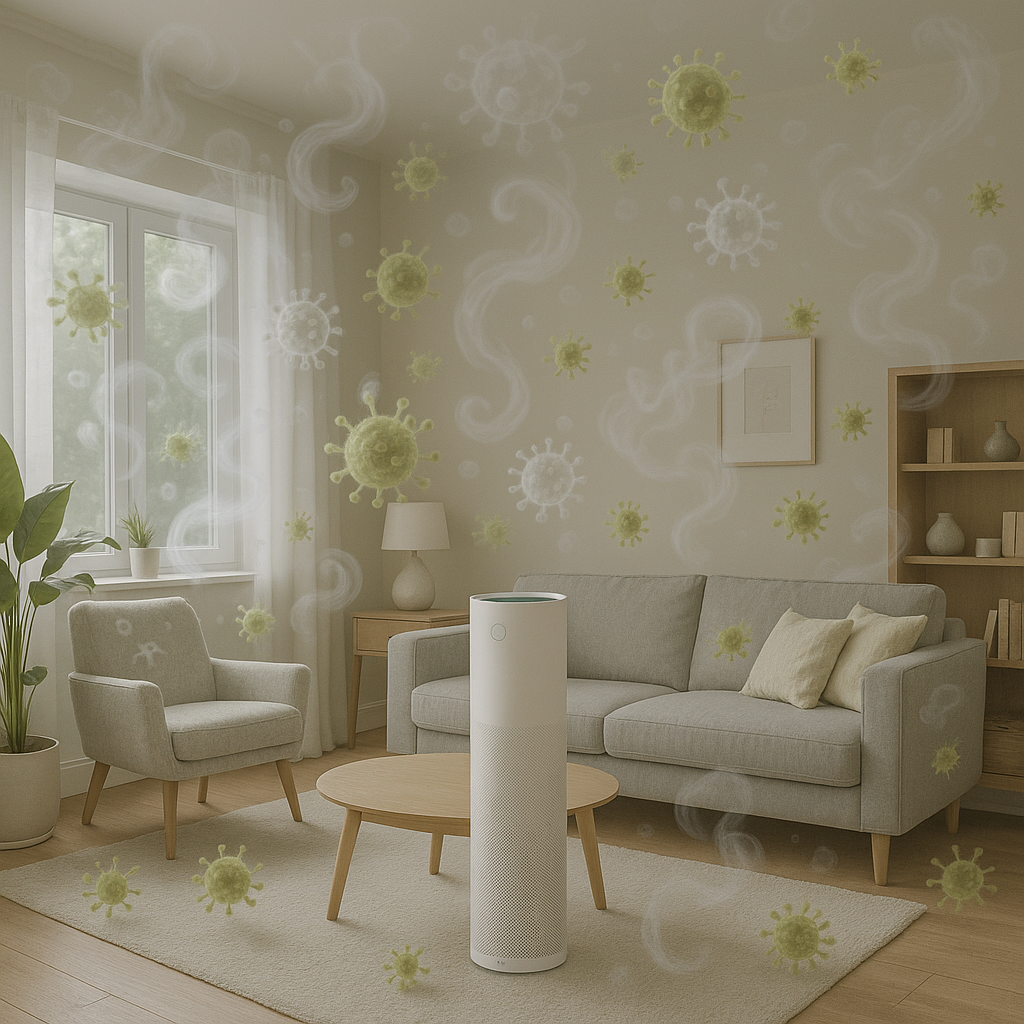

Bringing our son home changed the way we see everything — from the air we breathe to the products we use every day. This is how we’re building a healthier, lower-toxin home for our growing family, one thoughtful change at a time.