Wood-Fired Style Sourdough Pizza with Fresh Mozzarella & Sausage
Wood-Fired Style Sourdough Pizza with Fresh Mozzarella & Sausage
This wood-fired–style sourdough pizza is baked hot in a home oven to create a blistered, chewy crust, then topped simply with clean tomato sauce, fresh sliced mozzarella, shredded pizza cheese, and savory ground sausage. It’s our go-to pizza night recipe when we want something nostalgic and comforting, but still made with real, farm-sourced ingredients we trust.

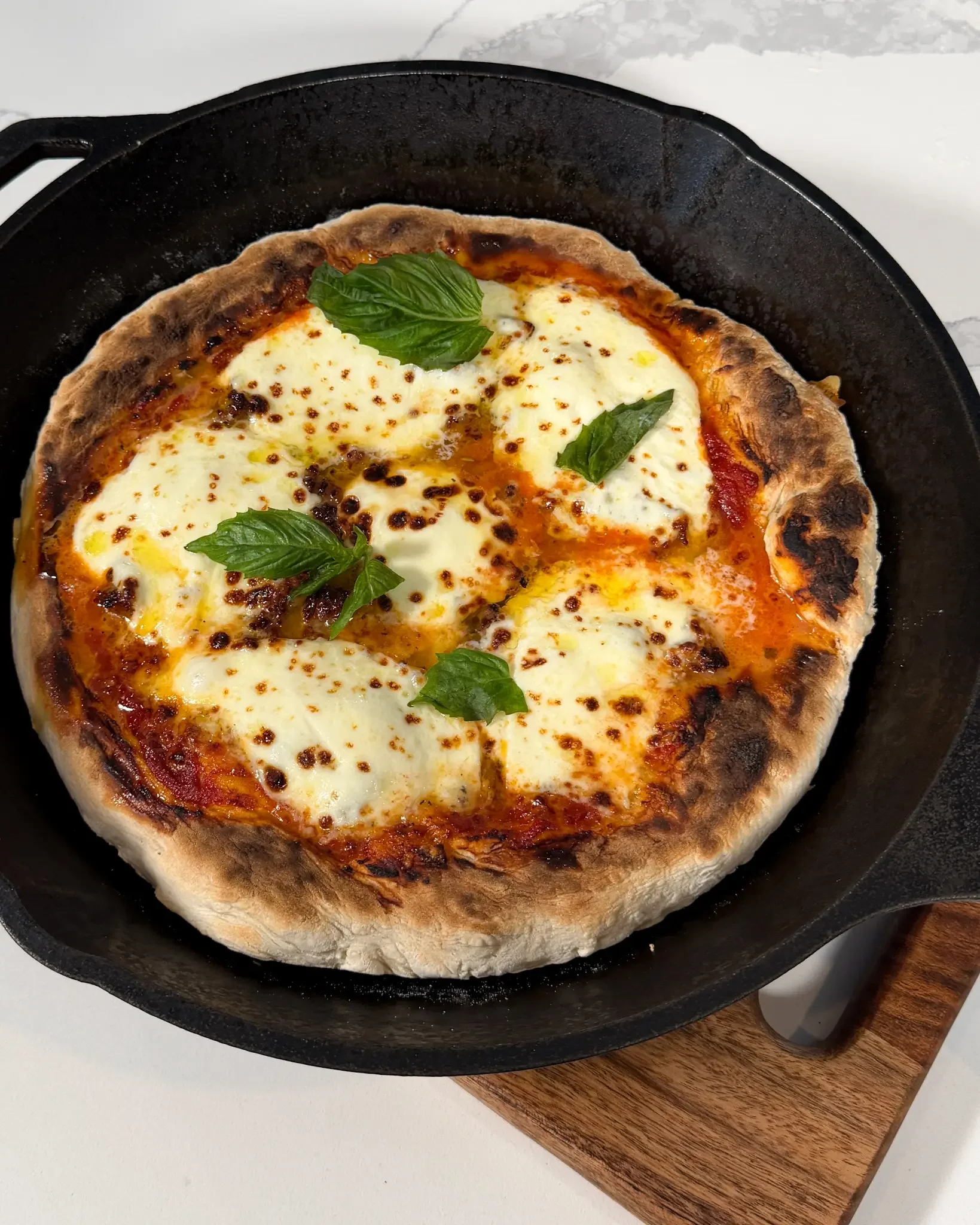
Sourdough Sausage & Mozzarella Pizza (The “Real Food” Pizza Night)
There are a few meals that feel like a reset in our house—meals that slow everything down, bring everyone into the kitchen, and somehow make a random weeknight feel like a small celebration. Pizza is one of those meals.
But not the flimsy, greasy kind that leaves you feeling heavy and weird an hour later.
I’m talking about the kind of pizza that smells like a wood-fired place in a tiny mountain town… even though it’s coming out of your oven. The kind with a crust that has bite—chewy, blistered, and a little tangy—because it’s made with sourdough. The kind where you actually recognize every ingredient because most of them came from a farm stand, your garden, or a simple grocery list you can read in 10 seconds.
This is the pizza we make when we want something nostalgic and fun, but still aligned with how we eat: minimal ingredients, no sugar bombs, no industrial seed oils, and quality animal foods that actually satisfy.
And honestly? This is the pizza that makes you forget “healthy pizza” is even a category. It just tastes like pizza should taste.
Watch me make this recipe step-by-step on Instagram.
Why This Pizza Hits Different (And Why We Use These Ingredients)
1) Sourdough crust: the slow-food upgrade
Sourdough pizza crust is one of the easiest “real food” swaps you can make that actually improves both flavor and how you feel after eating it.
Instead of a quick-rise dough that’s basically “fast carbs on demand,” sourdough brings a slower fermentation process. That fermentation:
deepens flavor (that subtle tang + complexity),
improves texture (chewy interior, crisp edges),
and for many people, makes the crust feel lighter and easier to digest than typical pizza dough.
We love it because it takes something that’s traditionally a “treat meal” and turns it into something that feels more like a nourishing staple—especially when paired with quality toppings.
2) Pizza sauce: clean, simple, no sugar needed
Most store-bought pizza sauces taste like dessert because they’re loaded with added sugar. But the truth is: tomatoes don’t need sugar. If your tomatoes are good, you need salt, garlic, herbs—and maybe a splash of olive oil.
We either use:
homemade sauce from tomatoes we canned/froze from the garden, or
the cleanest store-bought option we can find: tomatoes + olive oil + herbs, no sugar, no seed oils.
3) Fresh mozzarella + shredded cheese: best of both worlds
Fresh sliced mozzarella gives you that creamy, stretchy, classic “pizzeria” melt. It’s rich and satisfying, and it makes the pizza feel more special.
Then we add shredded pizza cheese because it:
melts evenly,
fills in the gaps,
and helps you get that golden, bubbly top layer everyone wants.
If you’re buying cheese, just prioritize:
minimal ingredients (milk, cultures, salt, enzymes),
avoid “cheese product” blends with fillers,
and choose the best quality you can.
4) Ground sausage: real protein that actually satisfies
Sausage is one of my favorite pizza toppings because it makes a few slices feel like an actual meal. It brings fat + protein + flavor—so you don’t need a dozen toppings to make the pizza good.
If we’re doing it “our way,” we’re using:
locally sourced sausage from a farm we trust (ideally pasture-raised),
with simple ingredients (pork + spices + salt).
If you’re buying from a store, avoid sausage with:
added sugar,
seed oils,
and a long list of preservatives or “natural flavors.”
Keep it simple. Pork + seasoning should be enough.
5) The “healthier” part isn’t deprivation—it’s quality
This isn’t “diet pizza.” It’s just pizza made the way people used to make it:
real flour + fermented dough,
real tomatoes,
real cheese,
real meat,
cooked hot and eaten together.
That’s what makes it better: not restriction—ingredient quality and simplicity.
The Nostalgia Piece (Because This Is Why Pizza Matters)
Pizza has always been more than food. It’s a vibe.
It’s Friday nights. Sleepovers. Sports games. Movie marathons. That feeling of opening a box and knowing it’s going to be good before you even see what’s inside.
And now, as a dad, it hits differently.
Because pizza night becomes this little anchor in the week—one of those family rituals you look forward to. The kind where everyone crowds around the counter, someone steals a piece of mozzarella, someone asks when it’ll be ready for the fifth time, and the kitchen smells like a memory you didn’t know you needed.
That’s what I love about this recipe: it keeps the nostalgia… but upgrades the ingredients.
So you get the comfort and you feel good afterward.
Step-by-Step: How to Make Sourdough Sausage & Mozzarella Pizza
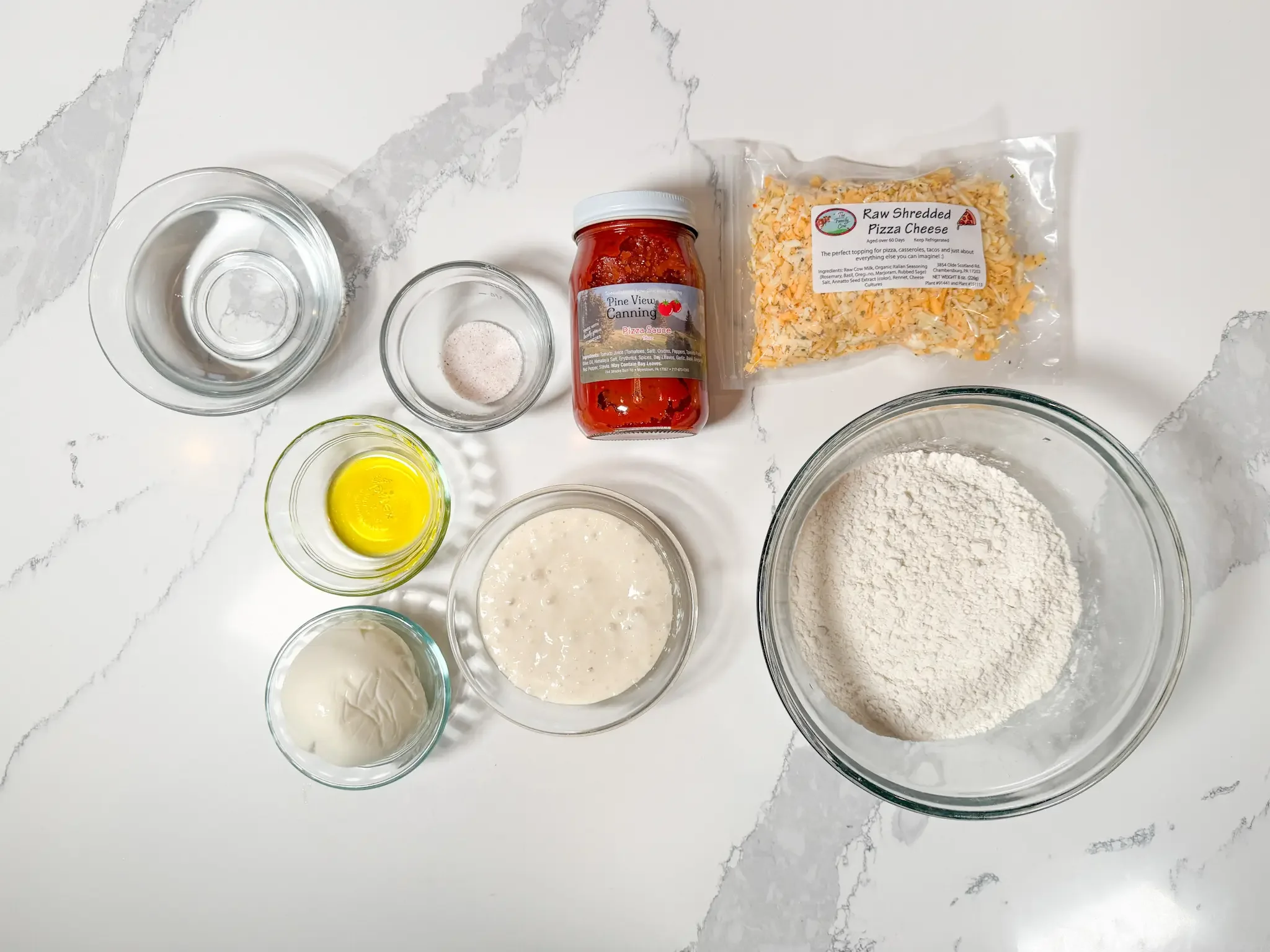
You can make this as simple or as “artisan” as you want. Here’s the flow that works best in a real-life schedule.
Step 1: Mix the dough (5 minutes)
In a large bowl, whisk together:
active sourdough starter
warm water
Then add:
bread flour
salt
Mix until you get a shaggy dough. Drizzle in olive oil and fold it in until the dough comes together.
Don’t overthink this. It doesn’t need to be perfect—it just needs to be mixed.
Step 2: Ferment (8–24 hours)
Cover the bowl and let it sit at room temp until it’s puffy and noticeably risen.
8–12 hours = mild tang, fast schedule
18–24 hours = more flavor, more fermentation, easier stretch
This is the magic of sourdough: the dough is doing the work while you live your life.
Step 3: Brown the sausage (10 minutes)
When you’re ready to make pizza, brown your sausage first.
Heat a skillet over medium heat with a little olive oil, add the ground sausage, and cook until browned and fully cooked through. Break it into small crumbles so every slice gets some.
Set aside.
Step 4: Preheat the oven HOT (30 minutes)
If you have a pizza stone or steel, put it in the oven and preheat to 500°F for at least 30 minutes.
High heat is the difference between:
“pretty good homemade pizza” and
“wait… this is homemade??”
No stone? Preheat a sheet pan upside-down. Same idea.
Step 5: Divide and shape the dough
Turn your dough onto a lightly floured surface and divide into two pieces.
Gently stretch each into a 12-inch round.
Pro tip: Start in the center and work outward, keeping a slightly thicker edge. If it resists, let it rest 10 minutes and try again. Dough relaxes when you give it time.
Step 6: Build the pizza (keep it simple)
Transfer dough to piping hot stone, steel, or cast iron. The bottom of the dough will begin to crust so have your ingredients ready to load.
Then:
Spread pizza sauce (don’t drown it)
Add fresh mozzarella slices (pat dry if they’re wet)
Sprinkle shredded cheese
Add browned sausage crumbles
Optional finishing touches:
basil after baking
crushed red pepper
Parmesan
Step 7: Bake (10–15 minutes)
Bake until:
the crust is golden and blistered,
cheese is bubbling,
and the edges look like you want to eat them first.
Step 8: Rest, slice, and enjoy
Let it sit 2–3 minutes before slicing. This helps the cheese set just enough so it doesn’t slide off.
Then slice and serve—ideally with everyone standing around the counter “just grabbing one more piece.”
Ingredient Standards (If You Don’t Have Farm/Garden Access)
If your ingredients aren’t coming from a local farm or your backyard, you can still make this a very clean pizza night.
Here’s the simple standard:
Sauce: no added sugar, no seed oils
Cheese: minimal ingredients (milk, cultures, salt, enzymes)
Sausage: pork + spices, no sugar, no seed oils
Oil: olive oil or none at all
That’s it. No “health food” gimmicks required.

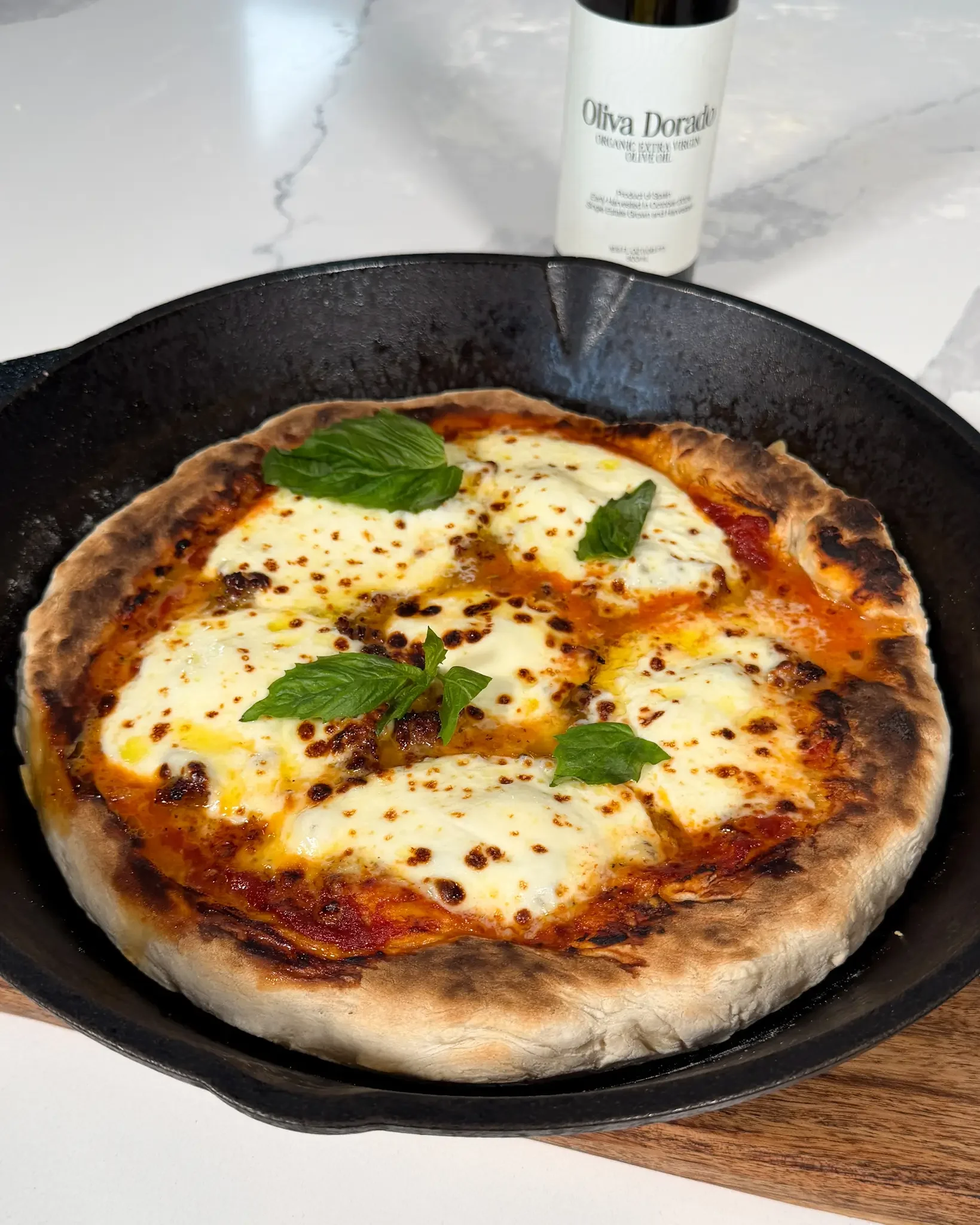
Wood-Fired Style Sourdough Pizza with Fresh Mozzarella & Sausage
An oven-baked, wood-fired–style sourdough pizza with a blistered, chewy crust, clean tomato sauce, fresh sliced mozzarella, shredded pizza cheese, and browned ground sausage. It’s nostalgic pizza night — upgraded with simple, real ingredients (and no sneaky sugar or seed oils).
Ingredients
Instructions
- Mix the dough. In a large bowl, whisk the sourdough starter and warm water until mostly smooth. Add the flour and salt, then mix until a shaggy dough forms. Drizzle in olive oil and fold until the dough comes together.
- Ferment. Cover and let the dough rise at room temperature until puffy and doubled, 8–24 hours depending on your starter strength and room temp.
- Brown the sausage. Heat olive oil in a skillet over medium heat. Add the ground sausage and cook until browned and fully cooked, breaking it into small crumbles. Drain excess fat if needed and set aside.
- Preheat the oven. Place a pizza stone, cast iron, or baking steel in the oven (if using). Preheat to 500°F for at least 30 minutes. (A hot surface = better rise and “wood-fired style” blistering.)
- Divide + shape. Turn dough onto a lightly floured surface. Divide into 2 equal pieces. Gently stretch each into a 12-inch round, keeping a slightly thicker edge for the crust.
- Assemble. Transfer dough to hot cast iron, steel, or stone. Spread about 3/4 cup pizza sauce on each crust. Layer on the fresh mozzarella slices, then sprinkle shredded pizza cheese evenly. Top with the browned sausage crumbles.
- Bake. Bake 10–15 minutes, until the crust is golden and the cheese is bubbling and lightly browned.
- Finish + serve. Rest 2–3 minutes before slicing. Add basil, crushed red pepper, or Parmesan if desired.
Notes & Substitutions
- “Wood-fired style” at home: A thoroughly preheated stone/steel + high heat gives you that blistered, pizzeria-style crust in a regular oven.
- Sauce tip: Choose a sauce made with tomatoes, salt, herbs, and olive oil — avoid added sugar and seed oils.
- Cheese moisture: Fresh mozzarella can be wet — pat slices dry for less soggy pizza.
- Sausage standards: Look for pork + spices + salt. Avoid sugar, soybean/canola oils, and long additive lists.
- Make-ahead: After fermenting, shape into balls and refrigerate up to 24 hours. Bring to room temp before stretching.
- Leftovers: Refrigerate up to 3 days. Reheat in a skillet or oven for best crust.
Shop Our Kitchen
These are the exact tools + simple staples we use to make this Wood-Fired Style Sourdough Pizza (fresh mozzarella, sausage, and all). Includes Amazon and affiliate links — all at no extra cost to you.

Pizza Baking Steel
The #1 upgrade for true “wood-fired style” crust at home — better blistering, faster spring, and a crisp bottom.

Wood Pizza Peel
Makes loading/unloading clean and smooth (especially if you’re baking on a steel or stone).

Stainless Mixing Bowl Set
Perfect for sourdough dough mixing + fermenting. Easy cleanup and no plastic taste lingering around your starter.

Digital Kitchen Scale
If you want consistent crust every time, weighing flour + water is the easiest way to level up sourdough baking.

Cast Iron Skillet
My go-to for browning sausage fast and evenly — it builds flavor without needing any seed oils.

Clean Pizza Sauce (No Added Sugar)
Look for tomatoes + salt + herbs + olive oil. If it tastes sweet, it’s usually because they added sugar.

Pizza Cutter
Classic Pizza Wheel with Sharp Blade For Cutting Through Crusts, Pies and More, Built In Finger Guard for Safety and Comfort Grip to Protect Fingers, Dishwasher Safe, 9-Inch.
Macros + Nutrition (Per Serving)
Approximate values for one serving (1/4 of one pizza, or 1/8 of the total recipe), based on the ingredient list as written: sourdough starter + bread flour crust, olive oil, pizza sauce with no added sugar, fresh mozzarella, shredded mozzarella-style pizza cheese, and ground sausage. Values will vary depending on flour brand, sausage fat content, cheese type, and how generously toppings are applied.
| Nutrient | Amount |
|---|---|
| Calories | ~520 |
| Protein | ~24 g |
| Carbs | ~48 g |
| Sugar | ~5 g |
| Fat | ~26 g |
| Saturated Fat | ~12 g |
| Fiber | ~3 g |
| Sodium | ~1,100 mg |
Note: This pizza is more balanced than conventional takeout pizza thanks to the sourdough fermentation, real cheese, and protein from sausage. Saturated fat and sodium will vary widely depending on the sausage and cheese you use. Choosing pasture-raised sausage with simple ingredients and a pizza sauce without added sugar or seed oils keeps this closer to a real, nourishing meal rather than a hyper-processed one.
FAQ
Yes — “wood-fired style” is about the result: high heat, blistered crust, and a quick bake. The easiest way to mimic it at home is a fully preheated pizza stone or baking steel at 500°F (or as hot as your oven goes) for at least 30 minutes. You’re recreating that intense floor heat that gives pizza its signature chew + char.
Either works, but a baking steel usually gives the most “pizzeria” bottom crust because it holds and transfers heat faster. A stone is still great — just preheat it long enough. If you don’t have either, preheat an upside-down sheet pan and bake on that.
For best rise and texture, yes — use starter that’s bubbly and near peak (not flat and exhausted). That said, this dough is forgiving because it has a longer fermentation window. If your kitchen is cool or your starter is sluggish, just plan for the longer end of the rise time.
Anywhere from 8–24 hours. Around 8–12 hours gives a milder flavor and a faster schedule. The longer end (18–24 hours) tends to develop more flavor and can be easier to stretch. Let the dough tell you: it should look puffy, airy, and noticeably risen.
Not at all. Sourdough pizza dough can feel tacky, especially after a long ferment. Use a light dusting of flour on your hands and surface, and don’t overwork it. If it’s fighting you, let it rest 10 minutes and try stretching again — the gluten relaxes and it becomes much easier.
Fresh mozzarella is naturally higher in moisture. The fix is simple: pat the slices dry with a paper towel, and don’t overload the center with sauce. You can also place fresh mozzarella on top of the shredded cheese so it melts without soaking into the crust as much.
We like a simple-ingredient ground sausage (ideally local/pasture-raised) with pork + spices + salt. Italian sausage is classic, but breakfast sausage also works. If you’re buying from a store, look for options without added sugar and without industrial seed oils.
Keep it minimal: tomatoes + salt + herbs + olive oil is the goal. A lot of jarred “pizza sauces” sneak in sugar to make them taste sweeter. If your sauce tastes like marinara candy, it’s probably sweetened. Homemade is easiest: crushed tomatoes, garlic, oregano, salt — done.
Yes. After the room-temp ferment, divide into balls and refrigerate up to 24 hours. Bring to room temperature for about 60–90 minutes before stretching so it relaxes and bakes well.
You can. After fermenting, portion into dough balls, lightly oil, and freeze in an airtight bag/container. Thaw overnight in the fridge, then bring to room temperature before stretching. The texture can be slightly less airy than fresh, but it’s still a great meal-prep move.
A skillet is the cheat code. Heat a pan over medium, add the slice, cover with a lid for a minute to re-melt the cheese, then uncover to crisp the bottom. You can also reheat on a stone/steel in a hot oven for a few minutes — avoid the microwave if you want the crust to stay right.





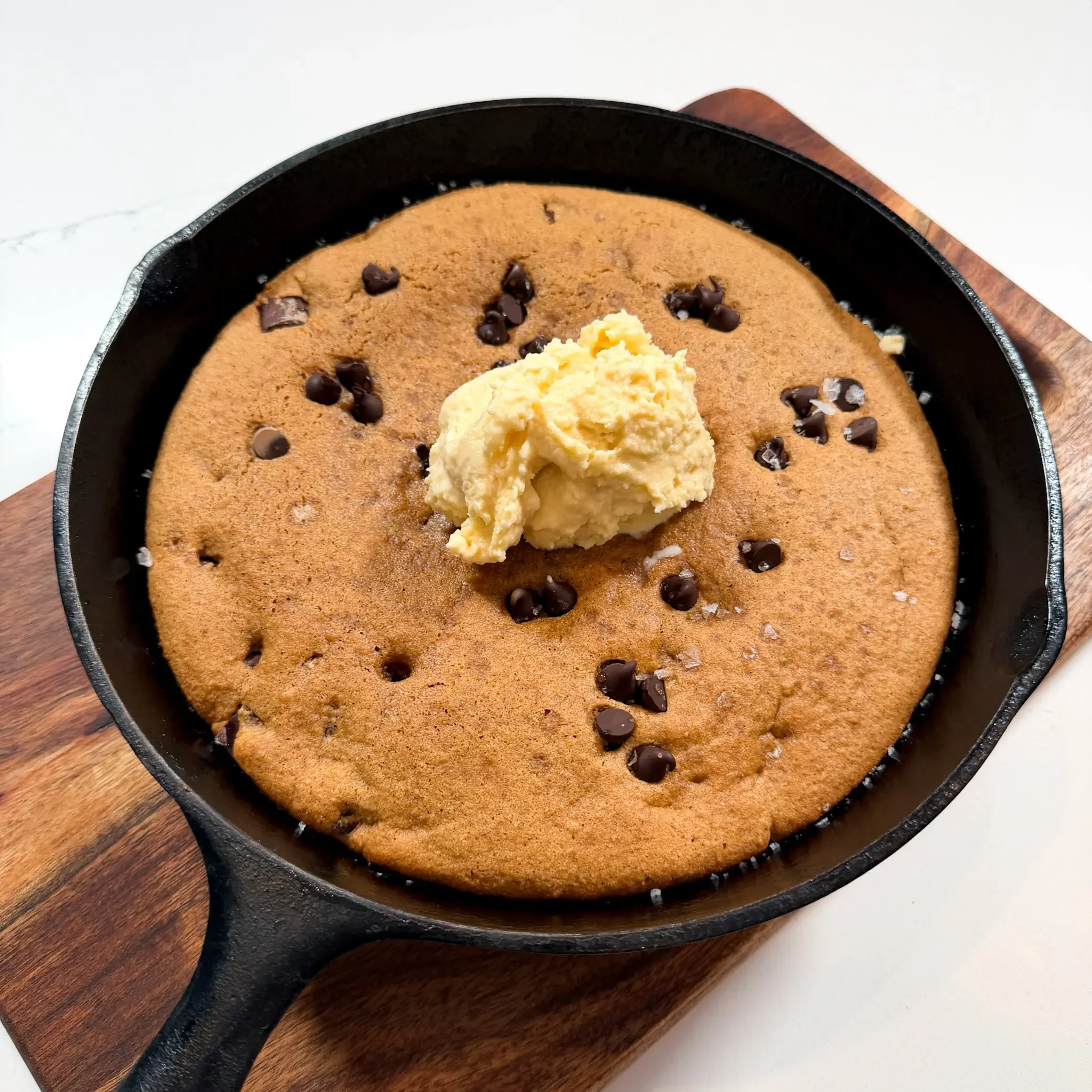

A soft, naturally sweetened smash cake made with bananas, applesauce, sprouted oat flour, and creamy cashew butter. No added sugar, no seed oils, and topped with a protein-rich Greek yogurt frosting—perfect for baby's first birthday.