Digestive Enzymes 101: What They Do, Why You Need Them, and How to Choose the Best Formula
DIGESTIVE ENZYMES — DIGESTION + ABSORPTION + GUT COMFORT
Digestive Enzymes Explained: Benefits, Deficiency, and How to Choose One
A science-backed breakdown of what digestive enzymes actually do, why so many people today are enzyme-deficient, and how targeted enzyme support can improve bloating, nutrient absorption, protein digestion, gut health, and overall digestive comfort — plus how to choose a high-quality formula that truly works.


Digestive issues are one of the most universal human experiences — bloating after meals, feeling “too full” from normal portions, reflux that seems to come out of nowhere, or the classic “I look 6 months pregnant after dinner” belly.
For years, I thought these symptoms were just part of life. But the deeper I dug into the research (and the more I optimized my own nutrition), the clearer the picture became:
Most people are struggling with low digestive enzyme output — especially lipase, amylase, and proteases — and they don’t even know it.
And when your enzyme levels drop, everything downstream struggles: nutrient absorption, blood sugar balance, gut motility, inflammation, and even your mood.
Today’s article breaks down exactly why enzymes matter so much, how modern life depletes them, what the science says, and how to choose a formula that actually works.
Why Digestive Enzymes Matter More Than You Think
Digestive enzymes are specialized proteins that break your food down into absorbable nutrients.
Without enzymes, eating would be pointless — we’d swallow food, but nothing meaningful would make it into our bloodstream.
Different enzymes have different jobs:
Proteases → break down protein into amino acids
Lipase → breaks down fats
Amylase → breaks down carbohydrates and starch
Lactase, maltase, sucrase, etc. → handle specific sugars
Cellulase → helps break down plant fibers
Peptidase & DPP-IV → help break down hard-to-digest peptides like gluten or casein
The pancreas produces most enzymes, but your stomach, salivary glands, and small intestine contribute too.
When enzymes are low, food doesn’t break down properly. That undigested food sits in the gut, ferments, feeds the wrong bacteria, slows motility, and triggers inflammation.
And that’s when symptoms start showing up.
“Without enzymes, eating would be pointless — we’d swallow food, but nothing meaningful would make it into our bloodstream.”
Signs You Might Have Low Digestive Enzymes
Many people have no idea their discomfort is enzyme-related. The signs can be subtle:
Feeling full after small meals
Bloating 30–90 minutes after eating
Floating stools (fat malabsorption)
Gas with strong odor
Undigested food in stools
Reflux or “pressure” under the ribs
Fatigue after meals
Constipation or alternating constipation/loose stools
But even young, healthy people are at risk — because modern eating habits work against our natural enzyme production.
Why Most People Today Are Enzyme-Deficient
There are several big reasons WHY enzyme levels tank, even if you eat clean:
1. Stress shuts down digestive enzyme secretion
However, most people eat every meal in a state of stress — driving, rushing, scrolling, and multitasking.
2. The standard American diet overwhelms the system
Ultra-processed foods contain enzyme inhibitors and lack the raw, living enzymes found in whole foods.
3. Low-stomach-acid issues
Hydrochloric acid (HCl) is the “on switch” for digestive enzyme release.
Low HCl → poor enzyme activation → poor protein and fat digestion.
4. Less raw food in modern diets
Raw fruits, vegetables, raw dairy, cultured/fermented foods, and sprouted grains carry naturally occurring enzymes.
5. Gut inflammation and dysbiosis
Most people are operating with suboptimal digestive enzyme levels every day.

The Science-Backed Benefits of Digestive Enzymes
When you restore enzyme levels, digestion becomes dramatically more efficient.
Here’s what the research shows:
1. Reduced bloating and gas
2. Better protein absorption and muscle recovery
3. Improved fat digestion
4. Better carb and fiber tolerance
Enzymes like amylase, cellulase, and alpha-galactosidase help break down fermentable fibers that normally cause gas.
5. Support for gut inflammation
6. Relief for people with enzyme-related intolerances
Lactase for lactose intolerance
DPP-IV enzymes for gluten fragments
Lipase for bile insufficiency
Proteases for people with low stomach acid
7. Better nutrient absorption overall
If food is better broken down, more nutrients reach your bloodstream — minerals, fat-soluble vitamins, amino acids, and essential fatty acids.
Many people notice:
More energy
Less bloating
Clearer skin
Better stools
Reduced heartburn
Less after-meal fatigue
Digestion is foundational — fix digestion, and everything downstream improves.
How to Choose a High-Quality Digestive Enzyme Supplement
Not all enzyme supplements are created equal.
Here’s what actually matters:
1. Look for a high protease count (VERY important)
Protein digestion is where most people struggle. Enzymes should list multiple protease types, not just one.
2. Include lipase for fat digestion
Most cheap formulas underdose lipase — one of the enzymes people need most.
3. Broad-spectrum carbohydrates + fiber enzymes
Amylase, glucoamylase, lactase, cellulase, hemicellulase, invertase, alpha-galactosidase — these expand your ability to break down a wide range of foods.
4. Stability in stomach acid
The formula should be able to survive the acidic stomach environment and activate in the small intestine.
5. No fillers, gums, or binders
Low-grade products cut corners by using cheap fillers, low-activity enzymes, or proprietary blends without transparency.
6. Clinically meaningful enzyme activity numbers (not mg)
The label should show activity units like HUT, LU, DG, or FCC — this is how you know the enzymes are potent.
My Personal Experience With Enzymes
When I first started using digestive enzymes consistently, I could feel the difference immediately:
Less post-meal heaviness
Better tolerance to high-protein meals
Less bloating in the evenings
More stable energy after eating
Better bathroom regularity
And honestly… just feeling lighter
Optimizing digestion has ripple effects — from absorption to hormones to immunity.
My Go-To Digestive Enzyme: MassZymes by BiOptimizers
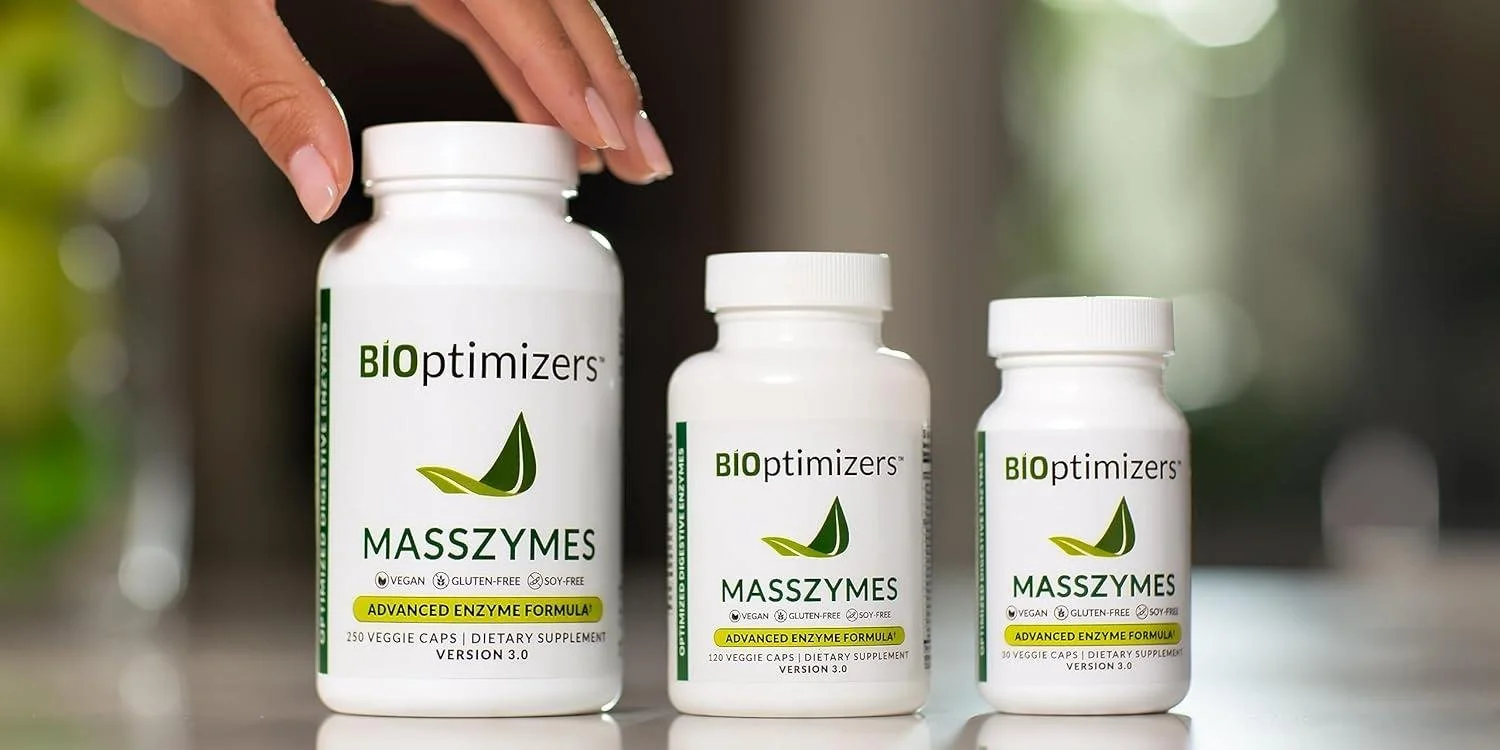
After testing a lot of different formulas over the years, MassZymes is the one I keep coming back to — and the one I use personally. If I accidentally (or intentionally) consume gluten when eating out, I legitimately don’t feel the negative effects nearly as much when I take three capsules of MassZymes.
Here’s why:
1. Extremely high protease content
MassZymes contains multiple forms of proteases at high activity levels — ideal for protein-heavy diets or anyone with low stomach acid.
2. Broad-spectrum enzyme blend
Covers proteins, fats, carbs, fibers, dairy sugars, and difficult-to-digest peptides.
3. Active in a wide pH range
It works in both low-acid and higher-acid environments, meaning it’s reliably effective.
4. Noticeable difference in post-meal comfort
I feel lighter after meals, especially protein-rich ones like steak or eggs — and the research supports these effects.
5. No junk fillers
Clean formulation, no gums, dyes, or unnecessary additives.
If someone is struggling with bloating, fullness, sluggish digestion, or protein tolerance, this is almost always my first recommendation.
You can always save 15% off MassZymes when you use my code ‘CRAIG’ at checkout! Grab yours here
Final Thoughts
Digestive enzymes aren’t a fad — they’re foundational biology. When enzymes are low, digestion becomes slow, uncomfortable, and nutrient-poor. When enzymes are restored, everything works better.
Think of enzymes like the spark that allows your food to become fuel.
If your goal is:
better digestion
less bloating
improved nutrient absorption
better tolerance to protein and fiber
or just feeling lighter after meals
…digestive enzymes may be one of the easiest and most effective tools you can add to your daily routine.




Bringing our son home changed the way we see everything — from the air we breathe to the products we use every day. This is how we’re building a healthier, lower-toxin home for our growing family, one thoughtful change at a time.